Blending Modern and Historic Architecture in Sacramento

Walking through the tree-lined streets of East Sacramento or the grid in Midtown, you can feel the history. The architecture tells the story of the city—from the ornate Victorians of the late 19th century to the sturdy Craftsman bungalows of the early 1900s. But Sacramento isn't a museum. It's a living, breathing city where people need modern functionality. The challenge for homeowners here isn't just maintaining an old house; it's about blending modern and historic architecture in Sacramento in a way that respects the past while embracing the future.
Renovating a historic home is a delicate balancing act. You want the open concept kitchen and the updated primary suite, but you don't want to strip the soul out of the building. You want the character—the high ceilings, the intricate molding, the sense of craft—but you need it to work for 21st-century life. Achieving this balance requires thoughtful design choices and a deep understanding of what makes our local architecture special. It’s about finding the sweet spot where old charm meets new convenience.
Sacramento’s Historic Neighborhoods Deserve Thoughtful Renovation
Sacramento is lucky. Unlike many western cities that bulldozed their history, we preserved distinct pockets of architectural heritage. Historic home remodel Sacramento projects are happening all over the central city, and each neighborhood has its own flavor that dictates the renovation approach.
In Midtown and Mansion Flats, you have the "high style" Victorians—homes built to show off, with verticality and intricate detailing. Move over to East Sac or Land Park, and the vibe shifts to the 1920s and 30s. Here, you see English Tudors, Spanish Revivals, and California Bungalows. These homes are grounded, often smaller in scale but rich in texture.
When tackling a Sacramento historic neighborhoods renovation, the first rule is to listen to the house. A sleek, ultra-modern industrial remodel might work in a converted warehouse on R Street, but it often feels jarring inside a 1910 Craftsman on J Street. Successful renovations in these areas acknowledge the context. They don't try to turn a historic home into a new build. Instead, they enhance what's already there, fixing the "old house problems" (like dark hallways and tiny closets) while celebrating the "old house wins" (like old-growth wood floors and handcrafted millwork).
What Makes Sacramento Victorian Renovation Unique?
The Victorian era left a massive imprint on our city. But renovating these "painted ladies" comes with a specific set of challenges. Sacramento Victorian renovation isn't just about paint colors; it's about volume and proportion. These homes were built in a time before electricity was standard, where high ceilings were the primary way to keep a house cool in the Valley summer.
Ornamental Trim, Tall Ceilings, and Proportion
The defining feature of a Victorian home is verticality. Everything draws the eye up. The windows are tall and narrow. The baseboards are often 10 or 12 inches high. The ceilings soar to 11 or 12 feet.
In a Victorian home restoration Sacramento project, preserving these proportions is critical. If you lower a ceiling to run new HVAC ducts, you kill the room. If you replace tall, double-hung windows with standard squat sliders, the house looks wrong. The renovation strategy has to respect these vertical lines. This often means getting creative with modern systems—using mini-splits instead of ducted air, or hiding plumbing in new "thick walls" rather than dropping ceilings. It also means keeping the trim heavy. Modern minimalist trim looks lost in a room with 12-foot ceilings. You need the visual weight of substantial molding to anchor the space.
Updating Interiors Without Flattening Character
The biggest risk in updating a Victorian is "flattening" it. Historic homes have texture. They have plaster walls that aren't perfectly flat. They have layers. Modern drywall and recessed lighting can feel sterile in comparison.
Preserving original architecture California homeowners value means finding ways to keep that texture. Instead of tearing out all the plaster, maybe you repair it. Instead of removing the picture rail molding, you use it to hang modern art. When you do bring in modern elements, they should have their own texture. Matte finishes, natural stones, and warm woods bridge the gap better than glossy plastics or cool greys. The goal is to make the new elements feel just as crafted as the original ones, even if the style is different.
Modern Additions to Historic Homes: Where Design Gets Challenging
Sometimes, a renovation isn't enough. You need more space. Adding a modern addition historic homes can handle is one of the toughest architectural feats. Do you try to fake the old style, or do you build something clearly new?
The Contrast Approach: Old Meets Clean Lines
One popular school of thought in Sacramento home addition design is the "contrast" approach. This is where the addition looks distinctly modern. It doesn't try to mimic the Victorian or Craftsman details. Instead, it uses glass, steel, and simple forms to create a backdrop for the historic structure.
This can be stunning. Imagine a classic Victorian front that transitions into a glass-walled kitchen addition at the back. The contrast highlights the history rather than diluting it. It says, "This is the old part, and this is the new part." It avoids the "uncanny valley" effect where a new addition looks almost like the old house but feels slightly fake because the materials or proportions are just a little off. This approach works well for blending contemporary architecture with historic homes, allowing for bright, airy living spaces that open up to the backyard—something historic homes rarely did.
The Continuity Approach: Seamless Material Transitions
The other strategy is continuity. This is harder to pull off but can be seamless if done right. Here, you carry the materials and scale of the original house into the new addition. You match the siding profiles. You replicate the eave details.
In a transitional remodel Sacramento context, this doesn't mean building a museum replica. It means translating the language of the old house. If the original house has exposed beams in the living room, you use similar beams in the new family room, but perhaps with a cleaner, less ornate profile. You use the same wood species for the floors but lay them in a modern pattern. This creates a subconscious flow. You walk from the 1890s parlor to the 2020s kitchen without feeling a jolt. The house feels like one cohesive thought, evolved over time.
Decorative Beams in Sacramento Remodels: Subtle but Impactful
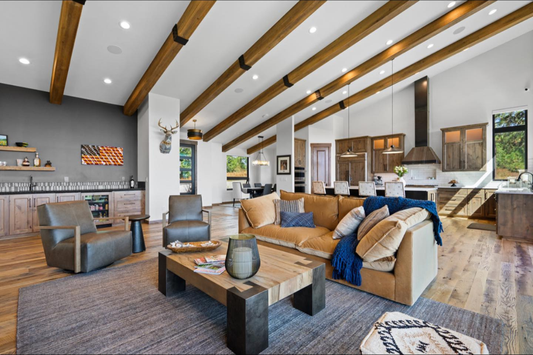
One of the most effective tools for bridging the gap between eras is the ceiling beam. In historic homes, structure was often hidden behind plaster. But in a modern renovation, exposing or adding structure adds warmth and scale. Decorative beams Sacramento designers use act as a connecting thread.
Adding Architectural Depth to Opened-Up Floor Plans
The most common renovation move in Midtown or East Sac is blowing out the wall between the kitchen and the dining room. Historic homes were compartmentalized; modern life is open. But when you remove those walls, you are often left with a large, undefined ceiling plane that feels awkward.
Exposed beams Sacramento remodel projects utilize solve this. By running beams across the new, open span, you define the "zones" of the room without putting the walls back. A beam running where the wall used to be suggests the original layout, honoring the history, while keeping the sightlines open. It adds a layer of architectural depth that makes the open space feel intentional, not just like a room where someone took a sledgehammer to a wall.
Preserving Historic Scale While Modernizing Layouts
Beams also help manage scale. In a house with 12-foot ceilings, a modern kitchen island can feel small and lost. Adding ceiling beams historic homes might feature brings the visual ceiling down slightly, making the room feel cozier and more proportionate to human scale.
This is crucial in architectural ceiling details Sacramento renovations. You want the grandeur of the height, but you want the intimacy of a home. A grid of coffered beams or a series of simple parallel timbers adds a rhythm to the ceiling. It gives your eye something to look at besides a vast expanse of white paint. It makes the modern kitchen feel like it belongs in the historic volume.
Respecting Structure While Enhancing Style
Here is the reality of renovating a 100-year-old house in the Valley: the structure is old. The foundations are brick or unreinforced concrete. The framing is true-dimensional lumber that has dried out and hardened over a century. You have to be careful what you add to it.
Why Added Weight Matters in Older Homes
If you want to add heavy timber beams to the ceiling of a Victorian, you have a problem. Those old plaster ceilings are heavy already. The roof structure wasn't designed for extra dead load. To install solid wood beams, you often have to tear open the ceiling, sister the joists, and maybe even add posts down to the foundation.
This is where lightweight decorative beams Sacramento homeowners choose become a lifesaver. High-density polyurethane beams weigh a fraction of real wood. A beam that looks like a 6x8 hewn timber might weigh only a pound per linear foot. This means you can install them directly onto the existing ceiling structure without reinforcing anything.
Maintaining Integrity Without Reinforcing the Entire Frame
For a remodel without structural overhaul, lightweight options are the only way to get the look without the engineering nightmare. You can glue and screw faux beams to the ceiling joists without worrying about sagging or cracking the plaster.
This is a key strategy for Sacramento historic home upgrades. You are adding value and style without compromising the fragile skeleton of the house. Non structural beam solutions allow you to put your budget into the finishes—the tile, the cabinets, the lighting—rather than burying it in structural steel just to hold up a decorative piece of wood. It respects the limits of the historic frame while delivering the modern aesthetic impact.
Exterior Updates That Complement Historic Architecture
Curb appeal in historic neighborhoods is everything. You are part of a streetscape. Your renovation needs to play nice with the neighbors. Historic facade renovation Sacramento projects often focus on restoring lost details or enhancing the ones that remain.
Porch Ceilings and Entryway Details
The porch is the living room of the street in Midtown and Land Park. It’s where you sit on warm evenings. Upgrading the porch ceiling is a subtle but powerful move. Many historic porches have plain plywood or beadboard ceilings that have seen better days.
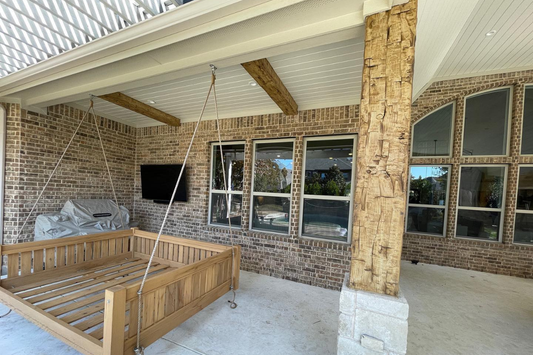
Adding beam accents here can transform the entry. A few well-placed decorative beams on the porch ceiling can make the entry feel grander and more substantial. It echoes the timber detailing often found on Craftsman homes. Sacramento exterior remodel ideas often neglect the "fifth wall" of the porch, but it’s the first thing guests see when they wait at your door.
Enhancing Gables Without Overbuilding
The gable ends of historic homes are prime real estate for detail. In many renovations, people want to add the decorative trusses or "gingerbread" that might have been stripped off in the 1950s.
However, hanging heavy wood accents on an old barge rafter is risky. It pulls on the roof overhang. Using architectural beam accents exterior elements made from lightweight material allows you to restore that visual richness without stressing the roofline. You can add the corbels, the knee braces, and the gable trusses that give preserving curb appeal historic homes their charm, knowing they are weather-resistant and won't drag the eaves down over time.
Designing a Historic Home Remodel That Ages Well
The danger with blending modern and historic is that "modern" changes fast. What looks cutting-edge today might look dated in ten years. Timeless Sacramento remodel ideas focus on materials and forms that age gracefully.
Choosing Finishes That Complement Original Materials
When choosing finishes, look at what the house is already made of. Historic Sacramento homes are built of redwood, brick, river stone, and plaster. Your new materials should speak that language.
Avoid shiny, plastic-looking composites. If you are adding beams, choose a texture that mimics the old-growth wood found elsewhere in the house. A rough-sawn or hand-hewn texture often blends better than a perfectly smooth, machine-planed look. Sacramento architectural preservation isn't about freezing the house in time, but about ensuring the new layers feel compatible with the old ones.
Avoiding Trend-Driven Overcorrection
We've all seen the "grey flip"—historic homes where every surface is painted grey, the floors are grey laminate, and the soul is gone. Avoid overcorrecting. Don't try to erase the history to make it look like a new model home.
Blending modern and historic architecture Sacramento style means embracing the quirks. Keep the weird little nook. Keep the stained glass window. Use Central Valley historic home renovation techniques to highlight these features, not hide them. If you add beams, make them look structural and necessary, not just pasted on. Authenticity is the ultimate timeless quality. If the renovation feels respectful, it will look good for decades.
Historic Home Remodel in Sacramento: Thoughtful Design Matters
Renovating a historic home in Sacramento is a stewardship. You are taking care of a piece of the city's fabric. Whether you are in a stately East Sac Tudor or a funky Midtown bungalow, the goal is the same: to create a home that works for today but remembers yesterday.
Historic home remodel Sacramento projects are most successful when they find that middle ground. It’s not about choosing between modern living and historic charm; it’s about weaving them together. By using tools like decorative beams Sacramento homes benefit from, you can bridge the gap. You can add the warmth and scale that historic architecture demands, while using modern materials that respect the structure and the budget.
Sacramento Victorian renovation ideas and Craftsman updates don't have to be rigid. There is room for creativity. There is room for modern addition historic homes California style. But it requires a thoughtful hand. It requires looking at the lines, the light, and the bones of the house. When you get it right, the result is magic. You get a home that feels established and rooted, yet fresh and ready for the next hundred years of life in the Valley.
If you're planning a remodel or new build, the details you choose will shape the entire space. Ceiling beams can either blend in or become a defining architectural feature depending on how they’re designed.
Browse our faux beam styles and finishes or reach out to our team to plan a design that fits your home and location.