

Authentic wood grain and texture

Lightweight construction

Long-lasting durability in all climates
Custom faux wood ceiling beams for Sacramento homes, vaulted ceilings, commercial interiors, and architectural renovations.
Quick answer: Faux wood beams are lightweight, high-density polyurethane structural replicas that provide the exact visual texture of solid wood without the heavy weight, structural strain, or high costs. Elite Ceiling Designs provides custom sizing, exact stain matching, and professional installation of faux wood ceiling beams for residential and commercial projects throughout the Sacramento area.
Faux wood beams offer an architectural solution for spaces lacking dimensional depth. Historically, adding heavy timber to an existing ceiling required structural engineering, specialized framing, and significant retrofitting. Today, polyurethane faux beams provide the same visual impact with vastly simplified logistics. These lightweight ceiling beams solve complex design challenges, allowing property owners to integrate realistic wood textures directly over drywall, plaster, or existing ceiling frameworks.
Understanding the technical and aesthetic variables of decorative ceiling beams ensures a successful architectural integration. Selecting the correct faux beam textures, calculating appropriate faux beam spacing, and choosing a finish that complements existing cabinetry and flooring requires precise planning. Elite Ceiling Designs specializes in bridging the gap between raw building materials and finished interior architecture. Read more in our comprehensive faux wood beam materials article.

Why Faux Wood Beams Continue To Grow In Popularity
The demand for faux wood ceiling beams stems from their ability to introduce architectural depth without requiring structural reconstruction. Modern interior design heavily favors open-concept homes and expansive vaulted ceilings, which can sometimes feel vast or sterile without overhead visual anchors. Polyurethane faux beams interrupt these large ceiling spans, adding necessary warmth and human-scale proportion.
A primary driver of this popularity is the lightweight installation process. Solid timber beams often weigh hundreds of pounds, requiring heavy lifting equipment and engineered load-bearing supports. In contrast, decorative ceiling beams typically weigh between one and three pounds per linear foot. This lightweight profile allows them to be mounted directly to standard ceiling joists using simple blocking techniques. View our detailed faux beam installation guide.
Flexibility in design application also contributes to their widespread use. Faux ceiling beams adapt seamlessly to modern, rustic, or farmhouse interiors based on the selected texture and finish. For commercial use, such as in restaurants or retail spaces in Sacramento, commercial faux beams provide a durable, cost-effective way to hide wiring, plumbing, or structural steel while elevating the interior aesthetic. They offer a high-impact design upgrade that avoids the permitting and engineering complexities associated with solid lumber. Explore our vaulted ceiling beam ideas page for more inspiration.
Faux Wood Beam Colors, Textures & Finish Options
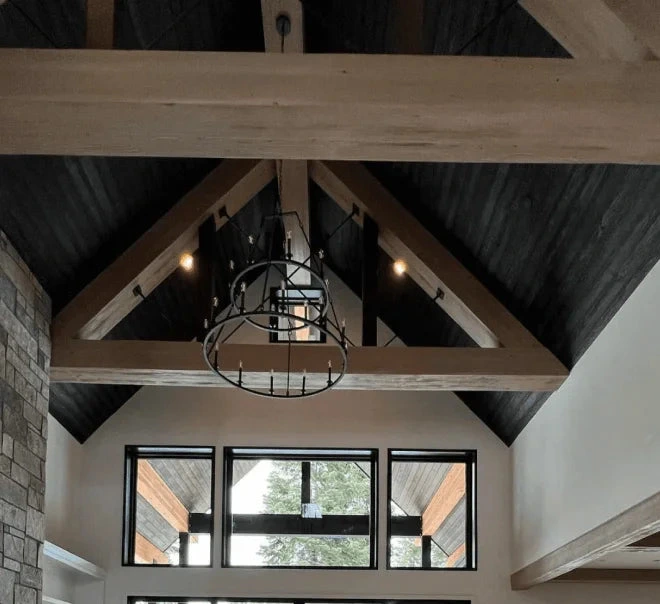
Selecting the right finish is critical to achieving a realistic wood grain appearance. High-quality faux wood beams are cast from molds taken directly from natural timber, capturing every knot, check, and grain variation. The manufacturing process ensures that the faux beam textures are visually indistinguishable from solid wood, even upon close inspection.
When specifying faux wood beam colors, balancing warm and cool tones against the existing room palette is essential. A space with cool gray flooring may require a specialized ash or driftwood finish, while a room with rich mahogany built-ins demands deep, warm tones. Elite Ceiling Designs provides custom beam color matching to ensure new ceiling elements align perfectly with existing cabinetry, flooring, and architectural trim. Learn more on our custom color matching page.
The finishing process involves applying multiple layers of stain and glaze to replicate the hand-finished appearance of aged timber. This layered approach prevents the flat, monochromatic look common in lower-quality alternatives. Whether the project calls for the sleek, refined finish of modern ceiling beams or the heavily distressed look of rustic ceiling beams, the color and texture must be tailored to the specific architectural environment. Explore our faux log textures.
Explore Our Beam Profile Types
Every beam starts with a profile — the shape that defines its character. Box beams are our most popular, and faux logs bring rustic warmth to the same lightweight construction. I-beam profiles have a page of their own, and you can also view all beam profiles.
Box Beam
Our most popular — versatile, lightweight, fits any style
Faux Log
Rustic warmth in Adobe, Santa Fe & Pueblo textures
Color Offering

Warm Gray

Nantucket

Oak Brown

Golden Pecan

Dark Natural

Natural Umber

Dark Pine

Russet

Greige

Navajo

Tahoe

Tobacco Leaf

Medium Walnut

Warm Pine

Coffee Bean

Dark Walnut

Drift Wood

Weathered Gray

Warm Natural

Gray Bark

Tan Bark

Fite Walnut

English Pub

New Black
Standard Textures

Traditional

Rough Sawn

Sedona

Axed

Rift Sawn

Mojave

Distressed
Custom Textures

Smooth

Reclaimed

Forest

Light Rustic

Raised Grain

Alt-Raised Grain

Sandblast

Knotty Pine

Windblown

Heavy Rustic

Old Rustic

Santa Fe

Beachwood
Popular Faux Beam Styles For Different Ceiling Designs
Choosing the correct beam style dictates the overall architectural narrative of the space. Different interior designs require specific beam profiles and textures to maintain visual authenticity.
Rustic Faux Wood Beams
Rustic ceiling beams feature deep graining, pronounced knots, and simulated checking (cracks). These beams replicate timber that has aged naturally over decades. They are frequently used in mountain-style homes, traditional lodges, and spaces where a heavy, rugged architectural presence is desired.
Farmhouse Ceiling Beams
Farmhouse ceiling beams bridge the gap between rustic and refined. They typically feature moderate distressing and are often finished in lighter, warmer tones or whitewashes. This style pairs exceptionally well with shiplap ceilings and open, airy living spaces, providing character without overpowering the room's natural light.
Modern Faux Beam Designs
Modern ceiling beams utilize clean lines, minimal graining, and crisp edges. These beams are cast to mimic freshly milled, high-grade lumber. Often finished in rich ebony, clear walnut, or stark white, modern beams provide linear architectural structure to contemporary spaces without introducing unwanted rustic textures.
Hand-Hewn Beam Textures
Hand-hewn beam textures replicate the distinct axe marks and irregular surfaces of timber shaped by early construction methods. This highly textured style brings significant historical character to a room, making it ideal for historic renovations or spaces leaning heavily into vintage aesthetics.
Box Beam Layouts
Box beam layouts involve installing faux beams in a grid or coffered pattern rather than simple parallel lines. This application requires precise faux beam spacing and specialized intersection joinery. Box beam layouts add profound architectural formality to dining rooms, executive offices, and upscale commercial environments.
Vaulted Ceiling Beam Layouts
Installing beams on a sloped surface requires a deep understanding of scale and geometry. Vaulted ceiling beams often include a central ridge beam with intersecting rafter beams cascading down the ceiling pitch. This layout dramatically enhances the structural illusion of the space. See our vaulted ceiling ideas article for layout configurations.
Faux Wood Beams vs Real Wood Beams
Choosing between polyurethane faux beams and solid timber involves evaluating weight, cost, and long-term maintenance.
| Feature | Faux Wood | Real Wood |
|---|---|---|
| Weight | Lightweight | Very heavy |
| Installation | Easier | Structural support often required |
| Maintenance | Low | Higher |
| Moisture Resistance | Strong | Can warp/crack |
| Cost | Lower overall | Higher |
| Beam Length Options | Flexible | Depends on lumber |
| Ceiling Compatibility | Easier retrofit | More limitations |
| Appearance | Highly realistic | Natural wood |
The practical implications of these differences are substantial. Real wood beams require an underlying structure capable of supporting massive dead loads. Retrofitting solid wood into an existing home often means opening the ceiling, sistering joists, and involving a structural engineer. Real wood is also susceptible to environmental changes, meaning it can warp, twist, or crack as it dries and responds to interior humidity.
Faux wood beams bypass these structural limitations. Because they are lightweight, they can be installed directly over existing drywall using basic structural blocking. Polyurethane is inert, meaning faux beams vs real wood comparisons strongly favor faux options in environments with fluctuating temperatures or humidity. The lower overall cost of materials, combined with drastically reduced labor and engineering expenses, makes faux beams the superior choice for ceiling design retrofits.
Where Faux Wood Ceiling Beams Work Best
Faux wood ceiling beams enhance nearly any space, provided the ceiling height and room proportions can accommodate the visual weight.
Living Rooms
Living rooms serve as the central gathering space of a home. Adding ceiling beam designs here creates an immediate focal point, lowering the perceived ceiling height just enough to make a large room feel intimate and inviting.
Kitchens
Kitchens benefit greatly from the warmth of wood textures, which contrast beautifully with hard stone countertops and metal appliances. Farmhouse ceiling beams are particularly popular in kitchens, often running parallel to kitchen islands to reinforce the room's linear flow.
Great Rooms
Great rooms, which combine living, dining, and kitchen areas into one expansive space, rely on ceiling details for zoning. Faux beams can visually separate a dining area from a living area without the need for interior walls, maintaining the open-concept feel while establishing distinct functional zones.
Vaulted Ceilings
Vaulted and cathedral ceilings can feel cavernous and uninviting. Adding vaulted ceiling beams breaks up the expansive drywall, providing scale and directing the eye upward to appreciate the architectural volume of the space.
Commercial Interiors
For restaurants, retail stores, and corporate offices, commercial faux beams offer dual functionality. Aesthetically, they establish brand atmosphere and elevate the interior design. Practically, hollow faux beams are frequently used to conceal HVAC ductwork, electrical conduit, and plumbing lines that would otherwise be exposed.
Outdoor Covered Spaces
High-quality polyurethane faux beams are highly resistant to moisture, rot, and insects, making them excellent choices for outdoor covered spaces. Patios, loggias, and covered entryways benefit from the look of heavy timber without the severe weathering and maintenance issues associated with real wood exposed to the elements.

How Faux Wood Ceiling Beams Are Installed
The faux wood beam installation process is engineered for efficiency. Because the material is exceptionally lightweight, heavy lifting equipment is unnecessary.
The installation relies on solid wood mounting blocks (or continuous cleats) secured directly into the existing ceiling joists. The hollow structure of the faux beam is then slipped over these mounting blocks. Once in place, the beam is secured to the blocking using screws driven through the sides of the polyurethane material. This hollow interior also provides a convenient channel for running wiring for pendant lights or recessed fixtures. This retrofit advantage allows for rapid installation with minimal disruption to the home. Review the complete process on our faux beam installation guide.
Choosing The Right Beam Size & Spacing
Selecting the correct beam proportions is critical; oversized beam mistakes can make a ceiling feel oppressively low, while undersized beams look insignificant.
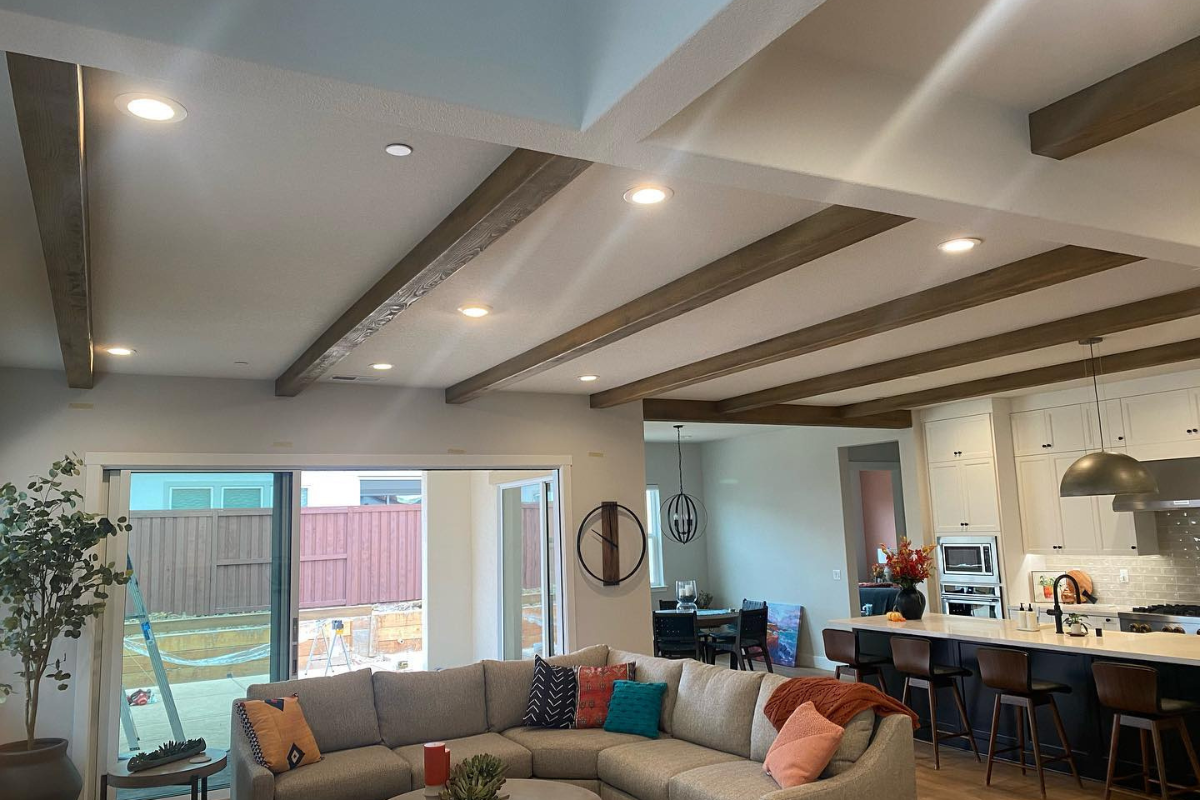
Ceiling height dictates beam thickness. Standard 8-foot or 9-foot ceilings typically require shallower beams (4 to 6 inches in depth) to preserve headroom and visual space. Conversely, a 20-foot vaulted ceiling demands massive beam profiles (10 to 12 inches or more in depth) to prevent the beams from looking like fragile trim work. Scaling the beam to the architectural volume is non-negotiable for a professional finish.
Faux beam spacing determines the visual balance of the ceiling. Beams placed too closely together clutter the ceiling and darken the room, while beams placed too far apart fail to create a cohesive design. Standard spacing typically ranges from 3 to 5 feet apart, depending on the room's width and the alignment of existing windows, fireplaces, or lighting fixtures. Proper layout planning ensures the ceiling grid feels intentional and architecturally sound.
Custom Faux Beam Color Matching In Sacramento
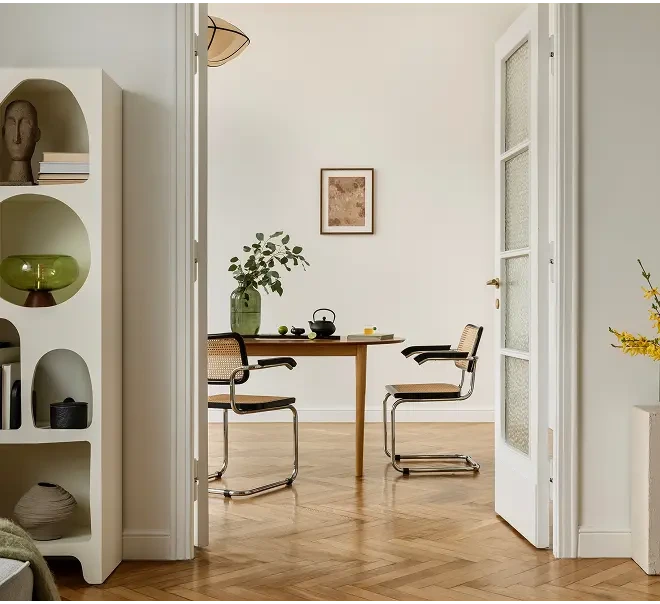
Integrating new architectural elements requires precise attention to existing finishes. Elite Ceiling Designs provides custom faux beam color matching specifically tailored for Sacramento homes and commercial projects.
Off-the-shelf faux beams often clash with existing interior elements. Our local fabrication and finishing process ensures your new beams coordinate flawlessly with your existing cabinetry matching and flooring tones. We utilize advanced stain blending techniques to adjust the warmth, depth, and sheen of the polyurethane finish. Whether you are integrating beams into a historic East Sacramento remodel or matching commercial design specifications for a new restaurant in Midtown, our custom finish requests ensure a seamless architectural transition. Visit our color matching page for details on our custom finish process.

Sacramento & Surrounding Service Areas
Elite Ceiling Designs proudly serves the greater Sacramento region, providing expert consultation, custom fabrication, and professional installation of faux wood beams.
We understand the local architecture, from modern builds in El Dorado Hills to historic renovations in Land Park. Our team conducts on-site evaluations to assess your ceiling structure, take precise measurements, and provide physical color samples. We manage the entire process locally, ensuring rapid turnaround times, clear communication, and a flawless final installation that elevates your property's value and aesthetic. View our gallery page to see completed local projects.
Ready To Plan Your Faux Beam Project?
Transforming your space with architectural faux wood beams requires precise planning and expert execution. Elite Ceiling Designs provides end-to-end service, from initial design consultation to custom stain matching and professional installation. Contact us today to discuss your ceiling dimensions, request a design consultation, and receive a comprehensive project estimate. Visit our contact page to get started.
Frequently Asked Questions About Faux Wood Beams
Serving Sacramento & Surrounding Areas
We are proud to bring our architectural design services to communities across the Greater Sacramento area, including Northern California, Southern California through our partners, Reno and surrounding areas, and Phoenix, Arizona.

Sacramento
Elk Grove
Roseville

Folsom
Rocklin
El Dorado Hills
Ask Us Today About Faux Beams Services in Sacramento
Ready to add the perfect finish to your project? Contact our team to discuss your color matching needs and request samples of our work.