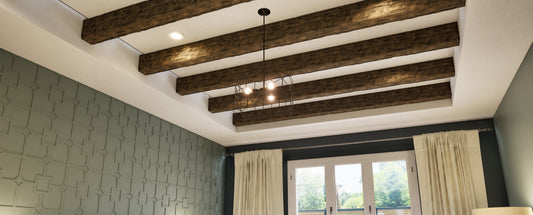
What Are Faux Wood Beams Made Of? Materials & Construction
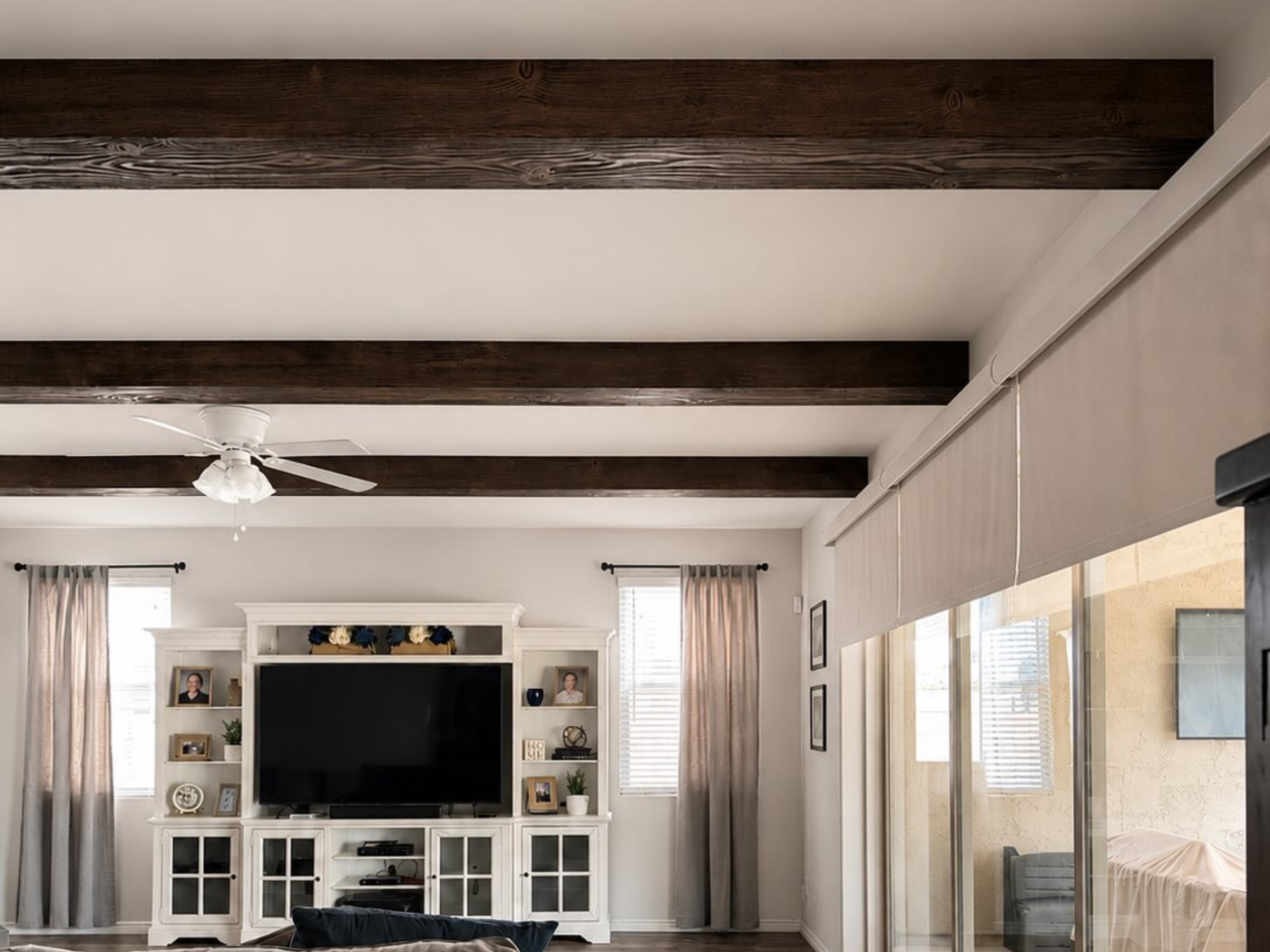
Quick answer: Faux wood beams are predominantly made from high-density polyurethane foam injected into specialized molds cast from natural timber. This manufacturing process creates a lightweight, hollow architectural element that perfectly replicates deep wood grain texture while remaining highly resistant to moisture, warping, cracking, and insect damage.
Not all faux wood beams are manufactured to the same standard. Material quality directly affects the architectural appearance, physical durability, installation requirements, and overall lifespan of the product. Understanding the exact construction of these materials is a critical step before specifying them for a residential or commercial project.
Evaluating decorative ceiling beam materials requires looking past the surface. Two beams that look identical in a photograph can behave entirely differently on a job site. A low-grade foam beam will easily dent during transit and may fade rapidly, while a commercial-grade polyurethane beam will withstand impact and retain its finish for decades. Understanding exactly how faux beam manufacturing works enables buyers to distinguish between entry-level decor products and architectural-grade materials.
What Materials Are Faux Wood Beams Made From?
The architectural foam products industry relies on specific chemical compositions to achieve realistic textures and structural stability. While early iterations of faux ceiling treatments utilized a variety of plastics, modern production has heavily consolidated around one specific material. View our beam profiles and styles.
High-Density Polyurethane Foam
High-density polyurethane is a closed-cell polymer. In the context of faux wood beams, polyurethane begins as a two-part liquid compound—a polyol and an isocyanate. When mixed, these chemicals undergo a rapid exothermic reaction, expanding to fill a predefined mold. Because it is a closed-cell material, the resulting foam is highly water-resistant, structurally rigid, and capable of capturing microscopic surface details. This material forms the core structure of the highest quality faux wood beams on the market.
Why Polyurethane Became the Industry Standard
Polyurethane replaced older plastics because it perfectly balances weight and rigidity. A standard high-density polyurethane beam weighs a fraction of what a solid wood beam weighs, yet it maintains enough structural integrity to hold its shape across long spans without sagging. Furthermore, polyurethane does not expand and contract with temperature and humidity fluctuations the way natural timber does. This dimensional stability prevents the material from cracking drywall or shifting out of alignment after installation.
How Faux Beams Differ From MDF, Fiberglass, and Hollow Wood Wraps
Buyers frequently confuse polyurethane faux beams with other hollow beam systems. Medium-density fiberboard (MDF) beams are heavy, highly susceptible to moisture damage, and typically lack realistic grain textures. Fiberglass beams offer excellent durability but are exceptionally brittle, difficult to cut on site, and produce hazardous dust during installation. Hollow wood wraps (often constructed by gluing thin veneers or reclaimed planks together into a box) utilize real wood but suffer from the same vulnerabilities as solid timber, including weight, potential insect damage, and the tendency to warp or split at the seams over time. Choose high-density polyurethane if long-term dimensional stability and moisture resistance matter more than having authentic wood cellular structure.
How Faux Wood Beams Are Manufactured
The faux wood beam manufacturing process dictates the realism and quality of the final product. Architectural-grade manufacturers employ a meticulous molding and curing sequence to ensure consistency. Browse our faux log textures.
Creating the Beam Mold and Wood Grain Texture
The manufacturing process begins with a real piece of timber. Manufacturers select heavily weathered, hand-hewn, or rough-sawn wood to serve as the master template. A thick layer of specialized silicone or latex is poured over this master timber to create a negative mold. This silicone perfectly captures every tool mark, grain line, and knot present in the original wood. The quality of this initial mold directly limits the texture quality of the final polyurethane faux beam.
Foam Injection and Curing Process
Once the mold is prepared and coated with a specialized barrier or release agent, the two-part liquid polyurethane is injected into the cavity. As the chemical reaction occurs, the foam expands violently, pushing outward against the silicone mold with significant pressure. This pressure forces the polyurethane into the microscopic crevices of the wood grain texture. The material is then left to cure. Proper curing time is essential; rushing this process can result in a beam that warps or shrinks after it leaves the factory.
How Hollow Beam Construction Works
Most faux wood beams are manufactured as hollow, U-shaped channels rather than solid blocks of foam. During the expansion phase, a rigid inner core or top plate is utilized to displace the expanding foam, forcing it against the outer walls of the mold. This hollow faux beam construction serves multiple purposes. It drastically reduces the overall weight of the product, makes the beam easier to handle, and creates a functional internal cavity. Installers utilize this hollow channel to conceal structural supports, electrical wiring, plumbing lines, or HVAC conduits.
Surface Finishing and Staining
The final step in faux wood beam manufacturing is surface finishing. Because raw polyurethane does not accept standard wood stains in the same manner as porous timber, manufacturers use specialized water-based or acrylic finishing systems. The barrier coat applied during the molding process bonds mechanically with the polyurethane, creating a paintable surface. Premium manufacturers apply stains by hand, layering different base coats and glazes to replicate the complex color variations found in aged wood.
Why Beam Density Matters
Not all polyurethane is identical. The density of the foam—measured by how much the raw material weighs per cubic foot—is a primary indicator of beam quality.
Low-density foam, similar in consistency to packaging styrofoam, is highly problematic for architectural applications. It dents easily upon impact, feels fragile to the touch, and lacks the structural rigidity necessary to span long ceiling distances without sagging. Furthermore, low-density foam struggles to hold sharp, deep surface details during the molding process.
High-density polyurethane foam behaves much like soft pine wood. It is rigid, dense, and requires standard woodworking tools (like a handsaw or circular saw) to cut. High-density faux wood beams will not sag under their own weight. The increased density allows the beam to withstand minor impacts from ladders or furniture during installation. Most importantly, high-density foam tightly compresses against the mold, resulting in a flawless transfer of wood grain detail and a finish quality that mimics actual timber.
What Makes Some Faux Wood Beams Look More Realistic Than Others?
When evaluating decorative ceiling beam materials, realism is heavily dependent on specific manufacturing tolerances and finishing techniques.
Wood Grain Depth and Texture Quality
Realistic faux wood beams possess deep, aggressive textures. If the mold is created from a smooth piece of lumber, or if the foam density is too low to capture the detail, the resulting beam will look plastic and artificial. High-quality beams feature undercut grain lines, distinct knots, and varied surface elevations that interact naturally with room lighting.
Hand-Finished vs Mass Production Finishes
The application of the stain separates premium architectural products from mass-produced alternatives. Mass-produced beams are often sprayed with a single, uniform color via automated machinery. This results in a flat, monochromatic appearance. Hand-finished polyurethane faux beams feature a base color overlaid with darker glazes that settle into the recessed grain lines, accurately mimicking the oxidation and aging process of natural wood.
Beam Dimensions and Proportions
Real timber has distinct proportions based on how trees grow and how historical mills cut lumber. Faux beams that are perfectly square or possess completely uniform edges often look fake to the trained eye. High-quality molds are taken from timbers with slight irregularities, tapered edges, and organic dimensional variations.
Seam Visibility and Edge Quality
Because faux wood beams are typically cast in a U-shape, the quality of the edges matters significantly. Cheaply manufactured beams often have thick, highly visible mold lines or "flash" where the polyurethane leaked past the mold constraints. Premium manufacturers trim, sand, and finish these edges so that the beam looks like a solid piece of timber from any viewing angle.
Are Faux Wood Beams Durable?
Durability is a major factor driving the adoption of molded polyurethane beams in commercial and residential construction. High-density polyurethane offers distinct physical advantages over natural wood.
Because it is a closed-cell polymer, polyurethane provides total moisture resistance. It will not absorb ambient humidity, meaning it will never rot, swell, or cultivate mold. This makes it an ideal specification for high-moisture environments like bathrooms or indoor pool enclosures. Additionally, faux wood beams are impervious to wood-boring insects such as termites or carpenter ants.
Regarding environmental stability, polyurethane does not suffer from cracking or warping over time. Real wood continually releases and absorbs moisture, twisting and splitting as it ages. Polyurethane remains dimensionally static. For indoor/outdoor covered applications, such as patio ceilings or deep soffits, polyurethane beams treated with UV-resistant topcoats offer exceptional longevity without the constant maintenance required by natural timber.
What To Check Before Buying Faux Wood Beams
Architects, builders, and property owners should evaluate specific manufacturing criteria before purchasing faux wood beams to ensure successful installation and long-term performance.
Beam Weight and Installation Requirements
Verify the weight per linear foot. While high-density polyurethane is lightweight compared to wood, it should still have enough mass to feel structurally sound. The weight directly impacts the installation requirements. Most hollow polyurethane beams require a solid wood blocking system (usually a 2x4 or 2x6) securely fastened to the ceiling joists, over which the U-shaped beam is sleeved and screwed into place.
Material Thickness and Rigidity
Inspect the wall thickness of the hollow beam. The sidewalls should be consistently thick (typically around one inch) throughout the entire length of the beam. Thin sidewalls indicate poor manufacturing control and will result in a beam that bows, flexes, or easily punctures.
Finish Consistency
Evaluate the finish consistency across multiple beams. While some variation is necessary to mimic natural wood, poor quality control can result in clashing undertones or drastically different sheen levels from one beam to the next. Request physical samples to verify the stain quality under your specific job site lighting.
Custom Sizing and Length Availability
Check the maximum length available from the manufacturer. Seaming two short beams together on a ceiling requires skill and often leaves a visible joint. Premium manufacturers offer molded polyurethane beams in continuous lengths of up to 24 feet or more, allowing for seamless installations across large rooms.
Outdoor Compatibility
If specifying beams for an exterior application, confirm that the manufacturer uses a UV-stable barrier coat and exterior-grade stains. Standard interior polyurethane finishes will chalk, fade, and degrade rapidly when exposed to direct sunlight.
Faux Wood Beams vs Real Wood Construction
When comparing faux beams vs real wood construction, the primary distinctions lie in structural weight and material behavior. A 20-foot solid oak timber requires structural engineering, heavy lifting equipment, and specialized support brackets built directly into the framing of the structure. A high-density polyurethane beam of the exact same dimensions can be lifted by two workers and installed onto standard drywall using simple wood blocking and basic fasteners.
Furthermore, material behavior post-installation differs drastically. Real wood is a dynamic material; as it dries, it exerts massive rotational force, which can pop drywall seams or twist supporting hardware. High-density polyurethane is entirely inert. Once installed, it exerts no changing physical forces on the surrounding architecture, streamlining the installation process and virtually eliminating callback repairs.
Frequently Asked Questions
Are faux wood beams solid or hollow?
Faux wood beams are almost exclusively manufactured as hollow, U-shaped channels. This hollow construction reduces the overall weight of the product, allows for easy installation over solid wood blocking, and provides an internal cavity for hiding electrical wires or plumbing lines.
What is high-density polyurethane?
High-density polyurethane is a rigid, closed-cell polymer foam. In manufacturing, it is created by mixing two chemical components that expand into a mold. The "high-density" classification means the foam is structurally rigid, impact-resistant, and capable of holding deep, realistic surface details.
Do faux wood beams crack over time?
No. Unlike natural timber, which constantly absorbs and releases moisture, high-density polyurethane is a dimensionally stable, closed-cell material. It does not expand, contract, warp, or crack due to age or environmental humidity changes.
Can faux beams be cut on site?
Yes. High-density polyurethane behaves similarly to soft pine wood. Installers can easily cut, miter, or cope faux wood beams on the job site using standard woodworking tools such as a handsaw, circular saw, or miter saw.
Are all faux wood beams made the same way?
No. While high-quality beams are injection-molded using high-density polyurethane in custom silicone molds, cheaper alternatives may use low-density styrofoam, brittle fiberglass, or heavy MDF panels. Material density and mold quality drastically change the durability and appearance of the beam.
How can you tell if a faux beam is high quality?
High-quality faux wood beams feature thick, consistent sidewalls, realistic undercut wood grain, and hand-applied, multi-layered stains. They will feel rigid to the touch, resist easy denting, and lack highly visible manufacturing seams along the edges.
Request a Quote
If your upcoming architectural or commercial project requires high-density polyurethane faux wood beams, contact our manufacturing team directly. Elite Ceiling Designs provides accurate material specifications, custom sizing availability, and detailed pricing tailored to your specific construction requirements. Request a quote today to speak with our product specialists.