How to Protect Your Architectural Features in Coastal Climates

If you live along the California coast, you know the environment is beautiful but unforgiving. Whether you are overlooking the Pacific in Half Moon Bay or enjoying the ocean breeze in San Clemente, the elements are constantly at work on your home’s exterior. Salt air, heavy fog, and intense UV exposure create a unique set of challenges that most building materials struggle to withstand.
For homeowners investing in high-quality architectural details, this raises a serious question: how do you keep your home looking its best without spending every weekend on maintenance? The answer lies in understanding what the coast actually does to building materials and choosing products designed to handle it.
Coastal Homes Face a Different Kind of Wear and Tear
Living near the ocean isn’t just about the view; it’s about managing a microclimate that attacks your home from every angle. In inland Sacramento or Phoenix, the primary enemy is usually the sun and heat. But coastal properties—especially those in the Bay Area and Southern California—face a complex cocktail of moisture and salinity.
Coastal home exterior protection starts with acknowledging that standard maintenance schedules don't apply here. A wood beam that might last twenty years in a dry climate can start showing signs of distress in five years or less on the coast.
The "marine layer" is a romantic term for what is essentially a wet, salty blanket that covers your home almost every morning. This moisture clings to surfaces, seeps into cracks, and carries corrosive salt deep into porous materials. If your architectural features aren't built to resist this, you are fighting a losing battle against nature.
Why Salt Air Is Harder on Exterior Beams Than Most Homeowners Realize
We often think of salt damage as something that happens to metal—rust on a bike chain or corrosion on a car. But salt air is incredibly destructive to wood and concrete as well. When we inspect salt air damage exterior beams on older coastal homes, the deterioration is often much deeper than the surface.
How Salt Accelerates Surface Breakdown
Salt crystals are hygroscopic, meaning they attract and hold water. When salt spray or salty fog lands on a wood beam, it doesn't just dry up and blow away. The salt stays behind, pulling more moisture from the air and keeping the surface of the wood damp for longer periods.
This creates the perfect environment for breakdown. The salt physically degrades the wood fibers (a phenomenon known as "defibration"), making the surface fuzzy and soft. It also attacks finishes. Paint peels faster, and stains fade more quickly because the salt breaks the chemical bond between the coating and the substrate.
The Compounding Effect of Moisture and Wind Exposure
The coast is rarely still. You have wind driving this salty moisture into every joint and seam of your home’s exterior. This pressure forces water deeper into the architectural elements than simple rain ever would.
For porous materials like natural timber or cast stone, this is a major problem. As the moisture gets in and then evaporates, the salt crystals left behind expand. Over time, this cycle of crystallization pushes the material apart from the inside out. In wood, this looks like deep checking and splitting. In concrete or stone, it manifests as spalling or flaking.
Moisture, Fog, and Humidity: The Slow Damage You Don’t See
In the Bay Area, fog is a daily reality. This constant high humidity means that exterior materials rarely get a chance to fully dry out. Wood needs to breathe, but when the air is saturated, the moisture content of the timber stabilizes at a high level.
This constant dampness is the enemy of longevity. Moisture resistant architectural materials aren't just a "nice to have" in these zones—they are essential for preventing structural rot and aesthetic failure.
Why Traditional Wood Expands, Cracks, and Eventually Fails
Wood is an organic material. It reacts to its environment. When it absorbs moisture from the heavy coastal fog, it swells. When the sun finally breaks through and heats up the surface, the wood shrinks.
On the coast, this cycle happens almost daily. Swelling in the morning, shrinking in the afternoon. This constant movement puts immense stress on the wood fibers. Eventually, the wood gives up. It cracks, twists, and warps.
Once a crack opens up, it’s an open door for rot fungi and termites. In a humid coastal environment, dry rot can take hold surprisingly fast, turning a solid beam into a hollow shell in just a few seasons.
The Hidden Cost of Constant Sealing and Re-Staining
To combat this, most homeowners resort to aggressive maintenance. You sand. You seal. You paint. And then, two years later, you do it all again.
The cost of this maintenance adds up. Scaffolding, specialized marine-grade sealants, and labor aren't cheap. But more than the money, it’s the hassle. You didn’t buy a beautiful coastal home to spend your free time managing fog exposure exterior materials and chasing rust spots.
We talk to clients all the time who love the look of natural wood but hate the "wood tax"—the ongoing payment of time and money required to keep it from rotting off the side of their house.
Choosing Architectural Materials That Perform in Coastal Conditions
The solution isn't to stop using architectural details. It’s to use materials that are engineered for the environment they live in. In the last 18 years, we’ve seen a shift in how builders approach coastal construction materials Bay Area projects. There is a move away from organic materials that degrade and toward synthetic materials that endure.
What to Look for in Moisture-Resistant Architectural Materials
When selecting features for a coastal exterior, you need materials that are:
-
Non-porous: They shouldn't absorb water or salt.
-
Dimensionally stable: They shouldn't swell or shrink with humidity changes.
-
Inert: They shouldn't provide food for termites or fungi.
This is where modern manufacturing shines. We can create architectural elements that look identical to distressed timber or hewn stone but possess none of the biological weaknesses.
Why Reduced Maintenance Matters Near the Ocean
If you live in a coastal zone, you know that everything degrades faster. Your outdoor furniture, your grill, your window screens. By choosing low-maintenance architectural features, you are removing one major item from your worry list.
Weather resistant exterior beams made from high-density polyurethane don’t need to be sealed every year. They don't need to be checked for rot. You install them, and they stay there, looking exactly how you intended, while you enjoy the sunset.
How Exterior Beams Can Withstand Salt Air Without Constant Maintenance
At Elite Ceiling Designs, we specialize in high-density polyurethane foam products. To the naked eye—and even to the touch—they mimic the texture and grain of real wood. But chemically, they are completely different. This difference is what makes them the superior choice for exterior beams coastal homes.
Why High-Density Polyurethane Doesn’t Absorb Moisture
Polyurethane is a closed-cell material. Imagine millions of tiny, sealed bubbles packed incredibly tight together. Because the cells are closed, water cannot migrate through the material.
Salt spray can land on an Elite Ceiling Designs beam, and it will sit on the surface until the rain washes it off. It will never soak in. It will never cause the material to swell. It will never cause the interior to rot.
This impermeability makes foam exterior beams California coast applications incredibly successful. Whether it's a foggy morning in Daly City or a salty afternoon in Malibu, the beam remains unaffected.
Maintaining the Look of Real Wood Without the Upkeep
The biggest hesitation we hear from designers is, "Will it look fake?" We understand that fear. In the past, faux products looked like plastic.
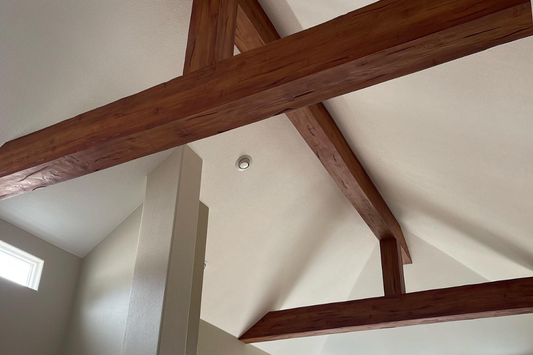
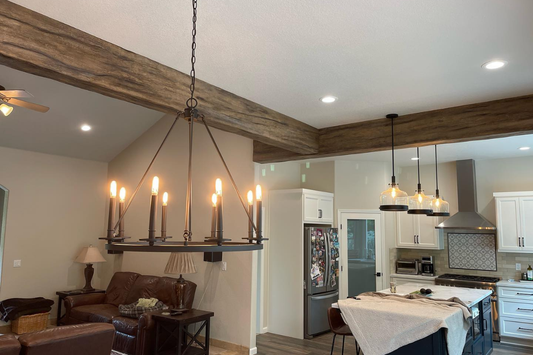
We’ve spent nearly two decades perfecting our molds. We cast our Exterior Beams from actual reclaimed timber. Every knot, every grain line, every check and split is captured in the mold. When we apply our multi-step finishing process, the result is indistinguishable from natural wood from even a foot away.
You get the rich, warm aesthetic of a heavy timber truss or a driftwood-style corbel, but you get the durability of a marine-grade product. It’s the perfect compromise for the coastal homeowner who refuses to sacrifice style for durability.
Coastal Protection Strategies for Bay Area & SoCal Homes
California is a massive state with distinct coastal zones. While the ocean is the common denominator, the specific challenges vary depending on where you are.
Northern California Fog vs. Southern California Sun Exposure
In the Bay Area coastal homes materials conversation, fog is the headline. In places like Pacifica, San Francisco, and Marin, the moisture never really leaves. Here, rot resistance is the priority. You need materials that can stay damp without decaying.
Move down to Southern California coastal architecture—Santa Barbara, Newport Beach, San Diego—and the equation shifts. You still have salt and moisture, but you also have intense, relentless sun.
UV radiation breaks down everything. It bleaches wood, cracks varnish, and chalks paint. High-quality polyurethane is inherently more stable under UV exposure than wood, especially when coated with premium, UV-resistant finishes. It doesn't dry out and crack like timber does under the harsh SoCal sun.
Designing for Longevity Without Compromising Style
Whether you are restoring a Victorian in San Francisco or building a modern masterpiece in La Jolla, the goal is the same: longevity.
We work with architects who are designing specifically for these microclimates. They are using our products to create deep overhangs, decorative trusses, and trellis tails that define the architectural style of the region.
If you are renovating in the north, check out our Bay Area service page to see examples of how local homeowners are beating the fog. For those further south, our Southern California projects showcase how our beams stand up to the sun and surf.
Installation and Detailing: The Overlooked Coastal Durability Factor
Even the best material in the world will fail if it is installed poorly. In a coastal environment, the details of the installation matter twice as much. Water will find a way in. Your installation strategy must be about managing that water.
Proper Sealing and Anchoring in High-Moisture Environments
When we install beams in coastal zones, we pay obsessive attention to the connection points. Where a beam meets the stucco or siding is a critical junction. If water gets behind the beam, it can get trapped against the wall, causing mold or rot in the underlying structure.
Coastal beam installation best practices involve using high-grade, marine-compatible sealants at every joint. We ensure that the top edges of any horizontal elements are flashed or sloped to shed water, rather than letting it pool.
Because our beams are lightweight, they don't require heavy steel brackets that penetrate the waterproofing membrane of the house. We can anchor them securely to surface blocking, minimizing the number of holes we put in your exterior envelope. Fewer holes mean fewer places for water to leak in.
Why Professional Installation Reduces Long-Term Risk
While our products are DIY-friendly for interiors, exterior coastal installation is a job for pros. You need to know which adhesives work in high humidity. You need to know how to seal a miter joint so that salt air doesn't work its way inside.
Our installation teams understand coastal construction detailing. We know that a bead of caulk isn't just aesthetic; it’s the primary line of defense against the marine layer. By having your features installed by experts, you are insuring your investment against the inevitable moisture intrusion that plagues coastal homes.
Protecting Your Architectural Investment for the Long Term
Your home is likely your biggest investment. The architectural details—the corbels, the rafter tails, the beams—are what give it character and value. Letting them rot away due to salt exposure isn't just an aesthetic loss; it's a financial one.
Coastal home exterior longevity requires a proactive mindset. It requires acknowledging that wood and salt are natural enemies. By choosing materials that are immune to salt, moisture, and rot, you are breaking the cycle of constant repair.
You don't have to watch your beautiful exterior slowly degrade. You don't have to budget thousands of dollars every few years for scaffolding and staining.
With Elite Ceiling Designs, you can have the rustic charm of a beach cottage or the grandeur of a seaside estate without the headache. Durable architectural features ocean climate demands are available, and they look better than ever.
Salt and moisture are constant. They work 24 hours a day, 365 days a year. Your exterior materials should be working just as hard. Choose high-density polyurethane, and give your home the protection it deserves against the beautiful, brutal California coast.
Covering or upgrading a ceiling beam is one of those projects where the right material makes all the difference. If you want something that looks like real wood without the weight, maintenance, or installation complexity, foam beams are usually the most practical option.
You can request a custom quote for your project or contact our team . to talk through your space and get a clear direction before you start.