Designing for Coastal and Desert Living in Southern California

Southern California is often viewed by outsiders as a single, sunny paradise. But those of us living here know the reality is far more complex. The architectural needs of a home sitting on a bluff in Laguna Beach are vastly different from one nestled against the San Jacinto Mountains in Palm Springs. While the sun is a constant factor in both, the specific environmental challenges—salt air versus dry heat, marine layers versus thermal radiation—dictate very different design strategies.
Creating a home that feels authentic to its location requires more than just picking a style. It requires an understanding of the microclimate. A Southern California home design guide isn't about applying a "one size fits all" Mediterranean look across the region. It is about nuance. It’s about knowing why a deep overhang is critical in the desert but might block welcome light on the coast. It’s about choosing materials that can survive salt spray in Malibu or triple-digit heat in La Quinta without needing constant repair.
At Elite Ceiling Designs, we have spent nearly two decades helping homeowners and builders navigate these differences. We’ve seen firsthand how the right architectural choices can elevate a home, making it not just beautiful, but resilient. Whether you are building a coastal retreat or a desert oasis, the principles of good design remain the same: respect the environment, and the environment will respect your home.
One Region, Two Very Different Environments
The distance between the coast and the desert in Southern California can be driven in under two hours, yet the shift in atmosphere is total. You go from 68 degrees and humid to 105 degrees and arid. This proximity creates a unique design landscape where coastal vs desert architecture often borrows from each other, sometimes successfully, sometimes not.
In the coastal communities of Orange County, San Diego, and Los Angeles, the ocean is the dominant force. The air is heavy with moisture and salt. Metal rusts quickly. Wood swells and grays. The light is often diffused by morning fog. Design here focuses on capturing views and managing moisture.
Inland, specifically in the Coachella Valley and the high desert, the sun is the antagonist. The air is dry enough to crack solid timber. The light is harsh and direct. SoCal custom home design in these areas is about shelter. It is about creating shadows and cool pockets of air. While a coastal home opens up to the elements to let the breeze in, a desert home often turns inward or uses deep shaded patios to create a buffer against the heat. Understanding these fundamental differences is the first step in successful Southern California architectural styles.
Coastal Architecture: Light, Airy, and Built for Marine Exposure
Coastal architecture in Southern California has evolved from small beach cottages to sophisticated, luxury estates. Whether it’s a modern glass box in Malibu or a Cape Cod-inspired build in Newport Beach, the goal is always the same: connection to the water.
Coastal Southern California architecture prioritizes transparency. Walls disappear to merge indoor living spaces with outdoor decks. The color palette mimics the environment—sand, white, soft blues, and greys. But achieving this effortless look requires rigorous material selection.
Open Layouts and Expansive Glass
The defining feature of beach house design SoCal style is the "great room" that spills onto a terrace. Structural steel and advanced glazing allow for massive sliding doors that vanish into pockets. This openness is wonderful for lifestyle, but it exposes the interior materials to the same harsh conditions as the exterior.
Flooring, trim, and ceiling details near these openings must be durable. If you run wood beams from the living room out to the patio soffit to create visual continuity, that material transition is a critical failure point. Real wood will behave differently on the conditioned interior side versus the damp exterior side, eventually causing the finish to mismatch or the joint to separate.
Materials That Handle Salt Air and Sun
The marine environment is corrosive. Salt spray accelerates oxidation on metals and breaks down the lignin in wood. Coastal exterior materials California builders rely on must be non-reactive.
Stainless steel (specifically 316 grade) is standard for hardware. For cladding and architectural details, there is a move away from organic materials that rot. Fiber cement, cellular PVC, and high-density polyurethane are becoming the standards for trim, siding, and beams. Oceanfront home architectural details like corbels or rafter tails made from wood will inevitably rot if not constantly maintained. Using synthetic alternatives allows homeowners to keep the classic aesthetic of white-painted eaves or stained timber accents without the constant cycle of scraping and repainting that salt air usually demands.
Desert Architecture: Clean Lines and Heat-Conscious Design
Drive east on the 10 freeway, and the architecture changes. Roofs get flatter. Overhangs get deeper. The colors shift to earthy ochres, desert sage, and stark whites. Desert modern architecture California style, popularized in Palm Springs in the mid-century, is a masterclass in living with heat.
The desert demands a defensive architecture. The beauty here comes from the interplay of light and shadow on simple geometric forms. It is less about ornament and more about mass and void.
Deep Overhangs and Courtyard Layouts
In the desert, shade is luxury. Palm Springs home design often features rooflines that extend six, eight, or even ten feet beyond the glass line. This prevents direct sunlight from hitting the windows during the hottest part of the day, reducing solar heat gain significantly.
These deep overhangs require structural support. Visually, they need to look capable of defying gravity. This is where architectural beams play a huge role. They provide the rhythm and the perceived structure for these expansive roofs. Additionally, the courtyard layout—a staple of desert living—uses the house itself to block the wind and create a private, shaded oasis for the pool and patio.
Minimizing Direct Sun Exposure Through Form
Coastal vs desert architecture must withstand extreme thermal shock. Materials expand rapidly in the morning sun and contract in the cool desert night. This movement destroys rigid materials. Stucco must have expansion joints. Wood splits and twists.
To mitigate this, desert architecture often uses mass walls—thick stone or concrete—to absorb heat during the day and release it at night. Windows are strategically placed. Clerestory windows (high up near the ceiling) let in light without the heat and glare of eye-level glass. Architectural screens (breeze blocks) are used to filter light, creating intricate shadow patterns that change throughout the day, adding visual interest without adding heat.
Coastal vs Desert Architecture: Key Design Differences
While both styles embrace the indoor-outdoor lifestyle, the execution differs wildly. Comparing coastal vs desert architecture reveals that successful design is specific, not generic. A Cape Cod style home looks out of place in Rancho Mirage because the steep roofs (designed to shed snow or rain) make no sense in a desert. Conversely, a flat-roofed desert modern home might struggle in a coastal rainy season without significant waterproofing upgrades.
Material Selection and Surface Finishes
In SoCal regional design differences, texture plays a huge role. Coastal homes often feature smoother, cleaner finishes—shingle siding, smooth stucco, white-washed wood. The light at the beach is soft and diffused, so subtle textures read well.
In the desert, the light is harsh and high-contrast. Smooth surfaces can cause blinding glare. Desert architecture favors rougher, more aggregate-heavy textures. Stone, raw concrete, and heavily textured wood (or faux wood) stand up to the strong light. Climate responsive architecture California designers use these textures to break up the sun’s intensity.
Beam Scale and Placement in Each Setting
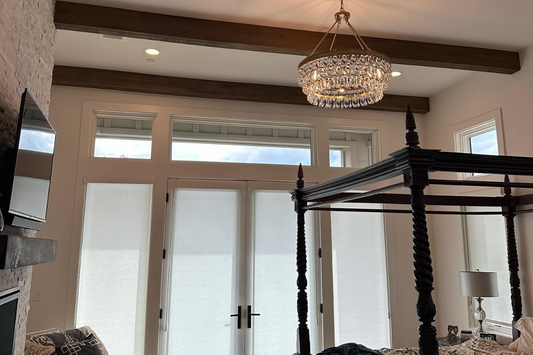
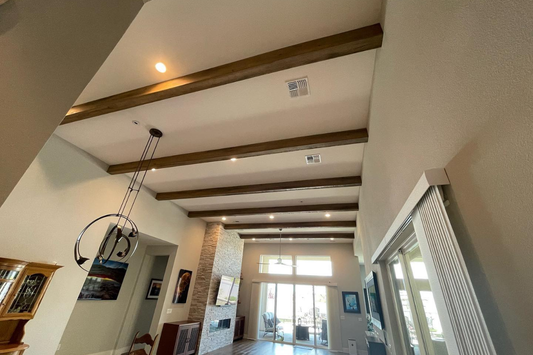
The use of exposed beams varies significantly between the two. In coastal design, beams are often painted white or finished in light, driftwood tones to keep the space feeling airy. They are often smaller in scale, used to add ceiling texture rather than visual weight.
In the desert, beams are muscular. They are often dark-stained to contrast with light walls, or they are left to look like raw steel or weathered timber. They need to look heavy enough to support those massive roof overhangs. Southern California exterior design in the desert uses beams to ground the structure, making it feel anchored to the earth against the vast, open landscape.
Color Palette and Texture Choices
Color is the quickest way to signal location. Coastal palettes are cool: blues, crisp whites, greys, and light natural woods. These colors reflect the ocean and the sky.
Desert palettes are warm: terracotta, sand, olive green, charcoal, and warm whites. These colors reflect the rocks and the desert flora. Using a "beach" color palette in the desert often looks washed out and weak under the intense sun. Conversely, heavy desert earth tones can feel muddy and depressing in the soft coastal light.
SoCal Exterior Beam Design: Adapting to Location
Beams are one of the few architectural elements that bridge both styles effectively. Whether it’s a trellis in Santa Monica or a pergola in La Quinta, SoCal exterior beam design is essential for defining outdoor spaces. However, the application must adapt to the climate.
Coastal Beam Applications in Covered Patios
On the coast, covered patios are often extensions of the living room. They are furnished like interior spaces. Exterior decorative beams Southern California homes use here are often finished to match the interior hardwood floors, creating a seamless flow.
Because of the moisture, avoiding rot is the priority. Using real wood beams on a coastal patio requires heavy sealing, which can look plastic and unnatural. Faux wood beams are superior here because they are impervious to moisture. They can be installed with a "driftwood" or "weathered grey" finish that looks exactly like aged timber but won't rot or attract termites, no matter how much salt spray they encounter.
Desert Beam Applications for Shade and Structure
In the desert, beams are functional shade devices. Pergolas and trellises are critical for making outdoor spaces usable. Patio beam design coastal vs desert differs in density. A coastal trellis might have wide spacing to let light in. A desert trellis needs tight spacing or angled louvers to block the sun while allowing hot air to rise and escape.
Exposed beams Southern California homes use in the desert are subjected to "oven" conditions. Real wood beams will twist and crack aggressively here. Homeowners often find that their expensive cedar pergola has warped into a fun-house shape within two summers. High-density polyurethane beams remain dimensionally stable even in 120-degree heat, maintaining the crisp, straight lines that modern desert architecture demands.
Achieving Timber Aesthetics Without Climate-Driven Maintenance
The common thread is the desire for the look of wood without the problems of wood. In both climates, maintenance is a burden. Coastal homeowners don't want to sand off varnish every year. Desert homeowners don't want to replace cracked beams every five years.
Elite Ceiling Designs’ products solve this across the board. By providing a material that is visually indistinguishable from wood but chemically stable, we allow designers to use exposed beams Southern California homes crave without worrying about the zip code. You can have the rich, dark timber look in Malibu without rot, and you can have the delicate, refined trellis in Palm Springs without warping.
Choosing Architectural Materials Based on Microclimate
When specifying materials, you have to look at the specific stressors of your site. Architectural materials for desert living need high heat deflection temperatures and UV stability. Coastal home exterior durability relies on non-porous surfaces and corrosion resistance.
Moisture Resistance Along the Coast
Water is the enemy on the coast. It’s not just rain; it’s the daily cycle of condensation. Any material that absorbs water will eventually fail. Stucco can spall. Wood rots. Steel rusts.
Weather resistant materials SoCal builders favor include high-density foam because it is a closed-cell material. It absorbs zero water. You could throw an Elite Ceiling Designs beam into the Pacific Ocean, fish it out a year later, and it would be structurally identical. This makes it the ultimate insurance policy for coastal renovations. It eliminates the risk of dry rot in high-humidity zones, which is a massive hidden cost in older coastal homes.
Heat Stability in Inland Regions
In the desert, UV radiation breaks down the chemical bonds in paints and plastics. Cheap plastics get brittle and yellow. Wood fibers detach and turn to dust.
Climate specific building materials California codes require are getting stricter about energy efficiency and durability. Materials used in the desert must be UV stable. Our beams use automotive-grade coatings that are designed to reflect UV rays rather than absorb them. This prevents the "chalking" and fading that ruins the curb appeal of so many desert homes. Furthermore, because the foam doesn't hold heat like thermal mass (stone or concrete), it doesn't radiate heat down onto your patio area in the evening, helping keep outdoor spaces cooler after sunset.
Designing for Lifestyle, Not Just Location
Ultimately, people move to Southern California for the lifestyle. They want to live outside. Southern California lifestyle architecture is about removing barriers. It’s about breakfast on the terrace and evening cocktails by the fire pit.
Outdoor Living as a Core Design Element
The house is just the shelter; the property is the home. Indoor outdoor living SoCal style means treating the backyard with the same design rigor as the living room.
This is where architectural beams shine. They define "rooms" without walls. A set of beams over a dining area creates a sense of enclosure and intimacy under the vast sky. Whether it’s a sleek, modern overhang in a desert home or a rustic, vine-covered pergola in a coastal garden, the beams provide the architectural framework for living. They scale the outdoors down to human proportions.
Creating Continuity Between Interior and Exterior Spaces
The hallmark of luxury coastal homes California and modern desert homes Southern California is the seamless transition. The floor material runs out. The ceiling plane continues through the glass.
To achieve this, the ceiling beams must match. You can't have a beautiful Douglas Fir beam inside and a painted aluminum tube outside. It breaks the illusion. Using Elite Ceiling Designs beams allows you to run the exact same beam profile and finish from the conditioned interior to the exposed exterior. The material handles the weather transition perfectly, maintaining the visual continuity that makes small homes feel huge and large homes feel cohesive.
A Southern California Home Design Guide for Performance and Style
Southern California is a region of microclimates, and successful design respects that diversity. A home in the desert shouldn't try to be a beach house, and a beach house shouldn't ignore the corrosive reality of the ocean.
This Southern California home design guide is a reminder that while the aesthetic goals—beauty, comfort, indoor-outdoor flow—are universal, the path to achieving them depends on where you build. SoCal architectural inspiration is everywhere, but durability is in the details.
By choosing materials that are engineered for the specific challenges of your environment—whether that's the salt air of the coast or the furnace heat of the desert—you protect your investment. You ensure that your coastal vs desert home design ideas translate into reality that lasts. At Elite Ceiling Designs, we believe that you shouldn't have to choose between the look you love and the durability you need. With the right approach to exterior beam design California style, you can have a home that stands up to the elements and looks incredible doing it, from the first mile of the coast to the last mile of the valley.
If you're planning a remodel or new build, the details you choose will shape the entire space. Ceiling beams can either blend in or become a defining architectural feature depending on how they’re designed.
Browse our faux beam styles and finishes or reach out to our team to plan a design that fits your home and location.