How to Protect Your Architectural Features in Northern California

The beauty of Northern California is its variety. From the rolling hills of the Bay Area to the expansive Central Valley and the leafy suburbs of Sacramento, the landscape is diverse. So is the weather. While it may not have the dramatic extremes of Tahoe's snow or Arizona's heat, Northern California’s climate has a demanding personality all its own. The cycle of wet, mild winters followed by long, dry, hot summers creates a unique set of challenges for a home’s exterior. For architectural features like exposed beams, corbels, and trusses, this constant seasonal shift is a relentless test of durability. Understanding how to protect your architectural features in Northern California’s climate is about planning for this predictable cycle and choosing materials that won't just survive, but thrive for years to come.
Northern California Weather Isn’t Extreme — But It Is Demanding
When people think of harsh climates, they often picture blizzards or scorching deserts. Northern California’s climate is more subtle in its attack, but just as effective at breaking down exterior materials over time. The real issue isn't a single event; it's the consistent, year-after-year repetition of seasonal change.
Northern California home maintenance is largely a story of managing moisture and sun. The winter brings months of rain, sometimes gentle and misty, other times driving and heavy. The ground gets saturated, and everything on your home stays damp. Then, the pattern flips. From May through September, rain is a distant memory, replaced by relentless sun and high temperatures, especially in inland areas like Sacramento and the Central Valley.
This swing from damp and cool to hot and bone-dry is what puts materials like wood under immense stress. It’s a slow, quiet process, but this Central Valley climate impact on homes is responsible for more exterior damage than any single storm.
Winter Rains: How Water Exposure Leads to Long-Term Damage
From November to April, Northern California is defined by rain. While it keeps the landscape green, it’s a constant source of trouble for exterior wood features. Porous materials like cedar, fir, or redwood absorb this moisture, and where the water sits, the damage begins.
Where Moisture Collects on Decorative Features
Water is lazy; it follows the path of least resistance and collects on horizontal surfaces. On a home’s exterior, this means the tops of exposed beams, the flat surfaces of decorative outlookers, and the pockets created by complex truss work are the first to suffer. Joints where one piece of wood meets another are particularly vulnerable. As the wood expands and contracts, these joints open up, creating perfect little channels for water to seep in.
This constant saturation is the first step toward exterior beam rot prevention failure. Once water gets into the wood fibers, it creates an ideal environment for mold, mildew, and fungus to grow. You may see this first as dark stains or discoloration, but beneath the surface, the wood is slowly breaking down.
Why Repeated Wet-Dry Cycles Break Down Wood Over Time
The real damage happens when the rain stops and the sun comes out. As the saturated wood begins to dry, it shrinks. The moisture that swelled the wood fibers evaporates, causing the material to contract. One cycle of this wet-to-dry transition won't cause a beam to fail, but repeat it hundreds of times over a decade, and the cumulative effect is significant.
Each time the wood swells and shrinks, tiny cracks, known as "checks," form and deepen. The wood’s internal structure weakens. Paint and stains, which are not as flexible as the wood beneath them, begin to crack and peel, exposing more raw wood to the next round of winter rain. This cycle of winter rain home damage California experiences is a quiet destroyer, gradually compromising the integrity and appearance of your home's most prominent features.
Seasonal Expansion and Contraction: What Wood Does Every Year
Every material expands when heated and contracts when cooled. For exterior wood in Northern California, this movement is a constant reality. The temperature swings might not seem extreme on a day-to-day basis, but the seasonal shift from a cool, damp winter to a hot, dry summer is significant. This process of seasonal expansion wood undergoes is a powerful, silent force.
How Heat Pulls Moisture Out of Wood
As winter gives way to spring and summer, the air dries out and the temperature climbs. For a wood beam that spent months absorbing moisture, this is a dramatic change. The heat from the sun and the warm, dry air begin to pull that stored moisture out of the wood. This process is not uniform. The surface of the beam exposed to the sun dries out much faster than the core, or the side facing the house.
This differential drying causes stress within the wood. The dry surface tries to shrink, while the still-damp core resists. This internal battle is what causes wood to warp, twist, and cup. A once-straight beam can develop a noticeable curve, and wide planks can pull away from their fasteners.
The Stress Caused by Continuous Movement
This continuous movement, season after season, creates material fatigue. Think of bending a paperclip back and forth; eventually, it breaks. The same principle applies to wood fibers being repeatedly stressed by expansion and contraction. The cracking exterior beams California homeowners often see is a direct result of this fatigue.
The joints in a decorative truss will loosen. The connection points where beams are attached to the house will widen. Fasteners can work themselves loose. It’s a slow-motion process of self-destruction, driven entirely by the region's predictable climate patterns. Materials that are not dimensionally stable simply cannot withstand this annual cycle without showing signs of wear.
Sun Exposure in the Central Valley and Bay Area
While moisture is the main culprit in winter, the sun takes over in the summer. The UV radiation in Northern California’s sunlight is a powerful force that breaks down materials at a molecular level. This is especially true for homes that have a south or west-facing orientation.
Color Fading and Surface Breakdown
UV rays act like a bleach, breaking down the pigments in wood stains and paints. This is why you see such dramatic fading exterior wood beams on homes in Sacramento and the surrounding valley. A rich, dark walnut stain can turn into a pale, washed-out brown in just a few seasons of direct sun exposure.
Beyond just fading the color, UV radiation also destroys the wood fibers themselves. It makes the surface brittle and chalky. This process, called photodegradation, weakens the wood and makes it even more susceptible to moisture intrusion when the winter rains return. The finish fails because the surface it’s clinging to is literally disintegrating.
Why Southern-Facing Features Age Faster
The features on the south and west sides of your home receive the most intense, direct sunlight, especially during the hottest parts of the day. As a result, they will always age faster than those on the north or east sides. An exterior beam over a west-facing garage door might need to be refinished every two to three years, while an identical beam on the north side might look fine for five or six. This uneven aging can make a home look patchy and poorly maintained, even when the homeowner is diligent about upkeep. The California heat impact on materials is not uniform across a single structure.
Choosing Weather Resistant Architectural Materials That Last
You cannot change the Northern California climate. The only way to win the battle against moisture and UV damage is to choose materials that are inherently immune to them. The goal is to find durable exterior beams Northern California homes need—products that look authentic but don't carry wood's natural vulnerabilities.
Materials That Don’t Absorb Water
The most effective way to prevent rot, warping, and cracking is to use a material that doesn't absorb water in the first place. High-density polyurethane foam is a closed-cell material. This means, unlike wood, it has no pores for water to seep into. It is 100% waterproof.
When rain hits an Elite Ceiling Designs beam, it simply sheds off. When snow melts, the water runs away. Because there is no moisture absorption, there is no swelling. And with no swelling, there is no subsequent shrinking. The material is dimensionally stable, meaning it does not expand or contract with changes in humidity. This eliminates the primary cause of material breakdown in Northern California's climate.
Reducing the Need for Constant Re-Sealing
Because polyurethane beams are stable, the finishes applied to them last significantly longer. Our proprietary multi-layer coating system includes UV inhibitors that protect against fading. More importantly, because the substrate isn't moving, cracking, and pushing the finish off from underneath, the coating maintains its integrity for years, not months. This dramatically reduces the exhausting and expensive cycle of sanding and re-staining your home's architectural details. Choosing moisture resistant decorative beams is the single most effective step toward a low-maintenance exterior.
Design Details That Improve Longevity
Beyond material selection, smart design and installation can significantly improve the durability of your home’s exterior features. As a company with over 18 years of experience, we have seen what works and what doesn't.
Beam Placement That Minimizes Water Traps
Thoughtful exterior beam installation best practices focus on shedding water. When designing decorative trusses or beam layouts, avoid creating flat spots or pockets where water and debris can collect. Every surface should have a slight slope to encourage drainage. When placing beams on a stucco or siding wall, ensuring they are properly flashed at the top is critical to prevent water from getting behind the beam and into the wall assembly.
Smart Overhang and Soffit Integration
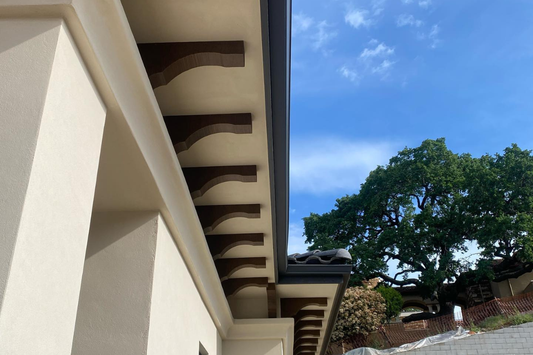
A home’s roof overhang is its first line of defense. Deeper overhangs do a better job of protecting the walls and the architectural features on them from both rain and direct sun. When integrating decorative rafter tails or outlookers into a soffit, ensuring the surrounding area is properly ventilated can help any residual moisture dry out quickly. These small details in exterior design durability California projects rely on can make a big difference in the long-term performance of the entire building envelope.
When It Makes Sense to Upgrade Instead of Repair
For homeowners with existing wood features, there comes a point where the cycle of repairs is no longer practical or cost-effective. Constantly fighting dry rot, peeling paint, and warped wood is a losing battle.
Signs of Moisture or Expansion Damage
It’s time to consider an upgrade when you see recurring signs of failure. Look for dark, soft spots in the wood, which indicate rot. Check for wide, deep cracks that go all the way through a beam. Pay attention to joints that have separated or pulled away from the house. If you find yourself scraping and painting the same architectural features every other summer, the underlying material has likely failed. Simply putting another coat of paint on a failing substrate is a temporary fix, not a long-term solution.
Improving Performance Without Changing the Look
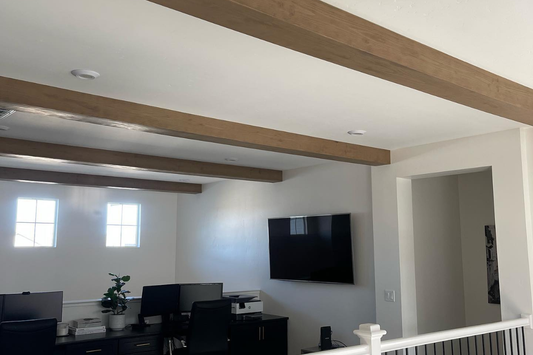
The great advantage of modern materials is the ability to upgrade performance without sacrificing the home’s original character. We can replicate the exact size, shape, and texture of your existing wood beams in high-density polyurethane. From the street, the look is identical. Your home retains its architectural integrity. However, the new beams will be impervious to the very climate forces that destroyed the old ones. This is the smartest way to protect architectural features Northern California homes have for the long term.
Protecting Architectural Features in Northern California
The Northern California climate, with its pattern of wet winters and dry summers, creates a consistent and predictable challenge for exterior building materials. While not "extreme," this relentless seasonal cycling is what fatigues wood, degrades finishes, and leads to costly maintenance and eventual failure.
Protecting your home is not about fighting the weather; it’s about choosing materials that are designed to handle it. Smart material choices—those that are stable, non-porous, and UV-resistant—are the key to breaking the cycle of repair. By planning for the region’s climate from the start, you can ensure your home’s architectural features remain a source of beauty and pride, not a constant source of work. The investment in durable materials pays for itself in reduced maintenance, long-term performance, and peace of mind.
Covering or upgrading a ceiling beam is one of those projects where the right material makes all the difference. If you want something that looks like real wood without the weight, maintenance, or installation complexity, foam beams are usually the most practical option.
You can request a custom quote for your project or contact our team . to talk through your space and get a clear direction before you start.