Designing for Wine Country Elegance: Ideas for Napa and Sonoma

There is a distinct feeling when you cross into Napa or Sonoma County. The light changes, softening as it filters through the oaks and vines. The pace slows down. The architecture shifts, too. It moves away from the hurried, packed-in styles of the city and breathes a little deeper. Wine Country elegance isn't about flashing wealth or following the latest trend. It’s about a quiet confidence, a connection to the land, and a commitment to materials that feel as real and enduring as the vineyards themselves.
Designing for this region requires a different approach. It asks for restraint. It values texture over ornament. Whether you are building a new estate in St. Helena or renovating a farmhouse in Healdsburg, the goal is the same: to create a space that feels timeless, grounded, and effortlessly sophisticated. This is the art of Wine Country living.
What Defines Wine Country Home Design?
At its core, wine country home design ideas are rooted in an agrarian history but refined for modern luxury. It is a style that borrows heavily from the Mediterranean—specifically the farmhouses of Tuscany and Provence—but adapts them to the California landscape.
Napa Sonoma home architecture is characterized by a seamless blend of indoor and outdoor living. These homes are designed to be opened up. Walls of glass disappear into pockets, turning living rooms into verandas. The palette is drawn directly from the surroundings: the dusty green of olive leaves, the warm gold of dry grass, the deep charcoal of basalt rock, and the rich browns of turned earth.
When we look at luxury homes Napa Valley has to offer, we see a rejection of the sterile. Surfaces are meant to be touched. Plaster walls have movement. Stone floors have variation. Wood beams have grain and history. Sonoma custom home design creates spaces that feel established, as if they have been part of the landscape for generations, even if the paint is barely dry. It is a luxury defined not by glitz, but by the quality of the light and the authenticity of the materials.
Napa Sonoma Architectural Details That Create Character
A home in Wine Country isn't defined by its square footage, but by its details. In the vast, open landscapes of the valleys, a plain box looks lost. It needs architectural weight to anchor it to the site. Napa Sonoma architectural details provide this gravity.
Vineyard estate design elements often focus on creating depth. Flat facades are rare. Instead, you see deep overhangs that cast long shadows, recessed windows that suggest thick masonry walls, and layered rooflines that break up the mass of the building.
Arches, Plaster, and Natural Stone
The influence of Mediterranean style California homes is unmistakable here. The arch is a recurring theme, used to soften the transition between rooms or to frame a view of the Mayacamas Mountains. These aren't the thin, drywall arches of suburban tract homes; these are substantial, often cased in wood or stone to give them presence.
Plaster is another essential element. Unlike flat paint, plaster absorbs and reflects light in a way that gives walls a velvety, changing texture throughout the day. Paired with natural fieldstone—often harvested from the site itself—these materials create a sense of permanence. The stone connects the house to the earth, while the plaster captures the famous California light.
Ceiling Treatments That Add Depth Without Overcomplicating the Space
In many high-end homes, the ceiling is an afterthought. In Wine Country, it is a canvas. Because these homes often feature large, open great rooms, a flat white ceiling can feel oppressive or unfinished. Arched doorways and exposed beams work together to lift the eye.
Designers in the region use ceiling treatments to define zones within open floor plans without building walls. A grid of coffered beams might define the dining area, while a soaring truss system marks the living room. The key is subtlety. The goal isn't to overwhelm the room with woodwork, but to add just enough texture to make the volume of the space feel comfortable and human-scale.
Rustic Luxury Beams: The Signature Element of Wine Country Interiors
If there is one architectural feature that defines the Wine Country aesthetic, it is the exposed beam. It is the thread that ties the farmhouse roots to the modern luxury execution. Rustic luxury beams provide the necessary contrast to the sleek surfaces of modern kitchens and the softness of linen upholstery.
In exposed beams vineyard homes, the texture is paramount. We aren't looking for perfectly smooth, sanded lumber. We want wood that looks like it has a story. It should have checks, knots, and grain patterns that catch the light. This rustic character grounds the space, preventing it from feeling too precious or fragile.
Creating Warmth in Open-Concept Great Rooms
The challenge with luxury ceiling beams Napa designers often face is balancing the vastness of the room with the need for intimacy. A 30-foot ceiling is impressive, but it can also feel cold.
Beams solve this by visually lowering the ceiling. They create a "ceiling plane" that feels closer to the occupants, making the room feel cozy despite its size. The warm tones of the wood also counteract the coolness of large glass windows and stone floors. By introducing decorative wood beams California style, you add a layer of organic warmth that makes the space inviting. It turns a cavernous hall into a living room.
Beam Scale and Spacing in High Ceilings
Proportion is everything. In a room with high ceilings, small beams look like toothpicks. They feel weak and out of place. To achieve true elegance, the beams must match the scale of the architecture.
In Wine Country estates, this often means using wider, deeper profiles. We might see beams that are 10 inches wide and 12 inches deep, spaced four to six feet apart. This spacing allows the ceiling to breathe while still providing a strong rhythmic element. The beams should feel structural, even if they are decorative. They need to look capable of holding up the roof. When the scale is correct, the room feels settled and right. When it’s off, the subconscious mind registers that something is wrong.
Vineyard Estate Design: Mediterranean Roots, California Simplicity
There is a specific dialect of architecture here that blends the romance of Europe with the pragmatism of the West. Vineyard estate design is less ornate than traditional Italian villas but warmer than modern minimalism. It occupies a beautiful middle ground.
A Mediterranean vineyard home in Napa might have a clay tile roof, but the pitch will be lower, the eaves deeper. The walls might be stucco, but the color will be a warm, dusty white rather than a stark bright white. Spanish inspired California estates in this region strip away the heavy wrought iron and intricate tile work of the past, replacing them with clean lines and simple forms.
Exterior Beam Details for Covered Patios and Loggias
The "loggia"—an open-sided gallery or arcade—is a staple of California winery style homes. It serves as a transition zone, offering shade from the intense summer sun while allowing the breeze to pass through.
The ceiling of a loggia is almost always detailed with beams. Here, the beams serve a visual purpose: they continue the rhythm of the interior out into the landscape. We often see simple, heavy timbers supporting a tongue-and-groove ceiling. This detailing transforms a simple concrete patio into an architectural room. It signals that the outdoor space is just as important, and just as finished, as the indoor space.
Bringing Texture to Smooth Stucco Facades
Stucco is a fantastic material, but a large expanse of it can look monolithic and uninteresting. Architectural elements break up these large planes.
Designers use corbels, rafter tails, and timber headers to punctuate the facade. A timber header above a window adds a horizontal line that visually widens the opening. Rafter tails under the eaves create a play of shadow that changes throughout the day. These wood elements provide a material contrast to the smooth stucco, adding the necessary texture that defines the Wine Country look.
Achieving Authentic Wood Texture Without Structural Bulk
While the aesthetic of heavy timber is non-negotiable, the reality of building with it is complicated. Solid wood timbers of the size required for lightweight beams Napa homes are incredibly heavy, expensive, and prone to twisting and cracking over time.
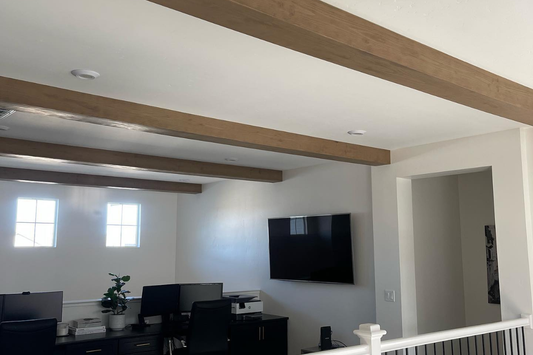
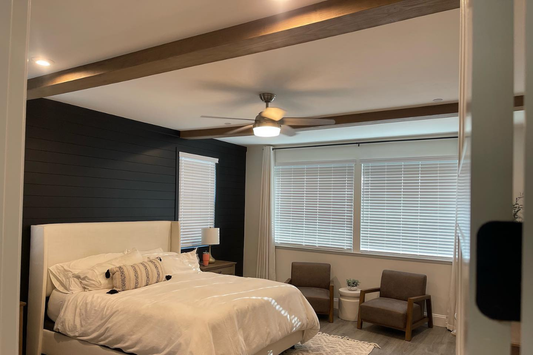
This is where Elite Ceiling Designs provides a solution that respects the design intent while solving the construction challenges. Our faux wood beams wine country builders rely on are molded from actual heavy timbers. We capture every saw mark, every split, and every grain detail of the original wood.
Preserving Clean Rooflines While Adding Architectural Presence
Modern engineering often relies on steel or engineered lumber (like GLBs) to span the large distances in open-concept homes. These materials are strong but ugly. They need to be covered.
Using solid wood to box out these structural members adds immense weight to the ceiling, often requiring additional engineering and stronger foundations. Non structural ceiling beams luxury homes use allow us to wrap these structural elements in a material that weighs a fraction of solid wood. We can create the look of massive, load-bearing timbers without adding "dead load" to the roof structure. This gives the architect freedom to design clean, soaring rooflines without worrying about the weight penalty of decorative wood.
Custom Finishes That Complement Stone, Iron, and Oak
In a luxury home, "close enough" isn't good enough. The finish on the beams needs to harmonize perfectly with the other materials in the room. If you have European white oak floors with a grey wash, a red-toned cedar beam on the ceiling will clash.
We specialize in custom beam finishes California designers demand. We can color-match our beams to coordinate with cabinetry, flooring, or even a specific piece of antique furniture. Whether the design calls for a sun-bleached driftwood look to match a limestone fireplace or a rich espresso stain to complement black iron windows, we have the control to get it exactly right. This level of customization is what separates a custom estate from a spec house.
Indoor-Outdoor Continuity: A Hallmark of Wine Country Living
In Napa and Sonoma, the boundary between inside and outside is fluid. The climate allows for doors to be left open for much of the year. Indoor outdoor living Napa homes prioritize this connection, designing spaces that flow physically and visually from the great room to the terrace.
The ceiling is the most powerful tool for creating this continuity. When the ceiling material and beam layout run continuously from the living room through the glass wall and out over the patio, it tricks the eye. The glass disappears. The two spaces read as one large volume.
Extending Beam Treatments from Interior to Exterior
To achieve this effect, the material performance matters. Real wood beams that look beautiful inside often fail when exposed to the UV and moisture of the exterior. They fade, crack, and rot, breaking the visual continuity.
Exterior beams vineyard estates need to be durable. Elite Ceiling Designs beams are weather-resistant and UV-stable. This means you can run the exact same beam profile and finish from your climate-controlled living room out to your sun-drenched poolside cabana. The look remains consistent year after year, maintaining that critical visual link that defines California patio beam design.
Designing Outdoor Rooms That Feel Permanent and Refined
Outdoor spaces in Wine Country aren't just for sitting; they are for dining, entertaining, and living. They are furnished like rooms. Outdoor architectural beams Sonoma residents install help define these "outdoor rooms."
A pergola or a covered structure with substantial beam work creates a sense of enclosure and protection. It provides a ceiling for the outdoor room. This psychological shelter makes the space feel intimate and settled, encouraging people to linger over a bottle of wine long into the evening. It elevates a backyard into an estate.
Proportion, Texture, and Restraint: The Balance Behind Elegant Design
Luxury in the Wine Country is not about excess. It is about editing. It is about knowing when to stop. Luxury home proportions California architects use are generous but balanced.
When we consult on architectural beam scale, we often advise against over-beaming. Putting beams every two feet can make a ceiling feel heavy and busy. It closes the room in. Elegant design uses fewer, larger beams. It allows the negative space (the ceiling between the beams) to be part of the composition.
Napa Valley custom home details are successful when they have room to breathe. A single, perfectly placed ridge beam is often more powerful than a complex web of trusses. The texture of the beam should be visible, but it shouldn't scream for attention. It should sit quietly in the space, a supporting player to the views and the life happening within the room. This approach—refined rustic architecture—is what gives these homes their calming, restorative atmosphere.
Wine Country Home Design Ideas That Age Well
Trends come and go, but the appeal of natural materials and good proportions never fades. Timeless Napa home design is an investment in longevity. It is building a home that will look as good in twenty years as it does today.
This requires choosing materials that age gracefully. Stone develops a patina. Plants grow in. Classic Sonoma estate architecture relies on the idea that the house should settle into its site.
Choosing durable architectural materials luxury homes require is part of this philosophy. You want materials that maintain their integrity. Elite Ceiling Designs’ high-density polyurethane beams provide the aesthetic of ancient timber without the maintenance headache of real wood. They don't rot, they don't get eaten by termites, and they don't twist. They allow the design to remain pristine.
Wine country remodel inspiration often starts with a desire to strip away the dated layers of the 90s or 00s and return to something authentic. By adding elements like arched openings, plaster walls, and rustic beams, you can inject soul into a generic structure. You can give it the gravity and warmth that belongs in this valley.
Designing for Wine Country elegance is a journey of subtraction. It’s taking away the noise to reveal the texture. It’s about building spaces that feel good to be in. Whether through the rhythm of a beamed ceiling, the shadow of a deep eave, or the flow of an indoor-outdoor room, the goal is always the same: to create a home that honors the land and the life lived upon it.
If you're planning a remodel or new build, the details you choose will shape the entire space. Ceiling beams can either blend in or become a defining architectural feature depending on how they’re designed.
Browse our faux beam styles and finishes or reach out to our team to plan a design that fits your home and location.