11 Modern Kitchen Ceiling Ideas Beyond Basic Drywall

The kitchen ceiling is one of the most overlooked surfaces in home design. Most kitchens get flat white drywall — functional, forgettable, and prone to grease stains and moisture damage above the stove. But the ceiling is a full canvas of usable design space, and modern materials give you options that are both more durable and more visually interesting than painted drywall.
We install kitchen ceilings across Sacramento and the Bay Area using stretch membranes, faux wood beams, backlit panels, and acoustic materials — all engineered to handle the heat, grease, and steam that kitchens produce daily. Our complete guide to ceiling design ideas for every room covers the full range of possibilities, but this list focuses specifically on what works in a kitchen environment.
Here are 11 kitchen ceiling ideas ranked by style, function, and practicality — with notes on cleaning, cost, and why each one works above a cooking space.
Kitchen Ceiling Essentials: Grease, Steam, Cleaning & Ventilation
Before choosing a ceiling treatment, consider the demands unique to kitchens. Cooking generates airborne grease particles that settle on overhead surfaces, especially above the stove and cooktop. Steam from boiling water and dishwashers raises humidity levels. Kitchen ceilings need to resist moisture, clean easily, and tolerate temperature fluctuations from range hoods and ovens.
Stretch ceilings — particularly PVC-based membranes — excel in kitchen environments because they're non-porous, wipeable with a damp cloth, and completely resistant to moisture absorption. Unlike drywall, they won't develop yellow grease stains over time or crack from thermal expansion. Most of the ideas below leverage these material advantages. Visit our kitchen ceilings page for more detail on material specifications.
1. Seamless White Matte Stretch Ceiling
Start with the simplest upgrade that delivers the biggest practical improvement: a seamless matte stretch ceiling in white. Unlike drywall, which shows seams, nail pops, and paint imperfections over time, a matte stretch membrane installs as a single continuous surface — no seams, no joints, no visible fasteners.
The matte finish absorbs light softly, avoiding the cheap-looking shine of semi-gloss paint while still reflecting enough light to keep the kitchen bright. Cleaning is simple: a damp microfiber cloth removes grease buildup without damaging the surface. For kitchens with average ceiling heights (8–9 feet), a matte stretch ceiling costs roughly $8–$14 per square foot installed.
This is the "invisible upgrade" — guests probably won't point at it and comment, but your kitchen will look cleaner, brighter, and more finished than any painted drywall ceiling can manage over time.
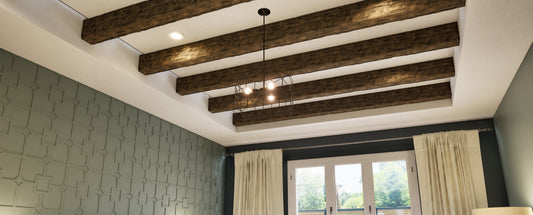
2. Faux Beams Over the Kitchen Island
Open-concept kitchens often struggle with spatial definition — where does the kitchen end and the living room begin? Faux wood beams running perpendicular across the ceiling above the island create a visual boundary without walls, effectively framing the kitchen zone within the larger open space.
Polyurethane faux beams weigh a fraction of real wood (typically 1–3 lbs per linear foot vs. 8–15 lbs for solid timber), making them safe for standard ceiling joists without structural reinforcement. They come in stained oak, walnut, reclaimed barnwood, and hand-hewn textures that look convincing from floor level.
Pair two or three beams spaced 3–4 feet apart above the island with pendant lights hanging between them. The result is a defined kitchen zone with architectural character — a popular look in Sacramento's Midtown bungalows and East Bay Craftsman homes.
3. Backlit Soffit Over Countertops
A backlit ceiling soffit above the counter creates dual-purpose lighting: ambient glow from the translucent membrane plus focused task lighting from recessed or under-cabinet fixtures below. The soffit drops the ceiling 4–6 inches in a defined zone above the countertop, housing LED panels behind a translucent stretch membrane.
The glow from above eliminates harsh shadows that overhead recessed lights create, making food prep easier on the eyes. Color temperature matters here — 3500K to 4000K hits the sweet spot between the warm tones you want for ambiance and the cooler tones you need for actually seeing what you're chopping.
This works especially well in galley kitchens and U-shaped layouts where the soffit follows the counter perimeter, creating a ring of soft light that opens up the space visually.
4. Coffered Ceiling in an Eat-In Kitchen
If your kitchen includes a dining area — a breakfast nook, eat-in section, or an island with bar seating — a coffered ceiling above the dining zone distinguishes it from the cooking area. Coffered ceilings use a grid of recessed panels framed by beams, adding depth and architectural formality to an otherwise flat plane.
Modern coffered designs use lightweight faux beams and flat stretch panels rather than heavy plaster and wood. The coffers can match your cabinetry finish (white shaker, espresso, natural oak) to create visual continuity. Budget roughly $18–$28 per square foot for a professionally installed coffered treatment with faux beam framing.
This approach works best in kitchens with 9-foot or higher ceilings, where the 4–6 inch drop for the coffer grid doesn't make the space feel cramped.
5. Printed Sky Stretch for Windowless Kitchens
Basement kitchens, interior galley kitchens, and windowless cooking spaces suffer from the same problem: no natural light, no connection to the outdoors. A printed stretch ceiling with a photorealistic sky image — blue sky, scattered cumulus clouds, or even a tree canopy — creates the illusion of an overhead window or skylight.
When backlit with LED panels, the image glows from within, simulating daylight convincingly enough to trick your brain into feeling like the room is brighter and more open than it actually is. High-resolution UV printing on stretch membranes produces photographic quality at up to 150 DPI on large-format panels.
This is one of the most impactful upgrades for kitchens that feel dark and closed-in. A 50-square-foot printed and backlit panel above the main work zone costs approximately $1,500–$2,500 and fundamentally changes the room's atmosphere.
6. Tin-Look Ceiling Tiles for Industrial Style
Pressed metal or tin-look ceiling tiles bring an industrial-chic aesthetic that pairs well with open shelving, stainless steel appliances, and exposed brick — a common combination in Bay Area loft conversions and Sacramento warehouse-to-residential projects.
Modern versions are made from PVC or aluminum, not actual tin, making them lighter, cheaper, and easier to install. They come in classic Victorian patterns, Art Deco geometrics, and simple raised-panel designs. Expect to pay $3–$8 per square foot for materials, plus installation.
The main consideration for kitchens: metal-look tiles with smooth, sealed surfaces clean easily. Avoid deeply textured patterns above the stove — grease collects in crevices and becomes difficult to remove.
7. Glossy Stretch Ceiling Above the Kitchen Island
A high-gloss (lacquer) stretch ceiling reflects the room below like a tinted mirror. Installing a glossy panel specifically above the kitchen island — while keeping the surrounding ceiling matte or satin — creates a dramatic focal point that amplifies pendant lights, draws the eye upward, and makes the ceiling feel higher than it is.
Glossy membranes reflect up to 95% of light, which is why they're so effective at visually expanding small kitchens. A dark gloss (charcoal or deep navy) above the island with a white matte surround creates contrast that photographs beautifully and feels intentional.
One practical note: glossy surfaces show dust and grease more readily than matte finishes. In a kitchen, plan on wiping the glossy panel every 2–4 weeks with a microfiber cloth and mild soap. The visual payoff is worth the minor maintenance.
8. Tongue-and-Groove Planks with Faux Beams
The farmhouse kitchen look remains one of the most requested styles in Northern California. Tongue-and-groove planks (or plank-look panels) in whitewash, natural pine, or weathered gray paired with exposed faux beams create that warm, rustic overhead plane that anchors farmhouse design.
Engineered wood plank panels install faster and lighter than solid lumber. Combined with faux beams in a contrasting stain — dark walnut beams against white shiplap planks, for example — the ceiling becomes the defining feature of the kitchen's design language.
For kitchens specifically, seal the planks with a moisture-resistant finish and ensure adequate ventilation above the stove. The beam channels can conceal wiring for pendant lights, making the aesthetic functional as well as decorative.
9. Acoustic Stretch Ceiling for Open Kitchens
Open-concept living is beautiful but loud. Clattering dishes, running water, the range hood fan, conversations at the island — all of it bounces off hard surfaces (countertops, tile backsplash, hardwood floors) and amplifies into a wall of noise that makes dinnertime feel chaotic.
An acoustic stretch ceiling absorbs a significant portion of that reflected sound. Micro-perforated membranes backed by sound-absorbing material (typically mineral wool or polyester batting) achieve Noise Reduction Coefficients (NRC) of 0.70–0.90, meaning they absorb 70–90% of mid- and high-frequency sound that hits them.
The perforations are nearly invisible from below — the ceiling looks like a standard smooth stretch surface. For open kitchens that share space with living and dining areas, this is one of the most functional upgrades available. Cost runs $12–$20 per square foot, depending on the acoustic backing material.
10. Tray Ceiling with LED Strip Lighting
A tray ceiling — where the center section is recessed higher than the perimeter — adds dimension and creates a natural channel for LED strip lighting along the inner ledge. The LED strips cast light upward into the recessed section, creating a floating, ethereal glow that provides ambient illumination without visible light fixtures.
Stretch membranes make tray ceilings far easier and cheaper to build than traditional drywall framing. The perimeter frame defines the tray shape, and the membrane stretches within it — no need for extensive framing, mudding, sanding, and painting. Tunable white LED strips (adjustable from 2700K to 5000K) let you shift from warm dinner lighting to bright task lighting with a dimmer or app control.
Tray ceilings work best in kitchens with at least 9-foot ceiling heights, where the 6–8 inch recess doesn't compromise headroom. The LED strip and stretch membrane combo typically costs $14–$22 per square foot.
11. Two-Tone Stretch Ceiling: Cooking Zone vs. Dining Zone
A two-tone ceiling uses different stretch membrane finishes or colors to delineate functional zones in the kitchen. The cooking zone might get a bright white matte membrane (easy to clean, bright task environment), while the dining or seating zone gets a warm satin or textured finish that feels more intimate.
The transition between zones can be a clean weld line (nearly invisible), a decorative aluminum profile, or a faux beam that doubles as a visual divider. This approach gives each zone its own identity while maintaining a cohesive overhead plane.
Two-tone installations cost roughly 15–20% more than single-finish ceilings because of the additional material and welding involved. For a 200-square-foot kitchen ceiling, expect the premium to add $300–$600 to the total project cost — a modest investment for significant visual impact.
Our Top Picks
Choosing depends on your priorities, but here's where we'd steer you based on our experience across hundreds of kitchen installations:
- Best all-around upgrade: Seamless white matte stretch — solves the most common kitchen ceiling problems (stains, seams, moisture) with minimal visual disruption.
- Best for open concepts: Faux beams over the island — defines the kitchen zone without walls and works in almost every style from farmhouse to modern.
- Best for dark kitchens: Printed sky stretch with backlighting — genuinely transforms windowless kitchens from oppressive to airy.
- Best for noise control: Acoustic stretch — the single most effective way to tame kitchen noise in open floor plans.
Browse our kitchen ceiling gallery for completed projects in Sacramento, the Bay Area, and throughout Northern California.
Planning beams over an island or a breakfast nook? See our kitchen ceiling beam ideas for layouts and finishes.