13 Patio Ceiling Ideas to Elevate Your Outdoor Living Space
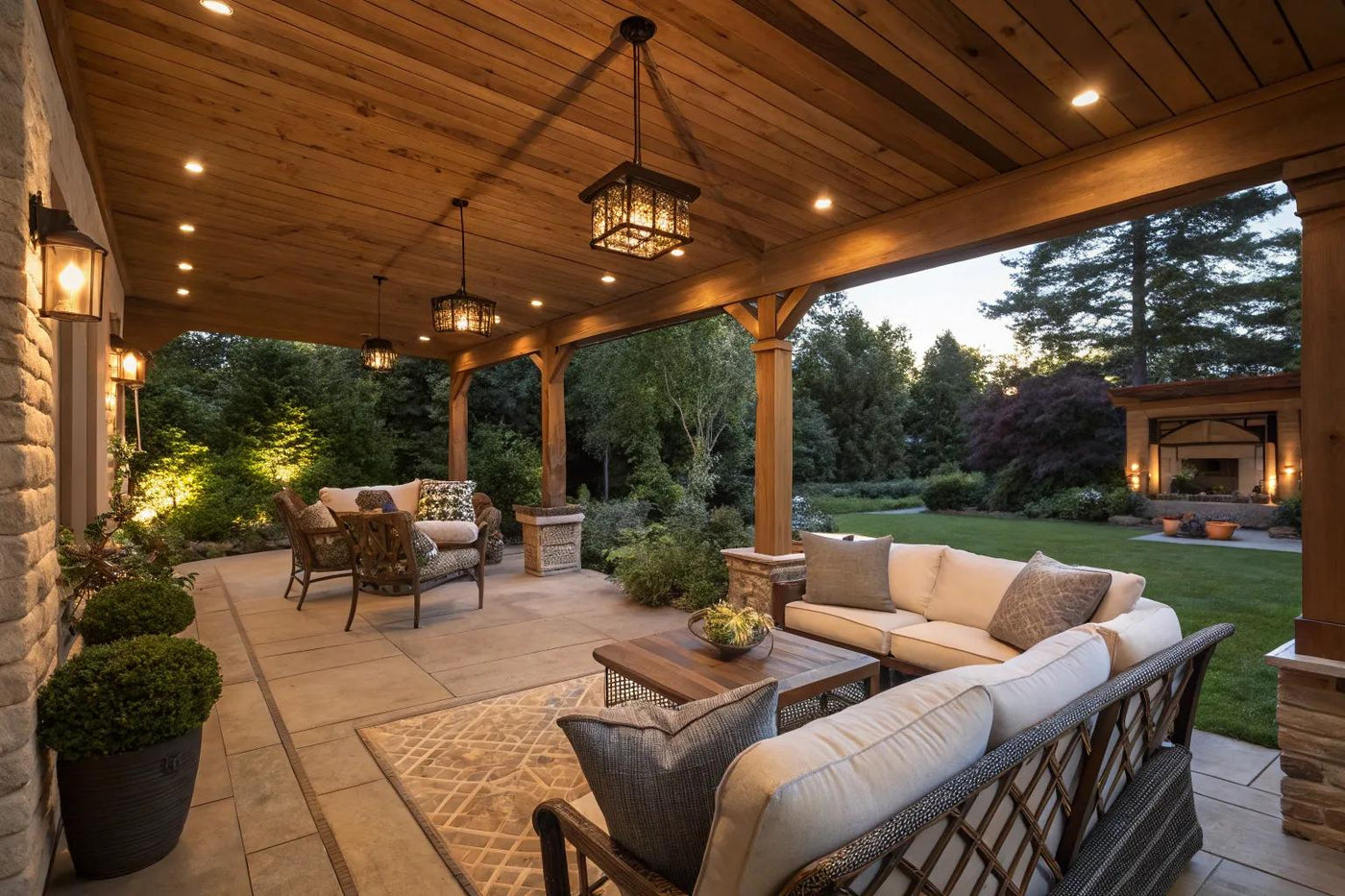
A finished patio ceiling transforms a bare outdoor structure into a genuine living space—one you'll actually use year-round in Sacramento's 269 days of sunshine. The right overhead treatment blocks UV, manages rain runoff, defines the aesthetic, and can even improve nighttime ambiance with integrated lighting. This guide covers 13 patio ceiling approaches ranging from budget-friendly weekend projects to professionally installed systems, each evaluated for Sacramento and Bay Area climates where summer temperatures regularly clear 100°F and winter rains arrive in concentrated bursts. For a broader look at outdoor overhead treatments, see our Outdoor Ceiling & Patio Beam Guide.
Below, you'll find cost estimates per square foot, maintenance expectations, and honest assessments of what works (and what doesn't) in Northern California's hot-dry summers and wet winters.
1. Rustic Faux Beam Rafters
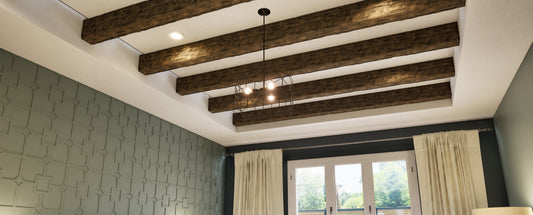
An open-rafter patio ceiling made from faux wood beams delivers the visual weight of heavy timber without the structural burden. High-density polyurethane beams weigh 1–2 pounds per linear foot compared to 8–15 pounds for real wood, meaning your existing patio posts and ledger board can support them without reinforcement.
Spacing beams 16–24 inches on center creates a classic exposed-rafter look. You can leave the gaps open for an airy pergola effect or layer additional material between them. In Sacramento's climate, faux beams outperform real wood because they won't crack, warp, or attract termites—a genuine concern in the Central Valley where subterranean termite pressure runs high from April through November.
Cost range: $12–$28 per linear foot installed. Maintenance: annual rinse with a garden hose. Lifespan: 20+ years with no refinishing needed.
2. White Tongue-and-Groove Planks
The classic American porch ceiling—white-painted tongue-and-groove boards running perpendicular to the house—remains one of the most popular patio treatments for good reason. It's clean, bright, and reflects light back down into the covered area, making smaller patios feel more spacious.
Use PVC tongue-and-groove rather than pine or cedar if your patio is exposed to any moisture. PVC boards won't rot, swell, or need repainting, and they cut and nail identically to wood. For a more traditional look, fiber cement planks (like HardiePlank in smooth finish) accept paint well and resist Sacramento's summer UV without chalking.
Cost range: $4–$9 per square foot for materials, $8–$14 installed. A standard 12×16-foot patio ceiling runs $1,500–$2,700 fully installed. Maintenance: repaint wood every 3–5 years; PVC needs only occasional cleaning.
3. Outdoor Stretch Membrane Ceiling
For a seamless, modern look that handles weather exposure, an outdoor-rated stretch ceiling membrane creates a perfectly flat, jointless surface that sheds water and resists UV degradation. The membrane attaches to a perimeter track mounted to your patio structure, stretching taut with heat application during installation.
Outdoor stretch membranes use PVC formulations rated for continuous UV exposure and temperature swings from 20°F to 140°F—well within Sacramento's range. The surface won't yellow, crack, or sag. If a branch or hail punctures it, the membrane can be patched invisibly or replaced in sections without dismantling the entire ceiling.
Cost range: $8–$16 per square foot installed, depending on shape complexity and lighting integration. Maintenance: virtually zero—wipe with a damp cloth once or twice a year. This option works exceptionally well for patios with irregular shapes or angles that would require extensive cutting with rigid materials.
4. Stained Cedar Planks with Beam Accents
Cedar naturally resists rot and insects, making it a strong candidate for patio ceilings in Northern California. A semi-transparent stain in a warm walnut or honey tone brings out the grain while providing UV protection. Pair the planks with faux box beams at 4-foot intervals for depth and shadow lines that make the ceiling feel architectural rather than flat.
Western red cedar runs $5–$8 per square foot for select-grade boards. Budget another $3–$5 per square foot for labor, staining, and the beam accents. The total investment for a 200-square-foot patio ceiling lands between $1,600 and $2,600. Restain every 2–3 years—Sacramento's intense summer sun breaks down stain faster than coastal climates.
Pro tip: apply a UV-blocking clear coat over the stain. It adds $0.50–$1.00 per square foot but extends refinish intervals to 4–5 years.
5. Haint Blue Painted Ceiling
The Southern tradition of painting porch ceilings sky blue—"haint blue" in Gullah Geechee culture—has migrated westward for both aesthetic and practical reasons. The soft blue-green hue (Benjamin Moore's "Breath of Fresh Air" or Sherwin-Williams' "Atmospheric" are popular choices) creates the illusion of open sky, makes the space feel taller, and genuinely appears to discourage wasps and mud daubers from nesting. Entomologists debate whether the color mimics open sky or whether the traditional milk-paint formulations contained lye that repelled insects, but Sacramento homeowners consistently report fewer nests under blue ceilings.
Apply haint blue to tongue-and-groove, plywood with battens, or even a flat drywall-style ceiling. The paint itself is the design element—the substrate just needs to be smooth and primed.
Cost range: $3–$6 per square foot (paint and labor on an existing substrate). This is one of the most affordable patio ceiling upgrades and can be completed in a single weekend for a DIY-capable homeowner.
6. Louvered Panels
Motorized louvered patio covers—brands like StruXure, Equinox, and Apollo—let you rotate aluminum louvers from fully open (100% sun) to fully closed (rain protection) with a remote or app. The ceiling becomes dynamic, adapting to Sacramento's weather in real time. Open the louvers on mild spring mornings; close them when afternoon temperatures spike past 95°F or when October's first rain arrives.
Louvered systems are engineered structures, not decorative add-ons. They mount to existing posts or integrate with new pergola frames and include built-in gutters that channel water to downspouts. Some models accept integrated LED strips, ceiling fans, and infrared heaters.
Cost range: $55–$110 per square foot fully installed—significantly more expensive than static options but arguably the most functional patio ceiling available. A 12×14-foot installation typically runs $9,200–$18,500. Maintenance: lubricate pivot mechanisms annually, rinse louvers seasonally.
7. Bamboo or Reed Mat Over Beams
For a tropical, resort-inspired feel at a minimal price point, rolled bamboo or reed mats laid across faux or real beams create instant texture and filtered shade. Woven bamboo fencing panels (typically 6×16 feet) attach to beam undersides with stainless steel screws and fender washers, creating a layered ceiling that dapples sunlight beautifully.
Honesty check: bamboo and reed are organic materials that degrade outdoors in 3–5 years, even in Sacramento's dry summers. UV breaks down the fibers, and winter rains accelerate the process. Consider this a low-cost, high-impact option that you'll replace periodically rather than a permanent installation.
Cost range: $1.50–$4.00 per square foot for materials. Installation is DIY-friendly—a staple gun, some wire, and an afternoon. Best paired with faux beams that give the mats a proper support grid.
8. Lattice Ceiling with Climbing Vines
A living ceiling combines wood or vinyl lattice panels with trained climbing plants—jasmine, wisteria, grape vine, or bougainvillea—that weave through the grid over one to three growing seasons. Sacramento's long, warm growing season (USDA Zone 9b) is ideal for vigorous climbers. Star jasmine fills in within 18 months and produces fragrant white blooms from April through June.
Install the lattice 1–2 inches below your structural beams using standoff brackets so vines can thread through both sides. Use rot-resistant material: vinyl lattice lasts indefinitely, while cedar lattice needs a sealant coat every two years.
Cost range: $3–$7 per square foot for lattice and hardware, plus $30–$80 per plant (you'll need one every 4–6 linear feet). Annual maintenance is moderate—pruning twice per year keeps growth controlled and prevents weight overload. This option provides increasing shade as vines mature, eventually reducing under-patio temperatures by 10–15°F compared to open exposure.
9. Corrugated Metal Panels
Standing-seam or corrugated metal panels deliver an industrial-modern or modern-farmhouse aesthetic that pairs well with Sacramento's agricultural heritage. Galvanized steel, Galvalume, or Corten (weathering steel) panels span between beams and shed water effectively, making this a true rain-proof ceiling option.
Install panels with a minimum 1:12 pitch to ensure proper drainage—dead-flat metal collects puddles and eventually sags. Use rubber-washer screws designed for metal roofing to prevent leaks. Add a layer of rigid foam insulation above the panels if the patio sits against the house; without it, radiated heat from the metal can raise under-patio temperatures by 5–8°F during Sacramento's peak summer.
Cost range: $4–$10 per square foot installed, depending on panel profile and material. Maintenance: inspect fasteners annually, touch up scratches to prevent rust on non-galvanized steel. Lifespan: 30–50 years for galvanized or Galvalume.
10. Composite Board with Recessed Lighting
Composite decking boards (Trex, TimberTech, Fiberon) aren't just for floors—mounted upside-down on a patio ceiling, their flat, finished surface creates a uniform, splinter-free overhead plane that never needs painting or staining. Pair them with recessed LED can lights wired through the joist cavities above for a clean, finished look that extends patio usability well past sunset. For full lighting integration details, see our installation services.
Choose lighter composite colors for ceilings—dark boards absorb more heat and can feel visually heavy overhead. A light gray or sandy tone reflects ambient light and complements most exterior color palettes.
Cost range: $9–$16 per square foot installed, including electrical for recessed lighting (budget 1 can light per 20–25 square feet of ceiling area). Maintenance: zero refinishing; clean annually with composite deck cleaner. Lifespan: 25+ years with color-fade warranties from most manufacturers.
11. Canvas or Shade Sail Ceiling
Retractable canvas panels or fixed shade sails stretched between anchor points offer a casual, Mediterranean-inspired patio ceiling that's removable for winter storage. Commercial-grade shade fabric blocks 85–95% of UV while remaining breathable, which prevents heat buildup underneath—a real advantage over solid ceilings during Sacramento's 100°F+ stretches in July and August.
Retractable systems run on stainless steel cables with marine-grade pulleys, allowing you to open or close panels in under a minute. Fixed shade sails use turnbuckle tensioners at each corner and create dramatic angular geometry.
Cost range: $3–$8 per square foot for quality shade sails; $15–$30 per square foot for motorized retractable canopy systems. Fabric lifespan: 5–10 years with UV-stabilized material; store during winter to maximize longevity. This is the most flexible option—you can reconfigure the layout, swap colors seasonally, or remove everything for a large outdoor event.
12. Glass or Polycarbonate Panels with Beams
A translucent ceiling—either tempered glass or multi-wall polycarbonate panels supported by a beam grid—delivers full rain protection while preserving natural light. Multi-wall polycarbonate (10mm or 16mm thickness) provides better insulation than single-layer, blocks 99% of UV, and won't shatter. Tempered glass offers superior clarity and a higher-end look but costs 3–4 times more.
Install panels at a slight pitch (minimum 2:12) for self-cleaning water runoff. Frame them with faux wood beams for a warm contrast that prevents the ceiling from looking like a greenhouse. Browse examples of beam-and-panel combinations in our project gallery.
Cost range: $12–$22 per square foot for polycarbonate with beam framing; $35–$65 per square foot for tempered glass systems. Maintenance: rinse polycarbonate panels twice yearly to prevent haze; glass stays cleaner but may need attention in dusty Sacramento summers. This option is ideal for patios where you want an outdoor feel with guaranteed rain protection.
13. Mixed Media — Beams + Stretch Membrane Sections
The most design-forward patio ceilings combine multiple materials. A popular approach: install a grid of [faux wood beams](/faux-wood-beams/) to create rectangular bays, then fill alternating bays with outdoor-rated stretch membrane in a complementary color. The beams provide structure and visual rhythm; the membrane delivers seamless, weather-resistant panels that can integrate LED backlighting for evening ambiance.
This mixed-media approach also works with beams + polycarbonate, beams + metal panels, or beams + lattice in different zones—shade section over the dining area, open lattice over the lounge. The key is consistent beam sizing and spacing to unify the design. Our team at Elite Ceiling Designs regularly engineers these hybrid patio ceilings for residential projects throughout the Sacramento and Bay Area region.
Cost range: $14–$30 per square foot depending on materials selected and lighting integration. This is a custom solution—each project is designed to the specific patio dimensions, orientation, and homeowner preferences. Installation typically takes 2–3 days for a standard patio.
Our Top Picks
Choosing the right patio ceiling depends on budget, desired maintenance level, and how you use the space. Here's a quick-reference summary:
- Best for low maintenance and modern style: Best for low maintenance and modern style: Outdoor stretch membrane ceiling (#3) — virtually zero upkeep, seamless appearance, handles Sacramento's climate extremes.
- Best budget option: Haint blue painted ceiling (#5) — high visual impact at $3–$6 per square foot.
- Best for Sacramento heat: Canvas/shade sail (#11) — breathable UV block without trapping heat underneath.
- Best for year-round use: Louvered panels (#6) — adjustable for every season and weather condition.
- Best for design impact: Mixed media beams + stretch membrane (#13) — fully custom, architectural-grade result.
- Best for rain protection + natural light: Polycarbonate panels with beams (#12) — full weather shield without losing daylight.