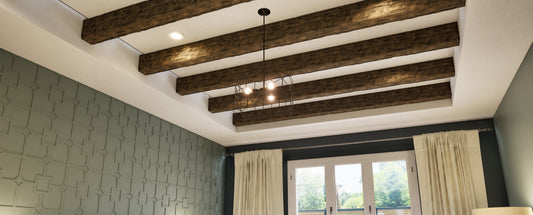
8 Wood Wall Paneling Ideas That Flow from Floor to Ceiling

Wood paneling is no longer the dark, dated look your parents tried to cover up. Modern wall paneling treatments range from bright horizontal shiplap to dramatic vertical slats, and the real design magic happens when that paneling does not stop at the ceiling line. Running wood from wall to ceiling — or coordinating wall paneling with overhead beams — creates a continuous, enveloping warmth that paint alone cannot achieve.
At Elite Ceiling Designs, we specialize in both wall and ceiling installations across the Sacramento and Bay Area markets. That dual expertise matters because the transition point between wall and ceiling is where most paneling projects either look seamless or fall apart. Below are eight wood wall paneling concepts that connect the vertical and horizontal planes of your room into one cohesive design.
For each style, we cover faux versus real wood options, approximate cost ranges, and which rooms benefit most. If you already have faux wood beams overhead, several of these ideas pair directly with your existing ceiling treatment.
1. Shiplap Accent Wall Extending to the Ceiling
Shiplap — horizontal planks with a characteristic gap between boards — has become a staple of farmhouse modern and coastal design. Running shiplap continuously from floor level up the wall and across the ceiling creates an enveloping, cabin-like effect without the heaviness of full log construction.
Real shiplap uses tongue-and-groove boards in pine, poplar, or cedar, running $3–$7 per square foot for materials. Faux shiplap options include lightweight PVC planks ($2–$5/sq ft) and MDF panels with routed grooves ($1.50–$4/sq ft). Both install with brad nails and construction adhesive over existing drywall.
The transition from wall to ceiling is the critical detail. A clean inside-corner joint works for modern looks, while a small crown molding strip suits more traditional spaces. Paint the shiplap white or soft gray for brightness, or leave it in natural pine for a true farmhouse feel. This treatment is especially popular in open-concept living areas and master bedrooms throughout Sacramento-area new builds and remodels.
Cost for a 12×14 room (one accent wall plus ceiling): $1,800–$4,500 installed, depending on material choice.
2. Vertical Plank Paneling
Where shiplap runs horizontal and emphasizes width, vertical planks draw the eye upward, making walls appear taller. This simple orientation change is one of the most effective visual tricks for rooms with standard 8-foot ceilings — the vertical lines create an illusion of an additional 6 to 12 inches of height.
Install planks in 4- to 6-inch widths for a classic board-and-batten feel, or go wider (8–10 inches) for a more modern, minimal look. Tongue-and-groove pine or poplar boards range from $2.50–$6 per square foot. Faux wood vinyl planks offer a moisture-resistant alternative for bathrooms and kitchens at $3–$5 per square foot.
Vertical paneling pairs naturally with matching overhead beams running perpendicular to the plank direction — the contrast between vertical wall lines and horizontal ceiling beams adds dimensional interest. Our color matching and stain services ensure the wall planks and ceiling beams read as a unified design rather than mismatched components.
Best rooms: bedrooms, home offices, hallways, and any space where ceiling height feels limited.
3. Herringbone or Chevron Wood Wall
Herringbone and chevron patterns bring geometric energy to a wall. The angled boards create movement and visual complexity that flat horizontal or vertical planking cannot match. Herringbone features boards meeting at 90-degree angles in a staggered zigzag, while chevron aligns the boards at matching angles to form continuous V-shapes.
This is a statement treatment — typically applied to a single accent wall in a dining room, bedroom headboard wall, or living room fireplace wall. Material costs run higher than standard planking because the angle cuts produce more waste: budget $5–$10 per square foot for real wood, $3–$7 for faux wood alternatives.
Installation is more labor-intensive, requiring precise angle cuts and layout planning. A 10×8-foot accent wall in herringbone typically takes 8–12 hours for a two-person crew. The visual payoff, however, is significant — this is the kind of wall that guests photograph.
For a cohesive floor-to-ceiling effect, extend the herringbone pattern up and over the top edge of the wall into a partial ceiling treatment, stopping where it meets a beam or transition strip. This technique works particularly well in rooms with sloped or vaulted ceilings where the wall and ceiling planes already converge. See examples in our project gallery.
4. Reclaimed Wood Feature Wall
Reclaimed wood — salvaged from old barns, factories, warehouses, and demolished structures — offers a weathered texture and color variation that no manufactured product can duplicate. Each board carries its own grain pattern, nail holes, saw marks, and patina from decades of exposure.
Sourcing reclaimed wood in Northern California often means barn wood from the Central Valley, old-growth redwood from dismantled structures, or mixed hardwoods from decommissioned industrial buildings. Prices range from $8–$20 per square foot depending on species, thickness, and how much processing (cleaning, de-nailing, milling) has been done.
Installation requires more care than standard planking because reclaimed boards vary in thickness, width, and condition. Expect installation to take 50–100% longer than uniform planking. The boards should be inspected for lead paint residue and treated for pests before interior use — reputable suppliers handle this pre-sale.
A reclaimed wood wall pairs beautifully with rustic faux wood ceiling beams. The faux beams provide structural visual weight overhead without the cost and complexity of sourcing matching reclaimed timber for the ceiling. This combination — authentic reclaimed walls, precision-crafted faux beams — gives you the best of both worlds at a manageable budget.
5. Slat Wall with Spacing (Modern / Japandi Style)
Wood slat walls use evenly spaced vertical or horizontal strips — typically ¾ to 1½ inches wide with ½ to 1 inch gaps — mounted on a solid backing. The spacing allows light and shadow to play across the surface throughout the day, creating a dynamic texture that changes with the light angle.
This design draws heavily from Japanese minimalism and Scandinavian simplicity — the aesthetic often called Japandi. Slat walls work as room dividers, headboard features, media walls behind televisions, and hallway accents. Running the slats from wall onto the ceiling creates a dramatic overhead canopy effect, especially effective in entryways and open-plan living areas.
Prefabricated slat panels (typically MDF or oak veneer on a flexible backing) cost $8–$15 per square foot and simplify installation considerably — the panels mount as full units rather than individual strips. Custom solid-wood slat installations run $15–$25 per square foot. Both options accept stain or paint.
For homes in the Sacramento area, slat walls paired with a clean white stretch ceiling create a striking contrast — warm wood below, smooth minimal ceiling above. Or extend the slats overhead for the full envelope experience. Either way, the result is unmistakably contemporary.
6. Wood Wall-to-Beam Ceiling Transition
This concept is about continuity: wall paneling that flows upward and merges directly into ceiling beams without a visible break or transition strip. The wood on the wall appears to simply continue overhead, wrapping from the vertical plane to the horizontal.
Achieving this seamless look requires careful material matching. The wall paneling and ceiling beams should share the same species, stain color, and finish sheen. This is where our color matching expertise becomes essential — even a slight color mismatch between wall and ceiling wood is immediately visible at the transition line.
Faux wood beams are actually ideal for this application because they can be manufactured to precisely match any wall paneling stain. Real timber beams are limited to whatever color the specific piece of wood will accept. A faux beam finished to match white oak wall panels, for example, will be indistinguishable from the real thing once installed 8+ feet overhead.
This treatment is particularly striking in great rooms, master bedrooms, and open-concept kitchen/living areas. The continuous wood creates a sense of shelter and warmth — the room feels wrapped rather than simply enclosed. Budget $12–$30 per square foot for the complete wall-to-ceiling treatment, including materials and installation.
7. Half-Wall Wainscoting with Matching Ceiling Beams
Wainscoting — paneling that covers the lower third to half of a wall — is a centuries-old technique for protecting walls and adding decorative structure. When the wainscoting material and finish match the ceiling beams overhead, the room develops a cohesive visual framework: wood at the bottom, wood at the top, with painted or papered wall space in between.
Traditional wainscoting heights run 32–36 inches (chair rail height) for dining rooms and 48–54 inches for hallways and staircases. Board-and-batten wainscoting — vertical boards with narrow battens covering the seams — is the most popular current style, though raised-panel and flat-panel options remain strong in traditional homes.
Material costs for wainscoting range from $5–$12 per square foot installed. Adding matching faux wood ceiling beams runs $15–$45 per linear foot depending on beam size and complexity. The combined effect — coordinated wainscoting and beams — gives a room a polished, intentionally designed look that casual observers might attribute to original architecture rather than a retrofit.
We frequently install this combination in dining rooms, home offices, and entryways across Sacramento and Bay Area homes. The wood tones anchor the room while the contrasting painted wall space keeps things bright and open.
8. Full Wood Envelope (Walls + Ceiling Wrapped)
The most immersive option on this list: covering every surface — walls and ceiling — in matching wood. This full-envelope approach transforms a room into what feels like a handcrafted wooden box. The effect ranges from cozy (a cedar-wrapped sauna or meditation room) to dramatic (a walnut-paneled library or home theater).
Cedar and redwood are traditional choices for saunas and spa rooms thanks to their natural moisture resistance and aromatic properties. White oak and walnut dominate in libraries, wine cellars, and high-end media rooms. Faux wood paneling offers the look at roughly 40–60% of the cost of solid hardwood, and its lighter weight makes ceiling installation significantly easier.
Full-envelope rooms require careful attention to acoustics. All-wood surfaces reflect sound aggressively, so incorporating acoustic panels, soft furnishings, or acoustic stretch ceiling panels in portions of the room prevents the space from becoming an echo chamber.
Budget: $20–$50 per square foot for a full-room treatment in faux or engineered wood. Real hardwood pushes to $40–$80+ per square foot. A 10×12 room with 9-foot ceilings has roughly 680 square feet of combined wall and ceiling surface — so material costs alone range from $13,600 to $34,000 for a faux wood finish, making this a premium investment.
Elite Ceiling Designs handles both the wall and ceiling components of full-envelope installations, ensuring material, stain, and finish consistency across every surface. Visit our gallery to see completed wood-wrapped rooms, or contact us to discuss your project.
Our Top Picks
Here is a quick guide based on your goals and budget:
- Best for Small Budgets: Vertical Plank Paneling (#2), Shiplap Accent Wall (#1)
- Best Modern/Contemporary Look: Slat Wall (#5), Herringbone/Chevron (#3)
- Best for Cohesive Wall + Ceiling Design: Wall-to-Beam Transition (#6), Half-Wall Wainscoting + Beams (#7)
- Most Dramatic Impact: Full Wood Envelope (#8), Reclaimed Wood Feature Wall (#4)
- Best for Rooms with Low Ceilings: Vertical Plank Paneling (#2), Slat Wall (#5)
The through-line across all eight ideas is continuity. When wall and ceiling treatments speak the same design language — matching materials, coordinated finishes, intentional transitions — the room feels complete rather than assembled from unrelated parts.
Elite Ceiling Designs is one of the few firms in the Sacramento and Bay Area region that handles both wall paneling and ceiling installations in-house. That means one team, one design vision, and seamless execution from floor to ceiling. Contact us for a consultation to explore which paneling approach fits your home.