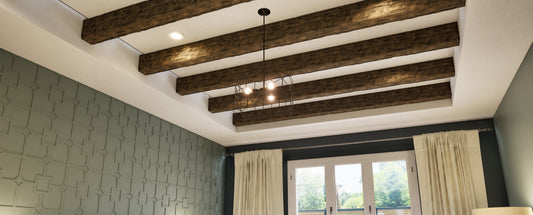
Are Faux Wood Beams Structural or Decorative?

Ceiling beams add immediate character, warmth, and architectural significance to a space. They can define a room's style, from rustic farmhouse to modern industrial, and create a powerful visual focal point. As homeowners and designers plan to incorporate this feature, a critical question often arises, especially when considering modern alternatives to solid wood: are faux beams structural or purely decorative? Understanding this distinction is not just a matter of design; it's a crucial issue of safety and proper construction.
The short answer is clear and unequivocal: faux wood beams, particularly those made from high-density polyurethane, are strictly decorative and have no load-bearing capabilities. They are designed to provide the aesthetic of a real wood beam without any of the weight. This guide will provide a definitive explanation of the difference between structural and decorative beams, debunk common myths about load bearing faux beams, and explore why the non-structural nature of polyurethane beams is one of their greatest strengths. For anyone considering a ceiling beam project, knowing these facts is essential for a safe, successful, and beautiful installation.
At Elite Ceiling Designs, we believe in empowering our customers with knowledge. Understanding the purpose and limitations of our products ensures they are used correctly to achieve stunning, long-lasting results.
Defining the Terms: Structural vs. Decorative Beams
To fully appreciate the role of faux beams, it’s essential to understand the two fundamental categories of beams in architecture and construction. Although they may look identical once installed, their functions are worlds apart.
What is a Structural Beam?
A structural beam, also known as a load-bearing beam, is an integral component of a building's framework. Its primary function is to support weight and transfer loads to other structural elements, such as columns, posts, or foundation walls. These are the workhorses of a building, responsible for holding up ceilings, floors, and roofs.
Key characteristics of structural beams include:
- Material: They are made from materials with immense compressive and tensile strength. This includes solid wood timbers, laminated veneer lumber (LVL), steel I-beams, or reinforced concrete.
- Engineering: The size, material, and placement of every structural beam are determined by a structural engineer. These calculations are based on the specific loads the beam must support (known as "dead loads" like the weight of the roof and "live loads" like snow or people) and the distance it must span. This is a precise science governed by building codes.
- Installation: Installing a structural beam is a major construction task. It requires proper support at each end, secure connections to the rest of the building's frame, and often involves heavy machinery to lift the beam into place. Retrofitting a structural beam into an existing home is an invasive and expensive process.
- Function: Its purpose is purely functional. While a beautifully finished wood beam can be an aesthetic element, its primary role is to keep the building standing. It is not optional.
In short, a structural beam is a critical part of a building's skeleton. Removing or altering it without professional engineering guidance could lead to catastrophic failure.
What is a Decorative Beam?
A decorative beam, also known as a non-structural or faux beam, serves a purely aesthetic purpose. Its job is to look like a structural beam, adding architectural character, style, and visual interest to a room without carrying any weight.
Key characteristics of decorative beams include:
- Material: They are intentionally made from lightweight materials. High-density polyurethane is the industry standard for high-quality decorative beams because it can be molded to perfectly replicate the look and texture of real wood while weighing only a few pounds. Other materials can include lightweight woods or styrofoam, though these often lack the durability and realism of polyurethane.
- Engineering: No structural engineering is required. Because they support no weight other than their own, there is no need for complex calculations or assessments of your home's structure.
- Installation: They are designed for easy installation. Lightweight decorative beams are typically hollow and U-shaped, allowing them to be mounted easily onto wood blocks that are screwed into the ceiling joists. This process is fast, safe, and can often be done as a DIY project.
- Function: Its purpose is purely visual. It is an architectural embellishment, like crown molding or wainscoting, added to enhance the design of a room. It can be added, moved, or removed at any time without affecting the building's integrity.
The answer to the question "are faux beams structural?" is a definitive no. They are sophisticated, realistic decorative elements designed to give you complete aesthetic freedom.
The Myth of "Load Bearing Faux Beams"
In the world of home improvement, misinformation can spread quickly. One of the most dangerous myths is the idea of a "load bearing faux beam." This term is a complete contradiction. A beam is either load-bearing (structural) or it is faux (decorative)—it can never be both.
Why This Concept is Dangerous
Promoting or searching for load bearing faux beams is hazardous because it conflates two entirely different product categories. A homeowner might mistakenly believe they can use a beautiful, lightweight polyurethane beam to replace a rotting structural support or to open up a wall. This could have disastrous consequences, leading to sagging ceilings, cracked walls, or even a structural collapse.
It is critical to understand:
- There is no such product as a load-bearing faux beam. Any product marketed as such is either mislabeled or dangerously misleading.
- Faux beams cannot be "made" structural. You cannot fill a hollow polyurethane beam with wood or concrete and expect it to carry a load. It lacks the internal integrity and material properties of a true structural member.
- Never use a decorative beam for any structural application. This includes supporting shelves, hanging heavy light fixtures (without separate anchoring to a joist), or holding up any part of the building itself.
Our commitment to our customers, which you can learn more about on our about us page, includes a commitment to safety through education. Always use materials for their intended purpose.
The "Wrap" Solution: The Closest You Can Get
There is one scenario where a decorative beam and a structural beam can work together. If you have an existing structural beam that is unsightly—such as a steel I-beam, a plain LVL beam, or a damaged wood beam—you can use a U-shaped faux beam to "wrap" or conceal it.
In this application:
- The faux beam still carries zero load. All the weight is supported by the original structural beam inside it.
- The faux beam acts as a decorative skin, providing the beautiful look of finished timber without interfering with the structural element's function.
- This is an excellent way to improve the aesthetics of a necessary structural feature, common in basement renovations or open-concept conversions where load-bearing headers are exposed.
This is the only safe and correct way to combine the appearance of a faux beam with the function of a load-bearing one. The faux beam remains a purely decorative element.
The Science: Why Polyurethane is Strictly Decorative
To understand why faux beams cannot be structural, one must look at their material composition and manufacturing process. High-density polyurethane is a phenomenal material for replication and durability, but it is not engineered for compressive or tensile strength in the way that steel or solid wood is.
Material Properties of Polyurethane
High-density polyurethane foam is a type of polymer created by reacting two liquid components. This reaction creates a stable, rigid foam with a closed-cell structure.
- Incredible Molding Capability: In its liquid state, polyurethane can be poured into molds taken from genuine wood beams. This process captures every minute detail—the grain, knots, saw marks, and imperfections—creating a replica that is virtually indistinguishable from the real thing.
- Lightweight by Design: The foaming process creates a material that is mostly air pockets within a strong polymer matrix. A typical 16-foot polyurethane beam might weigh 25-40 pounds, whereas a solid wood beam of the same dimensions could weigh 400-600 pounds or more.
- Durability, Not Strength: Polyurethane is extremely durable. It is resistant to impact, moisture, rot, and pests. It will not warp, crack, or split. This makes it a long-lasting decorative product. However, this surface durability should not be confused with structural strength. When subjected to a heavy load, it will not bend and flex like wood or steel; it will deform and fail.
The Hollow, U-Shaped Construction
Beyond the material itself, the form factor of a faux beam makes it non-structural. They are manufactured as three-sided, U-shaped channels.
- Designed for Mounting, Not Supporting: This U-shape is not designed for strength but for ease of installation. It allows the beam to be easily placed over wood blocks secured to the ceiling. A solid, four-sided profile would be much more difficult to install and would offer no structural benefit.
- Lack of Internal Mass: A structural beam relies on its entire cross-section—its internal mass—to resist forces of bending, compression, and tension. A hollow faux beam has no internal mass to provide this resistance. It is essentially an empty shell.
The very characteristics that make polyurethane faux beams such an excellent decorative product—their light weight, hollow profile, and molding fidelity—are the same characteristics that make them completely unsuitable for any load-bearing application.
The Unbeatable Advantages of a Non-Structural Beam
The fact that faux beams are decorative is not a limitation; it is their greatest advantage. It's the key that unlocks immense design freedom and makes stunning ceiling architecture accessible, affordable, and safe for virtually any home.
1. No Engineering or Structural Reinforcement Required
This is the most significant benefit. Because a faux beam adds negligible weight to the ceiling, there is no need to hire a structural engineer to assess your home's framing. You don't have to worry if your ceiling joists can handle the load, because there is no significant load to handle. This single factor saves thousands of dollars in consultation fees and eliminates the risk of needing costly, invasive reinforcement work on your ceiling structure.
2. Unmatched Design Freedom
With structural beams, your design is dictated by engineering requirements. With decorative beams, your design is dictated only by your imagination.
- Place Them Anywhere: You can install them on any ceiling, whether it's flat, vaulted, or sloped. You can create complex truss designs, intricate coffered ceiling layouts, or simple parallel patterns. The placement is based on aesthetics, not on where a support is needed.
- Any Size, Any Style: You can choose massive, dramatic beams for a grand statement or small, subtle beams for a touch of architectural detail. The size is based on scale and proportion, not load calculations. You can achieve the look of a heavy timber truss system without adding thousands of pounds of weight to your roof structure.
3. Safe and Simple Installation
The lightweight nature of faux beams revolutionizes the installation process, making it safer, faster, and far less expensive.
- Reduced Labor Costs: Installing a solid wood beam system is a major construction project requiring a large crew and heavy equipment. It can take days or even weeks. Installing a faux beam system is a finishing carpentry task. A professional can often complete a room in a single day, dramatically reducing labor costs.
- DIY-Friendly: For many homeowners, installing faux beams is a manageable DIY project. Lifting a 30-pound beam into place can be done safely by two people on ladders. This eliminates labor costs entirely, making a high-end look incredibly affordable.
4. Cost-Effectiveness
From materials to labor, every aspect of a faux beam project is more cost-effective than using real structural wood.
- Lower Material Costs: Polyurethane beams are significantly less expensive than solid wood timbers of a comparable size and style.
- No Hidden Costs: The price of the beam and installation supplies is the total cost. You won't be surprised by unexpected bills for engineering reports or structural modifications.
The various services we offer are all geared toward making this process as smooth and predictable as possible for our clients.
5. Long-Term Stability and Zero Maintenance
A decorative faux beam offers peace of mind that a structural wood beam cannot.
- Impervious to the Elements: Polyurethane does not react to changes in humidity or temperature. It will never warp, twist, or crack, which can be a problem with solid wood over time.
- Pest-Proof: Termites, carpenter ants, and other wood-boring insects have no interest in polyurethane.
- No Maintenance: Once installed and finished, a faux beam requires no ongoing maintenance, sealing, or treatments. It will look the same in 20 years as it did the day it was installed.
By embracing their decorative nature, you get all the aesthetic upside of real wood beams with none of the structural, financial, or long-term maintenance downsides.
Proper Application: Safe and Creative Uses for Faux Beams
Understanding that faux beams are decorative opens up a world of creative possibilities. Here are some of the most popular and appropriate ways to use them to enhance your home.
Ceiling Architecture
This is the primary application for faux beams. They can be used to completely transform a plain, flat ceiling into a custom architectural feature.
- Parallel Beams: The simplest and most common layout. A series of beams running across a living room or bedroom adds rhythm and a sense of structure.
- Coffered Ceilings: Creating a grid-like pattern of beams on a ceiling. This classic, elegant look adds a sense of luxury and depth, especially in dining rooms, studies, or master bedrooms.
- Trusses on Vaulted Ceilings: Building decorative trusses (like King Post or Scissor trusses) is one of the most dramatic applications. It creates a stunning focal point in great rooms with high, vaulted ceilings, a look that would be prohibitively expensive and complex with real wood.
- Ridge Beams: A single, large beam along the peak of a cathedral ceiling can anchor the space and accentuate its height.
Wall and Entryway Accents
Faux beams aren't just for ceilings. Their light weight makes them suitable for vertical applications as well.
- Mantels: A rustic faux wood beam makes a perfect fireplace mantel. It provides the look of a heavy, solid timber without requiring complex anchoring into the wall studs.
- Doorway Headers: Placing a beam over a large cased opening between two rooms can create a beautiful, rustic transition.
- Wall Decor: Used vertically or horizontally, beams can add texture and a rustic or industrial element to an accent wall.
Hiding Imperfections
The hollow, U-shaped profile of faux beams makes them excellent problem-solvers.
- Concealing Wires and Pipes: Run electrical conduit for new lighting, speaker wires for a home theater system, or even small plumbing lines inside the hollow channel of the beam for a clean, seamless look.
- Covering Seams and Cracks: A strategically placed beam can cover a large drywall seam or a settlement crack in the ceiling, turning a flaw into a feature.
- Wrapping Structural Elements: As mentioned earlier, they are perfect for wrapping existing structural beams, posts, or soffits to integrate them beautifully into your design.
When used correctly, decorative faux beams are one of the most versatile and impactful design elements available. If you have questions about whether a faux beam is right for your specific project, don't hesitate to contact us. Our team of experts can provide the guidance you need.
Conclusion: Embrace the Decorative Power of Faux Beams
The question of whether faux beams are structural has a clear and simple answer: no, they are strictly decorative. This fact should not be seen as a limitation but as the key to their incredible value and versatility. The myth of the load bearing faux beam is a dangerous misnomer; these products are designed for beauty, not brawn.
By being non-structural, high-quality polyurethane beams from Elite Ceiling Designs offer homeowners, designers, and builders a superior solution for adding architectural character. They provide the authentic, timeless look of real wood while eliminating the immense cost, weight, engineering challenges, and installation complexity associated with structural timbers. You gain complete design freedom to create the ceiling of your dreams, from simple beam layouts to complex trusses, without worrying about structural integrity or safety.
The lightweight, stable, and maintenance-free nature of faux beams makes them a smarter, safer, and more cost-effective investment in your home's beauty and value. When you choose a faux wood beam, you are choosing a purely aesthetic element—and in doing so, you are opening up a world of design possibilities that structural materials could never affordably offer.