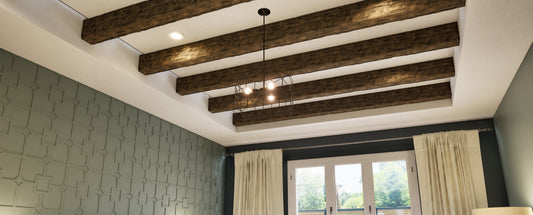
Faux Wood Beam Color Matching: How We Match Any Wood Species

Key Takeaways
- Custom color matching ensures faux beams blend seamlessly with existing wood flooring, cabinetry, and furniture.
- Elite Ceiling Designs uses a multi-layer staining and finishing process -- not a single coat of paint.
- We replicate specific wood species including oak, walnut, cedar, pine, mahogany, and reclaimed wood.
- Sacramento and Bay Area trends favor warm neutrals, gray-washed finishes, and whitewashed coastal looks.
- Photographing your existing wood elements in natural daylight is the best way to start a color match consultation.
Installing faux wood beams that look stunning on their own is the easy part. The real craft is making those beams look like they have always belonged in your home -- sitting in harmony with your hardwood floors, kitchen cabinets, fireplace mantel, and built-in shelving. Color matching is what separates a nice ceiling upgrade from a space that feels architecturally intentional. It is also a core specialty at Elite Ceiling Designs and one of our sharpest competitive advantages. For a comprehensive overview of faux beam options, materials, and styles, start with our ultimate guide to faux wood beams.
Most faux beam suppliers offer 6 to 12 stock colors. If one of those happens to match your existing woodwork, great. But homes are rarely that simple. Your red oak flooring from 2008 has aged differently than a new beam stained "Early American." Your walnut kitchen island has undertones that will not show up in a manufacturer online swatch. This is why we invested in a dedicated color matching and custom stain service -- so every beam we deliver is finished to your specific environment, not to a generic catalog.
Why Color Matching Matters More Than Most People Expect
Wood tones anchor a room's design language. When all the wood elements in a space share a family of tones -- even if they are not identical -- the room reads as cohesive and designed. When one element is noticeably off, the eye catches it immediately. Mismatched beams do not just look wrong on the ceiling; they make everything else in the room feel slightly disconnected.
The challenge is that "matching" does not mean "identical." Wood floors, cabinetry, and furniture all develop different patinas over time due to UV exposure, foot traffic, oil from hands, and cleaning products. A beam stained to match a brand-new sample of your flooring species will look slightly off against the actual floor that has been down for five years. Our process accounts for this by matching to the wood as it exists now -- in its current, lived-in state -- rather than to a theoretical fresh sample.
Mismatched wood tones are one of the top three complaints we hear from homeowners who previously purchased stock-color beams from big-box retailers or online suppliers. The beams themselves were fine products, but the color was off by just enough to bother them daily. That is the kind of subtle detail that erodes your satisfaction with a renovation over time.
Our Custom Color Matching Process -- Step by Step
Elite Ceiling Designs has refined this process over years of residential and commercial installations across the Sacramento metro, East Bay, and South Bay. Each project follows the same disciplined sequence, whether we are matching one beam above a fireplace or twenty beams across a great room ceiling.
1. Reference Collection
We start by gathering reference points. Ideally, we visit your home and see the target wood in person -- under the actual lighting conditions it lives in. We photograph flooring, cabinets, mantels, or furniture from multiple angles, in both natural daylight and the room's artificial lighting. If an in-person visit is not possible, we guide you through photographing the wood yourself (more on that later). We also take note of the room's wall color, ceiling color, and light fixture color temperature, because all of these affect how the beam color is perceived once installed.
2. Sample Selection and Analysis
Back in our workshop, we analyze the reference photos alongside physical samples when available. We identify the wood species (or the species the client wants to replicate), then break the color into its component characteristics: base hue (warm, cool, or neutral), grain contrast level (high contrast like oak, low contrast like maple), undertone (red, amber, golden, gray, or chocolate), and surface sheen (matte, satin, or semi-gloss). This diagnostic step prevents the most common matching error -- getting the overall darkness right but missing the undertone.
3. Custom Stain Mixing
We mix custom stain formulations using professional-grade wood stains and tinting bases. A typical match requires blending two to four stain colors to achieve the target hue and undertone. We maintain a library of formulas from past projects, so repeat colors (like the honey-oak tone common in 1990s Sacramento homes) can be reproduced consistently. Each batch is mixed in sufficient volume to complete the full project, ensuring no color variation between beams.
4. Multi-Layer Application
Color depth in real wood comes from layers: the wood's natural tone, stain penetration into the grain, and surface finish reflections. We replicate this layering on faux beam surfaces. A typical application includes:
· Base coat: A thinned wash that establishes the overall tone and seeps into the textured grain of the polyurethane surface.
· Grain accent layer: A darker stain applied selectively to the recessed grain lines using a dry-brush technique, creating the depth and contrast that reads as natural wood.
· Highlight layer: A lighter tone lightly dragged across the raised grain surfaces to mimic the natural wear pattern wood develops over time.
· Glaze coat: An optional tinted glaze that unifies the layers and adds warmth or coolness as needed.
The difference between this multi-layer approach and a single-coat stain is dramatic. A single coat produces a flat, one-dimensional color. Our layered finish creates the visual complexity that makes a polyurethane beam look convincingly like aged hardwood.
5. UV-Protective Topcoat
Every beam gets a UV-protective clear topcoat as the final step. Sacramento's intense summer sun sends strong indirect light through windows, and UV radiation will shift unprotected stain colors over time -- typically fading reds and warming yellows. Our topcoat blocks 95%+ of UV radiation, preserving the color match for years. Clients can choose matte, satin, or semi-gloss sheens to match the luster of their existing woodwork.
6. Client Approval
Before finishing the full beam order, we produce a 12-inch sample section and present it to the client for approval -- in the actual room where the beams will be installed. We check it against the reference wood under daylight, overhead lighting, and evening lamplight. If any adjustment is needed, we reformulate and re-sample. The full production run does not begin until the client signs off.
Wood Species We Replicate Most Often
Our faux wood beams can be finished to replicate virtually any species. These are the ones we match most frequently in the Sacramento and Bay Area markets:
Red and White Oak
Oak is the most common hardwood flooring in Northern California homes, particularly in houses built between the 1980s and 2010s. Red oak has warm amber-to-pink undertones with pronounced cathedral grain patterns. White oak runs cooler, with gray and tan undertones and a tighter, more linear grain. We match both varieties regularly, and the distinction between them is one we take seriously -- installing a red oak-toned beam above white oak floors is a noticeable mismatch.
Walnut
Walnut's rich chocolate-brown tones with subtle purple undertones make it one of the most requested finishes for modern and transitional interiors. It is a popular choice for beams above kitchen islands where walnut cabinetry or countertops are present. The challenge with walnut matching is its natural variation -- a single walnut board can range from creamy sapwood to deep heartwood. We typically match to the dominant heartwood tone and incorporate grain variation for realism.
Cedar
Western red cedar has a distinctive reddish-amber warmth and irregular, knotty grain that is popular in craftsman and rustic interiors. Cedar-toned beams are especially common in outdoor living spaces, covered patios, and homes with cedar siding. The color-matching challenge is that real cedar shifts dramatically with age -- from bright salmon-pink when fresh to silvery gray when weathered. We can match either end of the spectrum or any point between.
Pine and Knotty Pine
Pine appears in farmhouse-style and mountain cabin aesthetics, common in homes around the Tahoe corridor and increasingly popular in Sacramento's Craftsman revival interiors. Knotty pine adds visual character through its distinctive knot patterns, which we replicate with hand-painted knot accents on the beam surface. The golden-honey tone of aged pine is one of our most satisfying matches to execute.
Mahogany
Deep reddish-brown with a fine, consistent grain, mahogany is less common but appears in higher-end homes with mahogany doors, window trim, or built-ins. It demands precise undertone matching -- too much red reads as cherry, too much brown reads as walnut.
Reclaimed Wood Look
This is not a species match but a style match: the weathered, multi-tonal, imperfect surface of salvaged barn wood or industrial timber. Achieving this look requires the most layered finishing process -- base tones, dry-brushed highlights, selective distressing, and sometimes hand-applied "aging" marks. The reclaimed aesthetic is extremely popular in Sacramento's Farm-to-Fork restaurant scene and has crossed over into residential kitchens and living spaces.
Color Trends in Sacramento and the Bay Area
Regional design trends directly influence beam color requests. Here is what we are seeing most in our current project pipeline, based on consultations through our architectural design services:
Warm Neutrals
The dominant trend right now: tones in the warm-beige-to-light-brown family. Think "aged driftwood" or "sandy oak." These bridge the gap between the cool-gray trend of the mid-2010s and the warmer palette that has taken over. Warm neutral beams pair beautifully with white oak floors, linen upholstery, and the creamy wall colors (Benjamin Moore White Dove, Sherwin-Williams Alabaster) that dominate current Sacramento interior design.
Gray-Washed Finishes
Still holding strong, particularly in contemporary and industrial-modern homes throughout the Bay Area -- San Jose, Fremont, Palo Alto. Gray-washed beams start with a medium wood tone and get a diluted gray stain overlay that mutes the warmth and introduces cool undertones. The result is a beam that reads as wood but lives comfortably in a room with gray tile, concrete countertops, or brushed-nickel fixtures.
Whitewashed and Coastal
A lighter, airier option that is gaining traction in Sacramento as California coastal style moves inland. Whitewashed beams use a white or off-white stain applied thinly enough to let the wood grain show through. The effect is casual, bright, and surprisingly versatile -- it works in bedrooms, sunrooms, and open-concept kitchens. Paired with blue-gray accents and natural textiles, it creates a relaxed coastal atmosphere even in a landlocked Sacramento home.
Dark and Dramatic
Espresso, charcoal, and near-black stains are making a comeback in formal spaces -- home offices, wine rooms, and dining rooms. These deep tones create maximum contrast against a white ceiling, producing a striking, high-design effect. They pair well with the moody, richly layered interiors trending on design platforms. The key is adequate ceiling height: we generally recommend dark beams only on ceilings 9 feet or higher.
How to Photograph Your Existing Wood for a Match Consultation
If you are not in the immediate Sacramento area or want to start the color matching process before scheduling an in-home visit, good photographs are essential. Here is how to take photos that give us the most accurate reference:
- Shoot in natural daylight. Open curtains and blinds, turn off artificial lights. Artificial lighting -- especially warm LED or fluorescent -- shifts colors significantly. Midday light on a cloudy day is ideal: bright but diffuse, with no strong color cast.
- Photograph at a 45-degree angle. Shooting straight down or straight on creates glare on glossy surfaces and flattens the grain detail. A 45-degree angle captures both the surface color and the grain depth.
- Include a neutral reference. Place a plain white sheet of printer paper in the frame. This gives us a white-balance reference to correct for any camera color shift.
- Capture close-up and context shots. Take one photo from 6 inches away to show grain detail, and another from 3 to 4 feet away to show the overall tone as it appears in the room.
- Photograph all wood elements you want matched. If the beams need to coordinate with both floors and cabinets, photograph both -- they may be different species or different ages, and we need to see the full picture.
- Note the finish. Tell us whether the surface is matte, satin, semi-gloss, or high-gloss. This affects how we finish the final topcoat on the beams.
Email photos directly to us through our contact page, and include any notes about the wood species (if known), how old it is, and which room the beams will go in. We can typically provide a preliminary color direction within two business days.
Why Custom Color Matching Sets Elite Ceiling Designs Apart
Most faux beam retailers -- including the big online warehouses -- operate on a stock-color model. You pick from a swatch card, they ship a beam in that color, and you hope it works. If it does not match your space, your options are to live with it, return it (often at significant shipping cost for oversized items), or attempt to re-stain it yourself.
Our model is fundamentally different. Every beam we install is finished to order, matched to your specific wood elements, verified with a physical sample in your actual room, and backed by our satisfaction process. This approach costs slightly more than stock products, but it eliminates the guesswork and the close-enough compromises that leave homeowners subtly dissatisfied.
We have built a library of over 200 custom formulas from past projects across Northern California. When a client's flooring happens to match a formula we have already developed -- which happens more often than you would think, given the prevalence of certain floor brands in the region -- we can move straight to sample production, shortening the timeline considerably.
Browse our completed projects in the gallery to see examples of color-matched beams in real Sacramento and Bay Area homes. The photos speak louder than any description we could write.