How to Cover an Ugly Ceiling Beam: 5 Solutions That Actually Work
If you’re trying to figure out how to cover an ugly ceiling beam, you’re usually dealing with one of three problems: it looks outdated, it disrupts the room visually, or it doesn’t match the rest of your design. Whether it’s a steel I-beam in a basement or an unfinished structural beam in a living space, leaving it exposed often makes the room feel incomplete.
The goal isn’t just to hide the beam — it’s to make it look intentional. Some solutions simply box it in, while others turn it into a design feature. Below are five practical ways to cover a ceiling beam, including options that blend in completely and options that upgrade the entire look of the space.
Some of these options focus on blending the beam into the ceiling, while others turn it into a standout feature. One of the most effective approaches today is using lightweight polyurethane foam beams, which combine realistic appearance with easier installation and long-term durability. Understanding how each method works will help you choose the right solution for your space.
Understanding the Challenge: Why Beams Become Eyesores
Before diving into solutions, it’s helpful to understand why a ceiling beam might be considered "ugly" in the first place. Structural beams are essential for supporting the weight of your home, but their placement and appearance are often dictated by engineering needs, not design preferences.
Common Types of Unattractive Beams
- Steel I-Beams: Often found in basements or industrial-style spaces, these metal beams have a cold, unfinished look that can clash with cozier, more traditional decor. Their shape can also make them difficult to integrate smoothly into a ceiling.
- Laminated Veneer Lumber (LVL) Beams: These are strong, engineered wood products, but they are not meant for show. Their layered, plywood-like appearance is purely functional and lacks the natural beauty of solid wood.
- Oversized or Poorly Placed Concrete Beams: Common in some types of construction, concrete beams can feel bulky and oppressive, especially in rooms with lower ceilings.
- Dated or Damaged Wood Beams: A solid wood beam might sound appealing, but one that is painted a jarring color, has suffered water damage, or features an outdated texture can be just as problematic as an industrial I-beam.
The core issue is a disconnect between the beam's functional purpose and your design vision. The goal is to bridge that gap. You need a solution that can effectively hide the ceiling beam while adding character and value to your space.
Method 1: The Drywall Enclosure (Boxing In)
One of the most common approaches to cover a structural beam is to build a drywall box, or soffit, around it. This method creates a clean, seamless look that makes the beam appear as a natural part of the ceiling architecture.
How It Works
This process involves building a simple frame out of wood (2x4s) or metal studs around the beam. Once the frame is secure, drywall sheets are attached to it, and the corners are finished with tape and joint compound. After sanding and priming, the entire enclosure can be painted to match the rest of the ceiling.
Pros of a Drywall Enclosure
- Seamless Integration: When done well, a drywall box blends perfectly with the ceiling, making the beam completely disappear.
- Clean and Modern Look: This solution is ideal for contemporary and minimalist aesthetics where clean lines are a priority.
- Paintable Surface: You can paint it any color, allowing for perfect matching with your existing ceiling paint.
Cons of a Drywall Enclosure
- Labor-Intensive: This is not a simple weekend project. It requires carpentry skills for framing and drywall finishing skills for a smooth, professional result.
- Adds Visual Bulk: While it hides the beam, the resulting box is larger than the beam itself, which can make ceilings feel lower and rooms feel smaller.
- Lacks Character: A plain, painted box does little to add architectural interest. It solves the problem of an ugly beam but doesn't add any "wow" factor to the room.
A drywall enclosure is a practical but plain solution. It effectively hides the problem but misses the opportunity to add a significant design element to your space.
Method 2: Cladding with Real Wood
For those who love the rustic or traditional look of wood, cladding the existing structural beam with real wood planks is a popular option. This method involves wrapping the beam in thin pieces of wood to create the illusion of a solid timber beam.
How It Works
You can use a variety of wood types, from affordable pine boards to premium oak or cedar. The planks are custom-cut to fit the dimensions of the beam and are typically mitered at the corners for a clean join. The wood is then nailed or glued into place, sanded, and finished with a stain or sealant.
Pros of Wood Cladding
- Authentic Wood Look: This method provides the genuine look, feel, and texture of real wood because it is real wood.
- Customizable Finish: You can stain the wood to match your flooring, furniture, or other trim in the room.
- Adds Warmth and Character: Wood naturally adds a sense of warmth and coziness to any space.
Cons of Wood Cladding
- Heavy and Difficult to Install: Wood is heavy. Lifting and securing large planks overhead is a challenging, often two-person job. The installation requires precision cutting and carpentry skills.
- Expensive: The cost of quality wood can be substantial, especially for hardwoods like oak or walnut. This can quickly become one of the more expensive solutions.
- Susceptible to Warping and Splitting: Real wood can react to changes in humidity and temperature, potentially leading to warping, cracking, or splitting over time.
- Structural Limitations: Adding significant weight to the ceiling is not always advisable without consulting a structural engineer.
While beautiful, the cost, weight, and installation complexity of real wood cladding make it a less accessible option for many DIY homeowners. This is where engineered solutions begin to show their true value.
Method 3: The Superior Solution - Faux Wood Beams
What if you could get the stunning, authentic look of real wood without the weight, cost, and installation headaches? That’s exactly what faux wood beams offer. Specifically, high-density polyurethane foam beams are an innovative and practical way to cover a structural beam, especially when working with professional foam beam installation in Sacramento.
At Elite Ceiling Designs, we have perfected the art of creating realistic, lightweight, and durable foam beams that solve this common design dilemma. Our commitment to quality and craftsmanship is at the core of our business, as you can learn more about on our About Us page.
What Are Polyurethane Foam Beams?
Foam beams are not the flimsy craft-store foam you might be picturing. They are crafted from high-density polyurethane, a robust material that is molded from real wood beams. This process captures every detail—the grain, knots, tool marks, and texture—of the original timber. The result is a beam that is visually indistinguishable from solid wood.
These beams are typically manufactured with three sides, creating a U-shaped channel. This design is perfect for sleeving directly over an existing structural beam, making installation remarkably simple.
Why Foam Beams Are the Best Way to Hide a Ceiling Beam
Choosing a foam beam to cover your structural element isn't just a cover-up; it's a design upgrade. Let's explore the specific advantages that make this the go-to solution for homeowners and designers alike.
1. Unmatched Realism
Modern manufacturing techniques have made faux beams incredibly realistic. The molds are often taken from genuine reclaimed barn wood or hand-hewn timbers, preserving their history and character. For instance, our Resawn textured foam beams showcase the beautiful, subtle marks left by old sawmills, adding a layer of authenticity that a simple wood box can't replicate.
2. Incredibly Lightweight
This is perhaps the most significant advantage. A 16-foot-long real wood beam can weigh several hundred pounds, requiring a team and special equipment to lift. A comparable polyurethane beam weighs only a fraction of that. This means:
- Easy DIY Installation: One or two people can comfortably and safely install a foam beam.
- No Structural Reinforcement Needed: You are not adding significant load to your home’s structure, so there’s no need to consult an engineer.
- Versatile Placement: They can be installed on almost any ceiling type, including drywall, plaster, and even vaulted ceilings.
3. Simple and Fast Installation
The U-shaped design makes it easy to hide a ceiling beam. The process generally involves:
- Measuring: Accurately measure the dimensions of the structural beam you need to cover.
- Mounting Blocks: Screw wood blocking (e.g., 2x4s) to the ceiling along the sides of the structural beam.
- Lifting and Securing: Lift the lightweight foam beam into place over the beam and the mounting blocks.
- Fastening: Drive screws through the sides of the foam beam into the wood blocks to secure it.
- Finishing Touches: Use color-matched caulk to fill screw holes and a touch-up kit to blend any seams for a flawless finish.
Our Installation and Help page offers detailed guides and support for this straightforward process.
4. Cost-Effective
While the initial purchase price of a high-quality foam beam may be comparable to some cheaper wood options, the total project cost is often much lower. You save significantly on:
- Labor: You can likely install it yourself, saving on hiring a contractor.
- Materials: No need for the extensive framing and drywall supplies of a soffit.
- Shipping: Lighter products cost less to transport.
By choosing foam, you are investing in a high-impact design feature without the high costs associated with real wood. You can even get a custom Foam Beams Quote to accurately budget for your project.
5. Durability and Low Maintenance
Unlike real wood, polyurethane is an inert material. This means it is:
- Impervious to Moisture: It will not rot, warp, or swell, making it suitable for use in basements or even bathrooms.
- Resistant to Pests: Termites and other wood-boring insects have no interest in polyurethane.
- Fade Resistant: The high-quality finishes are designed to last for years without fading or needing re-staining.
Once installed, a foam beam requires no maintenance beyond occasional dusting.
Real-World Transformation: A Case Study
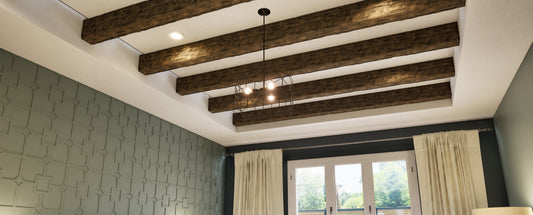
The impact of foam beams is best seen in action. One of our projects involved a room with a plain, uninspired ceiling that was disrupted by a necessary structural element. By installing our Resawn textured foam beams, we were able to not only cover the structural beam but also introduce a powerful architectural feature. The beams added warmth, definition, and a rustic elegance that completely revitalized the space.
This project highlights how a challenge—an ugly beam—can become the catalyst for a breathtaking design transformation. The comprehensive Services we offer ensure that every client can find the perfect product for their unique needs.
How to Choose the Right Foam Beam to Cover Your Beam
With a wide variety of styles, textures, and colors available, choosing the right foam beam is a crucial step. Here’s what to consider.
1. Measure Your Existing Beam
The first step is to get precise measurements. You need the height, width, and length of the structural beam you want to cover. When selecting a foam beam, ensure its inside dimensions are slightly larger than your structural beam's outside dimensions to allow it to slide over easily. Most manufacturers provide both interior and exterior measurements for their products.
2. Select a Style and Texture
The style of the beam should complement your home's architecture and decor.
- Hand Hewn: Perfect for rustic, farmhouse, or Tuscan-style homes. These beams feature classic adze marks for an old-world, handcrafted look.
- Resawn: Ideal for everything from traditional to modern industrial spaces. The finish mimics the circular marks left by rough-sawing at a mill.
- Rough Sawn: Offers a more rugged, less uniform texture that works well in cabins, lodges, and rustic interiors.
- Smooth/Contemporary: For modern or transitional spaces, a smoother finish provides clean lines while still offering a hint of wood grain.
Explore the full range of products at our online shop to find the perfect match.
3. Choose the Right Color
Foam beams come in a wide range of pre-finished colors, from light unfinished pines to deep, rich walnuts and dark ebony. To make the best choice:
- Order Samples: Always order samples to see how the colors look in your room and with your specific lighting.
- Match Existing Wood Tones: Consider matching the beam color to your wood floors, cabinets, or furniture for a cohesive look.
- Create Contrast: Alternatively, use a contrasting color to make the beams a dramatic focal point. A dark beam on a white ceiling, for example, creates a bold, striking effect.
- Unfinished Options: If you want a specific custom color, you can order unfinished beams and paint or stain them yourself with a water-based product.
4. Plan Your Layout
If you are only covering one beam, the layout is simple. However, many homeowners use this opportunity to add more non-structural beams to create a more elaborate ceiling design, such as a coffered ceiling or a truss system. This can make the main, functional beam feel more intentional and integrated into a larger architectural statement.
Other Creative Ways to Hide a Beam
While we believe foam beams are the premier solution, there are a few other creative ideas worth mentioning for specific situations.
- Paint It a Dark Color: If the beam isn't excessively unattractive and you have high ceilings, painting it a dark, dramatic color like charcoal gray or black can turn it into a deliberate graphic element. This works best in modern or industrial spaces.
- Wrap It in Rope: For a nautical or coastal theme, wrapping a beam tightly in thick jute or sisal rope can be a unique and textural solution. This is a labor-intensive but budget-friendly DIY option.
- Use It for Lighting: Integrate the beam by mounting track lighting or pendant lights to it. This makes the beam feel purposeful, drawing the eye to the light fixtures rather than the beam itself.
These options are more niche and may not work for all beams or design styles, but they demonstrate that with a little creativity, a beam can be disguised in many ways. However, none offer the same combination of aesthetic transformation, ease, and value as a high-quality polyurethane beam.
Take the Next Step Towards a Beautiful Ceiling
An ugly structural beam doesn't have to be a permanent flaw in your home's design. You no longer have to just live with it. By choosing to cover the structural beam, you can reclaim your space and add significant architectural character and value.
While options like drywalling and wood cladding exist, they come with considerable drawbacks in terms of labor, cost, and complexity. Polyurethane foam beams from Elite Ceiling Designs stand out as the most effective, accessible, and transformative solution. They offer the authentic beauty of wood without the weight and maintenance, empowering homeowners to undertake stunning DIY projects with professional-looking results.
Are you ready to turn your ceiling's biggest flaw into its most admired feature?
- Explore our products: Visit our online shop to see the variety of styles and finishes.
- Get a custom quote: Use our quote tool for a precise estimate for your project.
- Talk to an expert: If you have questions or need design advice, don't hesitate to contact us. Our team is here to help you find the perfect solution to hide your ceiling beam and create the home of your dreams.