
Outdoor Ceiling & Patio Beam Design Guide: Ideas & Installation
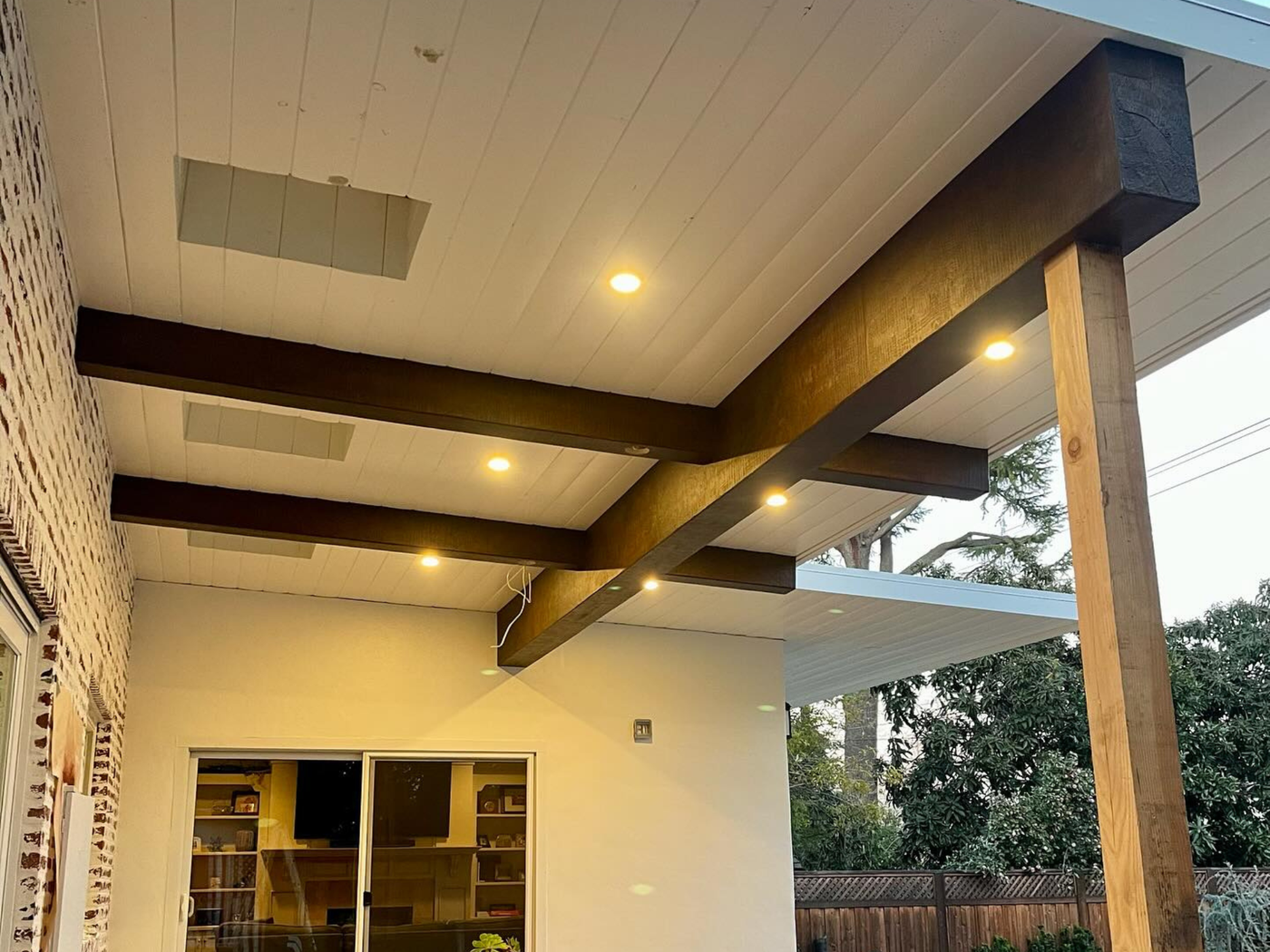
A covered patio without a finished ceiling is like a room without a roof — functional, but incomplete. Across Sacramento, Folsom, El Dorado Hills, and the Bay Area, homeowners are investing heavily in outdoor living spaces that feel like natural extensions of their homes. The ceiling overhead plays a bigger role than most people realize: it defines the visual scale of the space, affects acoustics, controls lighting options, and ultimately determines whether your patio feels like an afterthought or an intentional living area.
This guide covers everything you need to know about designing outdoor ceilings and selecting the right beam treatments for patios, pergolas, outdoor kitchens, and covered entertaining areas. We focus specifically on the materials and techniques that perform well in Northern California's climate — from Sacramento's 100°F+ summer heat to the Bay Area's persistent marine layer moisture.
Why Outdoor Ceiling Design Matters
Extending Your Usable Living Space
A finished patio ceiling transforms an outdoor area from a seasonal hangout to a genuine room. The overhead surface provides shade from direct sun — critical in Sacramento summers where temperatures regularly exceed 100°F from June through September. It also offers protection from light rain, falling leaves, and bird droppings. In practical terms, a well-designed patio ceiling can add 200 to 600 square feet of usable living space to a typical Sacramento or Bay Area home.
Property Value and ROI
Outdoor living improvements consistently rank among the highest-ROI home upgrades in Northern California. According to remodeling cost-vs-value reports, covered outdoor living spaces recoup 65–75% of their cost at resale in California markets. In high-demand neighborhoods like El Dorado Hills, Granite Bay, Walnut Creek, and Danville — where outdoor entertaining is a lifestyle expectation — the return can be even higher. A patio with a finished ceiling, decorative beams, and integrated lighting signals quality craftsmanship to buyers.
Year-Round Usability in the California Climate
Sacramento averages 269 sunny days per year. The Bay Area, despite its microclimates, offers mild year-round temperatures that make covered outdoor spaces usable in every season. The challenge isn't cold — it's managing heat, UV exposure, and occasional moisture. A properly designed outdoor ceiling addresses all three: it provides shade, protects finish materials from UV degradation, and channels or blocks rainwater. Homeowners in Folsom and Roseville frequently tell us their covered patios become the most-used rooms in the house from April through October.
Outdoor Faux Beam Options
Faux wood beams have become the preferred choice for outdoor ceiling installations, and for good reason. Real wood beams suitable for outdoor use — pressure-treated Douglas fir, cedar, or redwood — are expensive, heavy, and require ongoing maintenance. High-density polyurethane faux beams deliver the same visual impact at a fraction of the weight and with dramatically better weather resistance.
UV-Resistant Polyurethane Beams
Quality outdoor faux beams are manufactured from closed-cell polyurethane foam with UV-stabilized coatings. This matters enormously in Sacramento, where summer UV index values regularly reach 10–11 (classified as "very high" exposure). Without UV stabilization, any material will fade, crack, or chalk within two to three seasons. Premium polyurethane beams rated for outdoor use include UV inhibitors in both the foam core and the surface finish, providing 15–20 years of color stability with minimal maintenance.
Weight Advantages for Patio Structures
A solid 6"×8" real wood beam weighs roughly 12–16 pounds per linear foot, depending on species and moisture content. The same size in polyurethane faux beam weighs 1.5–2.5 pounds per linear foot. This weight difference isn't just a convenience — it's often a structural requirement. Many patio covers, aluminum pergolas, and lightweight patio roofs simply cannot support the dead load of real timber beams. Faux beams make decorative beam ceilings possible on structures where real wood would require costly reinforcement.
Style Options for Every Architecture
Outdoor faux beams come in finishes that match virtually any architectural style common in Northern California:
· Rustic hand-hewn: Deep texture with adze marks and weathered grain. Popular in Folsom, El Dorado Hills, and Gold Country foothills homes.
· Smooth modern: Clean lines with subtle grain for contemporary Sacramento builds and Bay Area modern farmhouse designs.
· Mediterranean: Warm honey and terra cotta tones with gentle distressing. A natural fit for Danville, Walnut Creek, and Pleasanton Spanish-revival homes.
· Reclaimed barnwood: Authentic gray-brown tones with nail holes and saw marks. Increasingly popular for transitional outdoor spaces throughout the region.
Our color matching and stain services allow you to match faux beams to existing outdoor woodwork — deck railings, pergola posts, or fence stain — for a cohesive look across your entire outdoor space.
Sizing for Outdoor Scale
Outdoor spaces demand larger beam proportions than interior rooms. A beam that looks substantial in a 9-foot-ceiling living room will appear undersized under a 12-foot patio cover. As a general rule, outdoor beams should be at least 6" wide × 8" deep for standard patio covers (10–12 foot ceilings) and 8" × 10" or larger for grand-scale structures with ceilings above 14 feet. Beam spacing typically ranges from 3 to 5 feet on center, depending on the desired density of the pattern and the length of the span.
Patio Ceiling Design Ideas
The ceiling material and pattern you choose sets the tone for the entire outdoor room. Here are the most effective approaches we install across Sacramento and the Bay Area.
Tongue-and-Groove with Exposed Beams
This is the most popular patio ceiling treatment in our market, and for good reason. Tongue-and-groove planking (typically 6" wide cedar, composite, or PVC boards) creates a warm, finished surface, while beams layered below add depth and architectural interest. The planking runs perpendicular to the beams, creating a grid that visually organizes the ceiling plane. For outdoor applications, we recommend composite or PVC tongue-and-groove over natural cedar — it holds up better against Sacramento's extreme UV and doesn't require annual sealing.
Stretch Membrane Ceilings for Covered Patios
Stretch ceiling membranes — typically associated with interior applications — are gaining traction in fully covered outdoor spaces. When installed under a solid roof structure, a stretch membrane provides a perfectly smooth, seamless surface that resists moisture, won't crack in temperature swings, and can incorporate recessed lighting. This works particularly well for modern patio designs in Bay Area homes where clean, minimalist aesthetics are preferred. The membrane installs on a perimeter track and can span up to 50 feet without a seam, which eliminates the joints that trap dirt and moisture in traditional panel ceilings.
Beadboard and V-Groove Alternatives
Cellular PVC beadboard offers a classic look with virtually zero maintenance. Available in 4" and 6" widths, it installs with standard fasteners and can be painted any color. We frequently install white beadboard ceilings on covered porches and patios in older Sacramento neighborhoods like Land Park, East Sacramento, and Curtis Park, where the traditional Craftsman and Colonial Revival architecture calls for a more classic overhead treatment.
Mixed-Material Designs
Some of the most striking patio ceilings combine two or more materials. A popular approach pairs painted beadboard panels between stained faux beams — the white ceiling reflects light into the patio while the dark beams provide contrast and architectural weight. Another option uses corrugated metal panels between beams for an industrial or modern farmhouse feel. These combinations allow you to balance aesthetics with practical concerns like reflectivity, maintenance, and budget.
Pergola & Open-Air Beam Structures
Pergolas occupy a unique design space between fully covered patios and open sky. The beams are the design — there's no ceiling surface to hide behind. That makes beam selection and spacing critical.
Beam Spacing for Pergolas
Pergola beam spacing affects both shade coverage and visual proportion. Tighter spacing (12–18 inches between rafters) provides more shade and a denser, more intimate feel. Wider spacing (24–36 inches) creates an open, airy structure that filters light rather than blocking it. In Sacramento, where shade is the primary goal, tighter spacing is almost always preferred. Bay Area homeowners — especially in coastal communities where fog already limits sun — often opt for wider spacing to maximize light on clear days.
Decorative vs. Structural Beams
Understanding this distinction saves money and opens up design options. Structural beams bear the load of the pergola — they connect posts and support rafters. These must be engineered lumber, steel, or solid timber sized by a structural engineer. Decorative beams, by contrast, are purely visual elements added to enhance the look. Faux polyurethane beams work brilliantly as decorative pergola elements: they can wrap around smaller structural members to create the appearance of massive timber, or they can be added between structural beams as infill rafters to tighten the visual spacing without adding meaningful weight.
Faux Beams on Lightweight Structures
Aluminum and vinyl pergola kits are popular for their low maintenance, but they look exactly like what they are — metal or plastic. Faux beam wraps transform these budget-friendly structures into something that looks like heavy timber construction. We've completed dozens of these projects across the Sacramento region, slipping polyurethane beam shells over aluminum rafters to create a convincing wood appearance. Browse our project gallery to see before-and-after examples of pergola beam transformations.
Outdoor Kitchen Ceiling Design
The Bay Area's outdoor kitchen trend has been building for over a decade, and Sacramento has followed closely. An outdoor kitchen ceiling needs to do more than look good — it has to handle heat, grease vapor, and ventilation requirements that standard patio ceilings don't face.
Heat and Grease-Resistant Options
Directly above a grill or cooktop, ceiling materials face radiant heat that can reach 150–200°F at close range. Polyurethane faux beams handle this well — their thermal resistance exceeds 300°F, which provides a comfortable safety margin. However, positioning matters. We recommend maintaining at least 36 inches of clearance between any beam and the cooking surface, and 48 inches is preferred for beams directly above a gas grill. Materials like standard PVC beadboard are not suitable for the area directly above a cooking station; here, composite or aluminum panels are safer choices.
Ventilation Integration
Outdoor kitchens under solid roof structures need ventilation pathways to prevent smoke and grease buildup. The ceiling design should incorporate gaps, vents, or a dedicated hood exhaust that routes through the roof. We often design beam layouts that create natural channels for airflow — running beams parallel to the predominant breeze direction in your yard and leaving 1–2 inch gaps between ceiling panels to allow passive ventilation.
Beam Placement Around Range Hoods
When an outdoor range hood is part of the design, beam placement must frame the hood rather than compete with it. The most effective layout runs beams on either side of the hood, creating a visual frame that integrates the ventilation equipment into the ceiling architecture. This is especially important when the hood is a stainless steel commercial style — the warm wood tones of beams soften the industrial look and connect it to the rest of the patio design.
Lighting for Cooking Areas
Task lighting is non-negotiable in an outdoor kitchen. Faux beams are ideal for concealing LED strip lighting and low-voltage wiring. The hollow interior of a faux beam can route wiring from a junction box to multiple downlight locations without any visible conduit. We typically install 3000K LED downlights at 24-inch intervals along beams that run over the primary cooking and prep areas, providing even, warm illumination that makes food look appetizing and work surfaces clearly visible after dark.
Weather & Climate Considerations for Northern California
Northern California's climate is a double-edged sword for outdoor design: the mild weather makes outdoor living spaces incredibly valuable, but the specific conditions demand careful material and installation choices.
Sacramento Valley Heat
Sacramento routinely hits 100–110°F between June and September. Prolonged heat exposure causes thermal cycling — materials expand during the day and contract at night, sometimes by significant amounts. Over years, this cycling loosens fasteners, opens joints, and cracks rigid materials. Polyurethane faux beams handle thermal cycling far better than real wood, which can warp, check, and split. Their dimensional stability across a temperature range of -40°F to 200°F means no seasonal gaps or cracks at joints.
Bay Area Marine Layer Moisture
Coastal and near-coastal areas from San Francisco through the Peninsula down to Half Moon Bay, and inland through Walnut Creek and Concord, experience regular marine layer moisture. Morning fog deposits a fine layer of condensation on outdoor surfaces for much of the summer. Real wood beams absorb this moisture, then dry in the afternoon sun — a cycle that promotes rot, mildew, and finish failure. Closed-cell polyurethane beams are non-absorbent; moisture beads on the surface and evaporates without penetrating. This makes them particularly well-suited for Bay Area outdoor installations.
UV Exposure
Sacramento receives approximately 3,600 hours of sunshine per year — among the highest in the state. UV radiation is the primary enemy of every outdoor finish material. It breaks down lignin in real wood (causing graying), degrades paint binders, and chalks solid stains. UV-stabilized polyurethane resists this degradation, but even the best materials benefit from periodic cleaning and, every 8–10 years, a fresh coat of UV-protective finish. South-facing and west-facing patio ceilings receive the most UV exposure and should use the highest-rated materials.
Wind Resistance and Seismic Safety
Coastal Bay Area locations — particularly elevated sites in the hills of Oakland, Berkeley, and Marin — experience sustained winds and gusts that can stress beam attachments. For more on wind-resistant beam installations in the Bay Area, see our detailed guide. All beam installations should use mechanical fasteners rated for the expected wind loads, not adhesive alone. In seismic zones (which includes all of Northern California), beam attachments must account for lateral movement. Our installation process includes seismic-rated mounting hardware and connection details that meet current California building code requirements.
Material Comparison for Outdoor Use
Choosing the right beam material for an outdoor application requires balancing aesthetics, durability, weight, maintenance, and cost. Here's how the main options compare for Northern California conditions.
Faux Polyurethane Beams
· Weight: 1.5–2.5 lbs/linear foot (6"×8" profile)
· Outdoor lifespan: 20–30 years with minimal maintenance
· UV resistance: Excellent with stabilized coatings
· Moisture resistance: Excellent (closed-cell, non-absorbent)
· Maintenance: Wash annually; refinish every 8–10 years if desired
· Cost: $15–$40 per linear foot installed
· Best for: Lightweight patio structures, pergola wraps, decorative applications
Real Wood Beams (Cedar/Redwood)
· Weight: 10–16 lbs/linear foot (6"×8" solid)
· Outdoor lifespan: 15–25 years with regular maintenance
· UV resistance: Poor without finish; moderate with quality exterior stain
· Moisture resistance: Moderate (cedar/redwood have natural oils, but still absorb moisture)
· Maintenance: Stain/seal every 2–3 years; inspect for rot, insects, and checking
· Cost: $25–$70 per linear foot installed (species dependent)
· Best for: Structural applications where real wood is required
Composite Beams
· Weight: 4–8 lbs/linear foot
· Outdoor lifespan: 20–25 years
· UV resistance: Good (varies by manufacturer)
· Moisture resistance: Good to excellent
· Maintenance: Wash annually; no staining or sealing required
· Cost: $20–$50 per linear foot installed
· Best for: Structural or semi-structural applications needing low maintenance
PVC/Vinyl Beams
· Weight: 2–4 lbs/linear foot
· Outdoor lifespan: 15–20 years
· UV resistance: Moderate (can yellow or become brittle)
· Moisture resistance: Excellent
· Maintenance: Wash annually; may need replacement if yellowed
· Cost: $10–$25 per linear foot installed
· Best for: Budget-conscious projects where close-up appearance is less critical
For most Sacramento and Bay Area patio projects, faux polyurethane beams offer the strongest combination of appearance, durability, and practical advantages. Real wood makes sense when authenticity is the top priority and the homeowner is committed to ongoing maintenance. Composite works well for structural situations where low maintenance matters. PVC is acceptable for budget projects but typically looks less convincing than polyurethane up close.
Installation Specifics for Outdoor Projects
Outdoor beam installation follows the same core principles as interior work, but with additional considerations for weather exposure, structural attachment, and code compliance. Our professional installation team handles these details, but understanding the process helps you plan your project effectively.
Mounting to Different Structures
The attachment method depends on what's overhead:
· Wood framing (most common): Lag screws into rafters or blocking, with a mounting cleat system that distributes load. Pilot holes prevent splitting, and stainless steel fasteners resist corrosion.
· Steel framing: Self-tapping screws or through-bolts with backing plates. We pre-drill mounting cleats to align with steel member locations.
· Concrete/masonry (soffits, stucco ceilings): Concrete wedge anchors or tapcon screws into pre-drilled holes. Minimum embedment depth of 1.5 inches for reliable hold.
Waterproofing Connections
Every penetration through an outdoor ceiling surface is a potential leak point. We seal all fastener holes with exterior-grade silicone or polyurethane sealant before installing beams. Where beams meet walls or posts, we use backer rod and flexible sealant rather than rigid caulk — the flexibility accommodates thermal movement without cracking. Drip edges are added where horizontal beams meet vertical surfaces to direct water away from the connection.
Electrical and Lighting Integration
One of the biggest advantages of hollow faux beams in outdoor applications is their ability to conceal wiring. Low-voltage LED wiring runs through the beam cavity from a weatherproof junction box to downlight or strip light locations. All outdoor electrical connections must be GFCI-protected per California electrical code. We coordinate with licensed electricians to ensure wiring is completed before beams are closed up. Common lighting configurations include:
· Recessed downlights at 24–36 inch intervals for general illumination
· LED strip lighting along beam edges for ambient glow
· Pendant light drops through beam centers for decorative fixtures over dining areas
Permit Considerations in Sacramento and the Bay Area
Permit requirements vary by jurisdiction. In Sacramento County, purely decorative beam additions to an existing covered patio typically do not require a permit, since they don't alter the structure. However, if the project involves new electrical work, structural modifications, or is part of a new patio cover construction, permits are required. Bay Area jurisdictions — particularly in Contra Costa and Alameda counties — tend to have stricter requirements and may require engineering calculations even for decorative attachments on seismically sensitive structures. We handle permit research and applications as part of our project management for residential and commercial outdoor projects throughout the Sacramento and Bay Area regions.
Frequently Asked Questions
Can faux beams handle direct rain exposure?
Yes, with caveats. High-quality polyurethane faux beams are waterproof at the material level — the closed-cell foam does not absorb water. However, prolonged direct rain exposure can eventually affect surface finishes and paint adhesion, particularly at cut ends or joints that haven't been properly sealed. For beams installed on open pergolas (no roof above), we apply an additional exterior-grade sealant to all seams and end cuts. Under a covered patio roof where beams are protected from direct rain, standard installation is more than adequate.
Do faux beams fade in the sun?
All materials experience some degree of UV-related color change over time. Premium polyurethane beams with UV-stabilized finishes maintain their color well for 8–12 years of direct sun exposure in Sacramento's intense UV environment. After that period, some lightening may occur — similar to how a quality exterior deck stain gradually mellows. A fresh coat of exterior-rated wood stain or paint restores the original appearance. Beams under a covered patio ceiling receive far less direct UV and can maintain their finish for 15+ years.
How do I match faux beams to existing outdoor woodwork?
We offer comprehensive color matching and custom stain services specifically for this purpose. The process starts with a sample of your existing woodwork — a photo in natural light, or ideally a small physical sample. We then custom-stain beam samples to match, adjusting undertone, grain contrast, and sheen level until the match is accurate. We bring test samples to your home for approval in actual outdoor lighting conditions before finishing the full order, because outdoor light reads very differently than showroom lighting.
What's the expected lifespan of faux beams outdoors?
Under a covered patio or porch roof, high-quality polyurethane beams last 25–30 years or longer with basic annual cleaning. In fully exposed pergola applications with direct sun and rain, expect 15–20 years before significant finish maintenance is needed. The foam core itself is essentially permanent — it won't rot, split, warp, or attract insects regardless of exposure. Lifespan is really about the surface finish, which can be refreshed at a fraction of the cost of replacement.
Do I need permits for outdoor beam installation?
In most Sacramento and Bay Area jurisdictions, adding decorative faux beams to an existing covered structure does not require a building permit, since the beams are non-structural and add negligible weight. Permits are typically required when: (1) the beam installation is part of a new patio cover or pergola construction, (2) new electrical wiring is being run for integrated lighting, or (3) the attachment involves modifications to the existing roof structure. We research permit requirements for your specific jurisdiction as part of our project planning and handle the application process when permits are needed.
Start Your Outdoor Ceiling Project
Your outdoor space deserves the same design attention as your interior rooms. Whether you're finishing a new patio cover in Folsom, adding beams to a pergola in Walnut Creek, or designing an outdoor kitchen ceiling in El Dorado Hills, the right materials and installation approach make the difference between a project that looks good on day one and one that still looks good in year fifteen. Contact Elite Ceiling Designs for a consultation and on-site assessment of your outdoor project. We serve Sacramento, the Bay Area, and communities throughout Northern California.
The right ceiling design can completely change the look and feel of your space while adding long-term style and value to your home or business.
Ready to transform your ceiling? You can contact Elite Ceiling Designs for a consultation and get a custom solution designed for your space and style.


