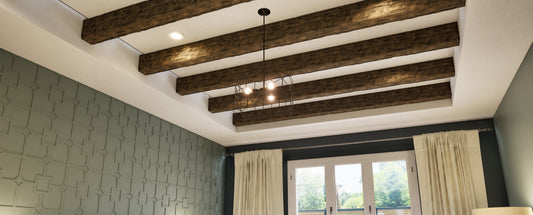
Foam Beams vs. Hollow Wood Beams: Which is Right for You?

The decision to add decorative beams to a ceiling is a transformative one, promising to bring warmth, character, and architectural depth to any room. Once you move past the immense weight and cost of solid timber, the choice often comes down to two popular alternatives: hollow wood beams and high-density polyurethane foam beams. From a distance, both can achieve a similar aesthetic, creating the illusion of a solid wood structure. But when you look closer at the materials, installation process, long-term durability, and overall value, a clear winner emerges.
This comprehensive comparison will explore the critical differences in the foam beams vs wood beams debate, specifically focusing on hollow wood constructions versus modern polyurethane solutions. While hollow wood beams seem like a logical step down from solid wood, they carry many of the same inherent disadvantages. Conversely, high-density foam beams offer a wealth of polyurethane beam advantages that make them a smarter, more practical, and often more beautiful choice for homeowners and professionals alike.
We will delve into key comparison points including weight, ease of installation, realism, durability, cost, and maintenance. By the end of this guide, you will have a clear understanding of why polyurethane beams from Elite Ceiling Designs represent the pinnacle of decorative beam technology, offering unparalleled benefits that hollow wood simply cannot match.
What Are Hollow Wood Beams?
Hollow wood beams, also known as box beams, are three- or four-sided boxes constructed from real wood. They are designed to look like solid timbers but are hollow on the inside. Typically, they are built by joining several planks of wood (often pine, cedar, or a higher-end hardwood) together. The corners can be simply butted together or, for a more refined look, mitered to create a cleaner seam.
The primary motivation for creating a hollow wood beam is to reduce weight and cost compared to a solid beam of the same dimensions. They allow for the use of thinner, less expensive wood planks and are easier to lift than a solid log. For years, this was considered the best way to get a wood beam look without the extreme structural requirements. However, this method is fundamentally a workaround that still relies on a problematic material: wood.
What Are Polyurethane Foam Beams?
Polyurethane foam beams are a modern, engineered solution. They are crafted from high-density polyurethane, a rigid and durable polymer. The manufacturing process is what sets them apart. Authentic wood beams, often reclaimed from historic barns or hand-hewn by artisans, are used to create highly detailed molds. Liquid polyurethane is then injected into these molds.
This process captures every minute detail of the original wood source—every knot, crack, grain pattern, and tool mark. The result is a three-sided, U-shaped beam that is lightweight yet incredibly strong and visually indistinguishable from the real thing. It’s not just a box made to look like wood; it’s a perfect replica of wood's texture and character. As we will see, this fundamental difference in material and manufacturing leads to a host of polyurethane beam advantages.
Our company's story, detailed on the About Us page, is rooted in a passion for this kind of innovation—blending authentic aesthetics with modern performance.
Head-to-Head Comparison: Foam Beams vs. Hollow Wood Beams
Let's break down the key factors to consider when choosing between these two options.
1. Weight and Ease of Installation
This is perhaps the most significant differentiator and a major factor in the total cost and complexity of a project.
- Hollow Wood Beams: While lighter than solid timber, hollow wood beams are still heavy. A 16-foot-long pine box beam can easily weigh 100-200 pounds or more, depending on the thickness of the wood used. This weight requires at least two strong people, proper scaffolding, and careful maneuvering to lift and install. The installation process is laborious, demanding precise measurements, complex mounting systems, and a significant amount of time and effort. The weight still puts a considerable load on the ceiling structure.
- Polyurethane Foam Beams: This is where the most significant polyurethane beam advantages shine. A comparable 16-foot foam beam might weigh only 20-30 pounds. This incredible lightweight nature transforms the installation process.
- DIY-Friendly: One person can often handle and install shorter beams, and longer beams are easily managed by two people without strain.
- No Structural Reinforcement: The weight is negligible and puts no stress on your ceiling joists. No engineer consultation is needed.
- Simple Mounting System: Installation involves screwing simple wood blocks to the ceiling, applying adhesive to the beam, and then lifting the lightweight beam over the blocks and securing it with screws.
Winner: Polyurethane Foam Beams. The difference in weight is dramatic, making installation faster, safer, and accessible to DIYers. This drastically reduces labor costs if you hire a professional. Our Installation and Help page provides detailed guides that showcase this simplicity.
2. Realism and Aesthetic Quality
Both products aim to replicate the look of solid wood, but they achieve this with varying degrees of success.
- Hollow Wood Beams: The main drawback of a box beam is the seams. No matter how well the corners are mitered and joined, it is often possible to see the lines where the planks come together, revealing that it is a constructed box rather than a solid piece of timber. Furthermore, they are typically made from new wood, which can lack the character and deep texture of aged or reclaimed wood. Creating a truly rustic, hand-hewn look requires extensive, costly manual distressing.
- Polyurethane Foam Beams: Because they are cast in molds from actual antique beams, foam beams offer a level of realism that is nearly impossible to replicate with new wood planks. They are a seamless, one-piece construction, so there are no corner joins to betray their nature. The molding process captures the deep grain, weathering cracks, and authentic tool marks of the original, providing a truly convincing look straight out of the box.
Winner: Polyurethane Foam Beams. Their seamless construction and ability to perfectly replicate the texture of historic and reclaimed wood give them a clear aesthetic edge.
3. Durability and Material Stability
How a beam holds up over time, especially when exposed to environmental changes, is a critical consideration.
- Hollow Wood Beams: As they are made of real wood, box beams are susceptible to all of wood's natural weaknesses.
- Moisture Damage: Wood absorbs humidity, which can lead to swelling, warping, and twisting. This can cause the mitered joints to separate or open up over time. In damp environments like basements, they can be prone to rot and mildew.
- Insect Damage: They are vulnerable to termites, carpenter ants, and other wood-boring insects.
- Cracking and Splitting: Changes in temperature and humidity can cause the wood to dry out, leading to cracks and splits.
- Polyurethane Foam Beams: Polyurethane is an inert, closed-cell polymer. This gives it incredible stability and durability.
- Completely Waterproof: It cannot absorb moisture. This means it will never rot, warp, swell, or grow mold, even in high-humidity areas like bathrooms or basements. This also makes them suitable for many outdoor applications.
- Pest-Proof: Polyurethane contains no organic material (cellulose), so it offers no food source for termites or other pests.
- Stable and unchanging: It will not crack, split, or change its shape due to fluctuations in temperature or humidity. Once installed, it remains stable for its entire lifespan.
Winner: Polyurethane Foam Beams. The material science is clear. Polyurethane is vastly superior to wood in terms of its resistance to moisture, pests, and environmental changes. This is one of the most compelling polyurethane beam advantages.
4. Cost Analysis: Upfront and Long-Term
The discussion of foam beams vs wood beams must include a thorough look at the total project cost.
- Hollow Wood Beams: The cost can be deceptive. While the raw lumber might seem affordable, the total cost adds up quickly.
- Labor: Building the box beams themselves is a time-consuming carpentry task.
- Installation: The heavy weight and more complex mounting mean higher labor costs for installation.
- Finishing: The beams must be sanded, stained, and sealed, adding to the cost of materials and labor.
- Maintenance: Over the years, they may require re-staining or repairs to separated joints.
- Polyurethane Foam Beams: The value proposition is much stronger.
- Lower Installation Costs: The primary savings come from installation. A project that might take a professional crew two days with wood could potentially be done in a few hours with foam, translating to massive labor savings. Many homeowners can also install them as a DIY project, reducing labor costs to zero.
- No Maintenance Costs: Once installed, there are no ongoing costs for sealing, staining, or repairs.
- Shipping: Being lightweight, foam beams are also cheaper to transport than heavy wood planks.
Winner: Polyurethane Foam Beams. While the initial purchase price of a high-quality foam beam might be comparable to the lumber for a hollow wood beam, the total project cost is almost always significantly lower for foam due to savings in labor, finishing, and shipping. To get a precise estimate for your project, you can request a custom quote from our team.
5. Consistency and Customization
The ability to get the exact look you want, consistently, is important for any design project.
- Hollow Wood Beams: The final appearance depends heavily on the skill of the carpenter building and finishing the beam. The quality and appearance can vary. Sourcing wood planks with a consistent grain and color for a large project can also be a challenge. Custom shapes or complex truss designs are very difficult and expensive to build.
- Polyurethane Foam Beams: The manufacturing process ensures perfect consistency. Every beam from a specific mold will have the exact same texture and dimensions. This is crucial when installing multiple beams in a room. Furthermore, foam can be molded into virtually any shape, allowing for a huge variety of styles, from simple contemporary beams to complex, ornate trusses and decorative corbels. The beams arrive pre-finished in a wide range of consistent, professionally applied colors. You can explore this vast selection in our online shop.
Winner: Polyurethane Foam Beams. They offer superior consistency, a wider range of available styles, and more customization options straight from the manufacturer.
Summary Table: Foam vs. Hollow Wood
|
Feature |
Polyurethane Foam Beams |
Hollow Wood Beams |
|
Weight |
Extremely lightweight (20-30 lbs) |
Heavy (100-200+ lbs) |
|
Installation |
DIY-friendly, fast, simple mounting |
Requires professionals, slow, complex |
|
Realism |
Seamless, perfect replication of old wood |
Visible seams, often lacks character |
|
Durability |
Waterproof, pest-proof, will not warp or crack |
Prone to rot, insects, warping, cracking |
|
Total Cost |
Lower due to minimal labor & maintenance |
Higher due to extensive labor & finishing |
|
Consistency |
Perfect consistency from beam to beam |
Varies based on wood and craftsmanship |
|
Maintenance |
None required beyond occasional dusting |
Requires potential re-staining and repairs |
When Might Hollow Wood Beams Make Sense?
Despite the overwhelming advantages of polyurethane, there might be niche situations where a hollow wood beam could be considered. For example, if you are a skilled carpenter with access to unique, reclaimed wood planks and you want the specific challenge and satisfaction of building the beams yourself, it could be a rewarding project. Additionally, if you require a very specific wood species or grain pattern that is not available in a foam replica, custom building a box beam might be your only option.
However, for the vast majority of homeowners, designers, and builders, these niche cases do not outweigh the practical, financial, and aesthetic benefits of choosing polyurethane. The comprehensive Services we offer, including expert consultation, can help you determine the absolute best solution for your unique project requirements.
The Professional's Choice
For contractors, builders, and designers, the choice between foam beams vs wood beams often comes down to efficiency, reliability, and client satisfaction. Time is money on a job site. The speed and ease of installing lightweight foam beams allow professionals to complete jobs faster, reduce labor costs, and move on to the next project. The consistency of the product means no surprises, and the durability means no callbacks from clients complaining about separated joints or warping.
This reliability is why so many professionals are making the switch to polyurethane as their default choice for decorative beams. We work closely with our trade partners to ensure they have the products and support they need to succeed. Professionals interested in leveraging these benefits can learn more about our Become a Partner program.
Conclusion: The Clear Advantage of Polyurethane
When you stand back and look at the evidence, the debate over foam beams versus hollow wood beams has a clear resolution. While hollow wood beams were a clever solution in their time, they have been surpassed by a superior technology. High-density polyurethane foam beams outperform their wood counterparts in nearly every meaningful category.
They are:
- Drastically Lighter and Safer to Install: Making them accessible for DIY projects and more efficient for professionals.
- More Realistic: Offering seamless, authentic textures that hollow wood boxes cannot replicate.
- Infinitely More Durable: With complete immunity to moisture, pests, and warping.
- More Cost-Effective: Providing a high-end look for a lower total project cost.
- Maintenance-Free: Saving you time and money for years to come.
Choosing polyurethane isn't a compromise; it's an upgrade. It’s a decision to use a modern, intelligently designed material that delivers a better result with fewer headaches. You get all the timeless beauty of wood beams with none of the inherent flaws.
If you’re ready to transform your space with the beauty and practicality of decorative beams, the choice is clear. Explore the possibilities and discover the perfect style for your home in our online shop. If you have questions or need guidance on your project, please don't hesitate to contact us. Our team of experts is ready to help you make the smart choice and bring your vision to life.