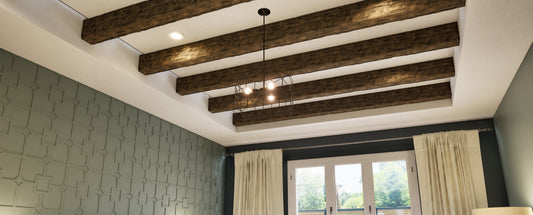
How Much Do Faux Wood Beams Cost?

Adding architectural character to a room can completely transform its feel, turning a plain space into one with warmth, depth, and style. Ceiling beams are a classic way to achieve this, evoking everything from rustic farmhouse charm to modern, sophisticated lines. For decades, the only option was real wood, which brought along significant costs, structural challenges, and extensive labor. Today, high-quality faux wood beams offer a stunningly realistic alternative without the drawbacks. But what is the actual faux wood beam cost?
The answer isn't a single number. The price depends on several key factors, including the material, the size and style of the beam, and your installation method. Understanding these variables is crucial for budgeting your project accurately. This guide will provide a comprehensive breakdown of the costs associated with faux wood beams, exploring everything from material expenses to long-term value. We'll examine why polyurethane has become the material of choice and how it delivers a premium look for a fraction of the price and hassle of real wood. By the end, you'll have a clear picture of what to expect and why solutions from companies like Elite Ceiling Designs offer an incredible return on your design investment.
Understanding the True Cost: Faux vs. Real Wood Beams
Before diving into the specifics of faux beam pricing, it's essential to compare them to their traditional counterparts: solid wood beams. This comparison highlights why so many homeowners, designers, and builders are turning to faux alternatives. The initial purchase price is only one part of the total ceiling beam cost.
The High Price of Real Wood
Solid wood beams are undeniably beautiful, but their cost can be prohibitive for many projects. The price of the wood itself varies dramatically based on the species (like pine, cedar, or reclaimed oak), the dimensions, and the current market. A single, large, hand-hewn reclaimed wood beam can cost thousands of dollars before labor is even considered.
Beyond the material cost, you must factor in:
- Structural Reinforcement: Solid wood beams are incredibly heavy. Your home's ceiling joists may not be designed to support this additional weight. This often requires hiring a structural engineer to assess the load-bearing capacity and potentially reinforcing the ceiling structure—a complex and expensive undertaking.
- Difficult Installation: The sheer weight and bulk of solid wood beams make installation a major construction project. It requires a team of skilled laborers, specialized equipment like lifts, and significant time. This labor cost can easily equal or exceed the cost of the beam itself.
- Transportation & Logistics: Getting a 20-foot solid wood beam to your home isn't simple. It involves freight shipping and careful handling, adding another layer of expense.
- Maintenance: Wood is susceptible to environmental changes. It can warp, crack, or split over time. It's also a target for termites and other pests. Regular maintenance, including sealing and treatments, is necessary to preserve its appearance and integrity.
When you add up the material, engineering, labor, and long-term maintenance, the total investment for real wood beams can quickly climb into the tens of thousands of dollars for a single room.
The Smart Economics of Faux Wood Beams
Faux wood beams, particularly those made from high-density polyurethane, present a much more accessible and practical financial picture. They are designed to replicate the exact look and texture of real wood without the associated weight and structural concerns.
Here’s where the cost savings become apparent:
- Lower Material Cost: While pricing varies, polyurethane beams are consistently more affordable than solid wood of a similar style and size.
- No Structural Engineering Needed: Because they are lightweight, faux beams don't require any changes to your home's structure. They can be installed on virtually any ceiling without worry.
- Simplified DIY or Professional Installation: The lightweight nature of faux beams dramatically reduces labor costs. A professional installation is faster and requires a smaller crew. For many homeowners, it even becomes a manageable DIY project, eliminating labor costs entirely. You can learn more about the straightforward installation process on our installation and help page.
- Durability and Low Maintenance: High-quality polyurethane is a stable, durable material. It is impervious to moisture, meaning it won't rot, warp, or crack. It's also resistant to pests like termites. Once installed, faux beams require no ongoing maintenance.
This combination of lower upfront costs, simplified installation, and zero long-term maintenance makes faux wood beams an outstanding value proposition for achieving a high-end look.
Breaking Down the Faux Wood Beam Cost
Now, let's focus on the specific factors that influence the price of faux wood beams. When you're ready to budget, you'll need to consider material quality, dimensions, texture and finish, and installation.
1. Material Quality: The Importance of High-Density Polyurethane
Not all faux beams are created equal. The primary driver of both quality and cost is the material they are made from. While you might find ultra-cheap options made from styrofoam (expanded polystyrene or EPS), these often look artificial and are easily damaged.
The industry standard for high-quality, realistic faux beams is high-density polyurethane. The polyurethane beam cost reflects its superior characteristics:
- Unmatched Realism: Polyurethane is molded from genuine wood beams. This process captures every intricate detail, from the grain patterns and knots to the distinctive marks of hand-hewing or saw cuts. The result is a replica that is virtually indistinguishable from the real thing.
- Exceptional Durability: Unlike cheaper foams, high-density polyurethane is robust and resistant to impact. It won't dent or chip easily during installation or everyday life. Its closed-cell structure makes it waterproof, so it's suitable for use in kitchens, bathrooms, and even exterior applications.
- Lightweight Strength: This material strikes the perfect balance. It's strong enough to feel substantial and hold its shape perfectly, yet light enough for one or two people to lift and install with ease.
At Elite Ceiling Designs, we are committed to using only the highest-grade polyurethane to ensure our beams deliver on the promise of both beauty and longevity. This commitment to quality is a core part of our mission.
2. Beam Dimensions: Width, Height, and Length
Just like with real wood, the size of the beam is a major factor in its cost. Larger beams require more material and are therefore more expensive. When planning your project, you will need to consider three dimensions:
- Width and Height: The profile of the beam (e.g., 6" wide x 4" high vs. 10" wide x 8" high) directly impacts the price. A larger, more substantial-looking beam will have a higher cost per linear foot than a smaller, more subtle one.
- Length: Beams are typically sold in standard lengths, such as 8, 10, 12, 16, or 20 feet. The price is calculated per foot, so longer beams will naturally cost more. It's often more cost-effective to buy a longer beam and cut it to the specific lengths you need on-site rather than ordering multiple custom-cut short pieces.
To accurately budget, first measure your room and decide on the desired visual impact. A large room with a high, vaulted ceiling can handle massive, dramatic beams, while a standard 8-foot ceiling might look better with more modestly sized beams.
3. Texture and Finish
The complexity of the beam's texture also plays a role in its final price. Different styles replicate different types of wood processing, and some are more intricate to mold than others.
Common textures include:
- Resawn: Mimics the look of rough-sawn lumber straight from the mill. It features parallel blade marks and a clean, rustic appearance. See how a Resawn textured beam transformed a room in one of our case studies.
- Hand Hewn: Replicates the look of beams shaped by hand with an adze or axe. It has a more irregular, rustic, and historic character.
- Rough Sawn: Similar to Resawn but with a more pronounced, less uniform texture, often with circular saw marks for added character.
- Modern/Smooth: Offers a clean, contemporary look with minimal texture, perfect for modern or transitional designs.
Beams typically come either unfinished (primed and ready for paint or stain) or pre-finished in a variety of wood tones. While pre-finished beams may have a slightly higher upfront cost, they save you the time, labor, and expense of finishing them yourself. Unfinished beams offer complete creative control, allowing you to match existing trim or create a custom color.
4. Installation: DIY vs. Professional Labor
This is one of the most significant areas where faux beams provide massive cost savings over real wood.
DIY Installation
For the handy homeowner, installing faux wood beams is a very achievable weekend project. The process generally involves:
- Mounting Blocks: Attaching wood blocks to the ceiling joists.
- Cutting the Beam: The U-shaped polyurethane beam is easily cut to length with a standard handsaw or power saw.
- Lifting and Securing: The lightweight beam is lifted over the mounting blocks and secured in place with screws.
- Finishing: Seams are concealed with caulk and touched up with a finish kit.
The cost for a DIY installation is minimal, limited to screws, adhesive, caulk, and any tools you may need to purchase. For many, this brings the total ceiling beam cost down to just the price of the materials.
Professional Installation
If you prefer to hire a professional, the cost will still be far less than for installing real wood. A carpenter or general contractor can typically install the beams for a full room in a day or less, depending on the complexity of the design.
Labor costs for a professional installation can range from a few hundred to over a thousand dollars, depending on your location, the number of beams, and the height of the ceiling. Even at the high end, this is a fraction of the cost to install heavy timber. You can explore the various services and support options available to ensure a smooth project from start to finish.
Putting It All Together: Example Project Costs
To give you a clearer idea, let's walk through a few hypothetical scenarios. Please note these are estimates, and for precise pricing on your specific project, it's always best to get a custom quote. You can easily request one through our foam beams quote page.
Scenario 1: Simple Rustic Living Room
- Room Size: 15' x 20' with an 8-foot ceiling.
- Project Goal: Add three rustic beams running parallel to the shorter wall.
- Beams Needed: Three 15-foot beams. Let's choose a popular Resawn texture in a 6" x 6" profile.
- Material Cost Estimate: The cost per linear foot for a quality polyurethane beam of this size might range from $15 to $25.
- 3 beams x 15 feet = 45 linear feet.
- 45 feet x $20/foot (average) = $900 for the beams.
- Installation:
- DIY: Add approximately $50 - $100 for supplies (screws, adhesive, caulk, touch-up kit).
- Professional: A carpenter might charge $400 - $800 for a straightforward, single-day installation.
- Total Estimated Cost:
- DIY: Around $1,000.
- Professional Install: Around $1,500.
- Comparison to Real Wood: The material cost for three 15-foot solid wood beams could easily be $3,000+, with installation and potential structural work adding several thousand more.
Scenario 2: Dramatic Vaulted Ceiling
- Room Size: 25' x 18' with a vaulted ceiling peaking at 14 feet.
- Project Goal: Install a large ridge beam and four angled truss-style beams.
- Beams Needed: One 25-foot ridge beam (10" x 10" profile) and approximately 60 linear feet for the truss beams (8" x 8" profile).
- Material Cost Estimate: Larger beams have a higher cost per linear foot.
- Ridge Beam (10"x10"): 25 feet x $45/foot = $1,125.
- Truss Beams (8"x8"): 60 feet x $30/foot = $1,800.
- Total material cost = $2,925.
- Installation:
- DIY: This is a more complex DIY project due to the angles and height. It's possible but requires confidence and at least two people. Supplies might cost $150 - $200.
- Professional: Working on a vaulted ceiling requires ladders or scaffolding. Labor for this more complex installation could be in the $1,500 - $2,500 range.
- Total Estimated Cost:
- DIY: Around $3,100.
- Professional Install: Around $5,000.
- Comparison to Real Wood: A project of this scale with real timber would be a major structural undertaking. The cost for the wood alone could exceed $10,000, with total project costs easily reaching $20,000 - $30,000 or more after engineering and labor.
These scenarios clearly illustrate that the faux wood beam cost is significantly lower than the cost of real wood, making a high-impact design accessible for a much wider range of budgets.
Long-Term Value: Why Polyurethane is a Smarter Investment
The financial benefits of polyurethane beams extend far beyond the initial purchase and installation. Their long-term value makes them a savvy investment in your home.
- Zero Maintenance Costs: Once installed, you're done. There is no need to budget for future sealing, staining, pest control, or repairs due to warping or cracking. This "set it and forget it" quality means your one-time investment is your final investment.
- Increased Home Value: Architectural details like ceiling beams are highly desirable features that can increase a home's perceived value and appeal to potential buyers. Faux beams provide the same aesthetic impact as real wood at a fraction of the cost, delivering an excellent return on investment.
- Versatility and Durability: Because polyurethane is impervious to moisture, you can confidently use it to create cohesive designs that flow from indoor living spaces to outdoor patios or bathroom vanities without fear of damage. This versatility allows you to add value and style to more areas of your home.
Conclusion: An Affordable Path to Elevated Design
So, how much do faux wood beams cost? While the price varies based on size, style, and installation, the conclusion is clear: high-quality polyurethane beams offer a dramatically more affordable and practical solution than real wood. You get the same stunning, authentic look without the structural risks, astronomical labor costs, and long-term maintenance headaches.
By choosing lightweight, durable, and realistic faux beams, you can transform your space with a project that is manageable either as a DIY endeavor or with a modest budget for professional installation. The initial faux wood beam cost is only part of the story; the true value lies in the combination of upfront savings and zero long-term expenses.
Ready to explore the possibilities for your own home? Browse the wide selection of styles available in our online shop or get a personalizedfoam beams quote today to start planning your transformation. With faux wood beams, a luxurious and character-filled home is well within your reach.