Top Architectural Trends in Phoenix Homes for 2026

Arizona has always marched to its own architectural drumbeat. The harsh beauty of the Sonoran Desert demands it. You cannot simply drop a Cape Cod colonial into Paradise Valley and expect it to work. It fights the landscape. As we look ahead, the vision for Phoenix home design is becoming even more refined, more intentional, and more connected to the environment. The trends shaping 2026 aren't about reinventing the wheel; they are about perfecting the desert lifestyle.
We are seeing a shift away from the heavy, ornate Tuscan styles of the early 2000s and a move toward something cleaner and more elemental. Homeowners are asking for spaces that feel quiet and expansive. They want homes that handle the brutal summer heat with grace while opening up completely to the perfect winter weather. It’s a balance of protection and connection. The architecture rising in Scottsdale, Gilbert, and the Phoenix foothills is confident. It relies on strong horizontal lines, natural textures, and a seamless flow between inside and out.
Where Phoenix Home Design Is Headed in 2026
If you drive through the new custom builds in Arcadia or the upper reaches of North Scottsdale, you’ll notice a common thread: restraint. Phoenix home design trends 2026 are defined by a "less is more" philosophy, but not in a cold, sterile way. It is a warm minimalism.
The focus is shifting toward longevity and sensory experience. It’s not just about how the house looks from the street; it’s about how the materials feel under your hand and how the light moves across the walls. Arizona custom home trends are prioritizing energy efficiency through smart layout and orientation, rather than just solar panels. We are seeing deeper overhangs, strategic glazing, and massing that shades itself. New build trends Phoenix buyers are requesting center on lifestyle—homes that feel like private resorts, where the boundary between the living room and the patio is dissolved entirely. Luxury home design Phoenix is no longer about square footage bragging rights; it's about the quality of the space and the authenticity of the materials used.
Trend #1: Clean-Lined Arizona Modern Architecture
The most dominant shift we are seeing is the rise of what we call "Arizona Modern." This isn't the stark white box of international modernism. It’s grounded. It feels heavy and permanent, like the mountains surrounding the valley. Arizona modern architecture respects the intense sun and utilizes it to create drama through shadow and depth.
Flat Roof Profiles and Strong Horizontal Lines
The pitched tile roof is taking a backseat. In its place, we are seeing strong, flat rooflines that echo the horizon. These aren't just aesthetic choices; they are functional. Modern desert homes Phoenix architects are designing use these flat planes to create massive, cantilevered overhangs. These overhangs protect the glass from direct solar gain, keeping the interiors cool while allowing for floor-to-ceiling windows.
The emphasis on horizontality grounds the building. It makes the home feel like it is hugging the earth rather than perching on top of it. Minimalist desert architecture uses these lines to visually expand the width of the property, making even smaller lots feel expansive. The fascia details are often kept simple—crisp metal edges or smooth stucco—allowing the form of the building to do the talking.
Neutral Palettes with Textural Contrast
Color is disappearing, but texture is exploding. Contemporary stucco homes Arizona is famous for are moving away from the beige and brown "Santa Fe" palette. Instead, we are seeing warm whites, soft greys, and deep charcoals.
The interest comes from contrast. A smooth, white stucco wall might be paired with a rough-hewn stone veneer or a vertically sided accent wall. The palette is quiet, allowing the desert landscape—the greens of the palo verde trees and the reds of the rocks—to provide the color. This restraint makes the architecture feel sophisticated and timeless. It provides a calm backdrop for the drama of the desert sky.
Trend #2: Desert Contemporary Homes with Natural Texture
While modernism can sometimes feel cold, the Phoenix variation is deeply textural. Desert contemporary homes are embracing the tactile nature of the environment. The goal is to make the home feel organic, as if it grew out of the site.
Layering Stucco, Stone, and Metal
Successful design in 2026 is all about layering. You rarely see a facade that is just one material. Textured exterior design Phoenix builders are mastering involves mixing smooth, troweled stucco with rugged, stacked stone. They then cut through that heaviness with sleek, black steel elements—window frames, fascia, or support columns.
This interplay of rough and smooth, heavy and light, creates visual interest without needing decorative curlicues or complex moldings. Stone and wood desert homes feel substantial. They have a visual weight that feels appropriate for the climate. The stone anchors the home, while the metal details modernize it, preventing it from looking like a rustic cabin.
Integrating Warm Wood Tones in Modern Designs
To balance the stone and glass, wood is essential. It adds the warmth that makes a house feel like a home. However, in modern southwest architecture, wood is used strategically. It’s not log cabin walls; it’s an accent.
We see this in slat walls, garage doors, and soffit details. The wood tones are drifting toward lighter, more natural hues—white oak, rift-sawn cedar, or ash. These lighter tones reflect the bleached colors of the desert driftwood and keep the home feeling airy and bright. The challenge, of course, is maintaining that wood look in the sun, which is why alternative materials are becoming standard specs for these applications.
Trend #3: Exposed Beams in Open-Concept Phoenix Interiors
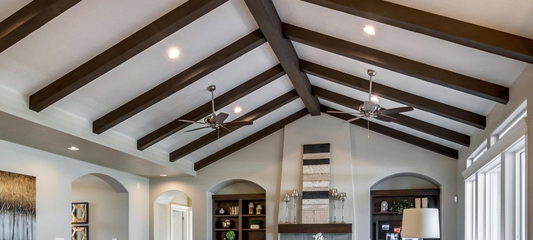
The open floor plan is here to stay, but the cavernous, undefined great room is out. Homeowners want open sightlines, but they also want definition. They want the space to feel human-scale. Exposed beams Phoenix designers are using serve this exact purpose. They break up the ceiling plane and organize the volume of the room.
Adding Architectural Depth Without Overbuilding
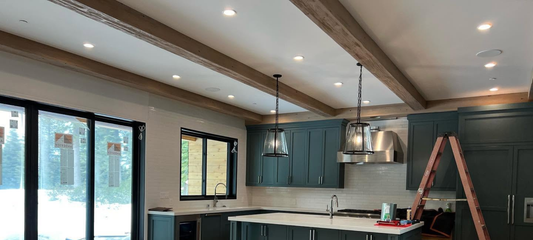
In the past, luxury meant ornate coffered ceilings with layers of crown molding. That feels dated now. Modern ceiling beams Arizona homes feature are cleaner. They are simple, linear elements that provide rhythm.
We are seeing a lot of parallel beam layouts that draw the eye through the room, often leading the gaze toward the view outside. Decorative beams Phoenix homes use now are less about "old world" charm and more about structural honesty. Even if the beam isn't holding up the roof, it needs to look like it could be. It adds a layer of subconscious stability to the room. It makes the space feel solid.
Beam Profiles That Fit Contemporary Desert Homes
The profile of the beam matters. For a Tuscan home, you might want a hand-adzed, distressed beam that looks 200 years old. For vaulted ceilings Phoenix modern homes, the texture is more refined.
We are seeing a demand for "wire-brushed" or "sandblasted" textures. These finishes highlight the grain of the wood without looking rustic or damaged. The edges are often sharper, and the dimensions are substantial—think 8x8 or 10x12. A skinny beam looks weak in a modern desert home. You need mass to balance the large expanses of glass and drywall. The beam becomes a piece of sculpture on the ceiling, adding warmth and interest without clutter.
Trend #4: Seamless Indoor-Outdoor Living
This is the holy grail of Arizona living. For six months of the year, the weather is perfect. Phoenix indoor outdoor living trends for 2026 are about completely erasing the line between the living room and the patio. It’s not just a sliding glass door anymore; it’s entire walls of glass that disappear into pockets.
Covered Patios as True Living Spaces
The patio is no longer just a place for a grill and a table. It is a fully furnished living room, just without walls. Patio beam design Phoenix architects are creating treats these spaces with the same level of detail as the interior.
We see full outdoor kitchens, fireplaces, and lounge areas with rugs and lamps. The ceiling of the patio is critical here. A stucco lid feels like an exterior. A beamed ceiling feels like a room. By adding beam details to the patio cover, you visually connect it to the main house. It stops being "outside" and starts being an extension of the square footage. Desert outdoor architecture relies on shade, and the structure providing that shade needs to be beautiful.
Extending Interior Materials to the Exterior
The ultimate trick for blurring the indoor-outdoor boundary is material continuity. If you have limestone floors inside, you run them outside. If you have wood beams on the living room ceiling, you run them right through the glass wall and continue them over the patio.
This visual trick makes the room feel twice as big. Your eye doesn't stop at the window; it follows the beam line all the way to the horizon. Arizona courtyard design trends are utilizing this heavily. Whether it’s a front courtyard or a backyard loggia, maintaining that material palette creates a cohesive, resort-like atmosphere that defines modern luxury in the desert.
Trend #5: Statement Ceilings in High-Volume Spaces
As footprints get simpler, volume gets more important. High ceilings are a hallmark of luxury, but a high, flat white ceiling is boring. It feels institutional. Statement ceiling design Phoenix is using to combat this involves bold, large-scale choices.
Large-Scale Beam Layouts in Great Rooms
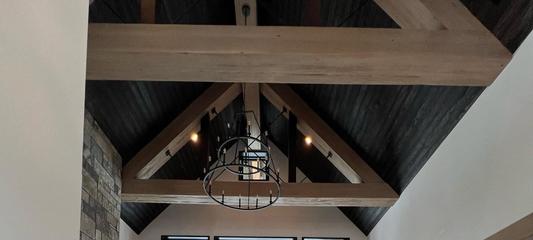
In a room with 14 or 16-foot ceilings, you have to go big. High ceiling beam ideas for 2026 involve trusses. Not the intricate, spindly trusses of Victorian architecture, but massive, simple forms. King trusses with metal tie-rods or simple scissor trusses that emphasize the pitch of the roof.
Great room design Arizona is seeing a return to the ridge beam—a single, massive timber running the length of the room at the peak. This draws the eye up and emphasizes the height while grounding the space. It gives the room a spine.
Balancing Scale with Structural Practicality
The challenge with these architectural ceiling treatments desert homes demand is weight. A solid wood timber that is 12x12 and 24 feet long weighs nearly a thousand pounds. Installing that requires cranes, steel reinforcement in the walls, and massive footings.
This is where the shift in materials happens. Designers are realizing they can achieve this look without the structural nightmare. They want the aesthetic of the heavy timber—the shadow, the mass, the texture—but they don't want the engineering headache. This desire for "lightweight mass" is driving the specification of alternative materials that look indistinguishable from wood but install like finish carpentry.
Materials That Support 2026 Design Without Complicating Maintenance
The trend is toward beauty, but the reality is the Phoenix climate. Wood warps. It cracks. It fades. As homeowners become more savvy about the long-term costs of ownership, they are demanding low maintenance exterior materials Phoenix weather can't destroy.
Choosing Materials That Handle Heat and Sun Exposure
The sun in 2026 is just as hot as it was in 2006. The difference is that now we have better solutions. Durable desert home materials need to be stable. They cannot expand and contract violently with the temperature swings.
This is why high-density polyurethane beams are becoming the standard for lightweight architectural beams Arizona custom builders prefer. They offer the exact visual texture of the wire-brushed oak or sandblasted cedar that is trending, but they are impervious to the heat. They don't check. They don't twist. They allow the clean, linear design to remain straight and true year after year, which is critical when your architecture relies on precise lines.
Designing for Long-Term Performance, Not Just Appearance
It’s easy to make a home look good for the listing photos. It’s harder to make it look good five years later. Weather resistant design Phoenix requires thinking about the lifecycle of the material.
If you wrap a modern flat-roof home in real wood fascia, you are signing the homeowner up for a lifetime of scaffolding and staining. If you use a UV-stable, non-organic material, you are giving them the gift of time. They get the warm, organic look of the desert contemporary style without the penalty. This alignment of aesthetic desire and practical performance is the ultimate trend. It’s smart design.
Why Phoenix Home Design Trends Favor Simplicity and Strength
As we move toward 2026, the architectural language of Phoenix is becoming more articulate. It is shedding the excess of the past and finding confidence in simplicity. Phoenix architectural style evolution is a story of learning to live with the desert rather than fighting it.
The homes of the future are strong. They use stone and steel and stucco to create protective shells, and they use warm textures like wood (and faux wood) to create inviting interiors. Contemporary desert home inspiration comes from the land itself—rugged, enduring, and beautiful in its restraint.
Whether it’s the strong horizontal line of a flat roof, the rhythm of exposed beams modern desert homes display, or the seamless flow of an outdoor living room, the goal is the same: to create a sanctuary. By choosing materials that honor this vision—materials that offer the look of luxury with the durability of modern engineering—you ensure that your home isn't just a trend, but a lasting piece of Arizona architecture. Arizona modern home ideas are about building for the reality of the place. And in the desert, reality is beautiful.
If you're planning a remodel or new build, the details you choose will shape the entire space. Ceiling beams can either blend in or become a defining architectural feature depending on how they’re designed.
Browse our faux beam styles and finishes or reach out to our team to plan a design that fits your home and location.