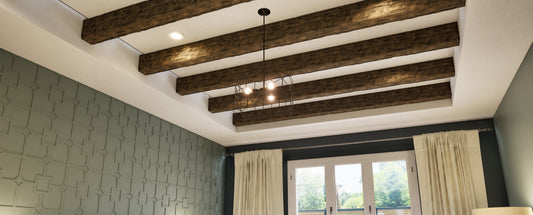
How to Install Faux Wood Ceiling Beams (Complete DIY Guide)

Adding exposed beams to your ceiling instantly elevates the character of any room. You can achieve that rich, architectural look without the heavy lifting or structural headaches of solid timber. High-density polyurethane beams offer the perfect solution for homeowners wanting a massive visual upgrade.
If you are wondering how to install ceiling beams, you have come to the right place. This guide walks you through the entire process from start to finish. We designed this tutorial to help you tackle your DIY faux wood beam installation with absolute confidence.
By the end of this post, you will know exactly how to measure your space, prep your ceiling, and mount your new beams securely. Let us dive into the steps needed to transform your space.
Why Choose a DIY Faux Wood Beam Installation?
Taking on a home improvement project brings a great sense of accomplishment. When you choose to install faux beams, you bypass the heavy machinery and structural engineering required for real wood. Polyurethane beams weigh a fraction of what solid wood weighs.
This lightweight nature makes them incredibly manageable. One or two people can easily lift and secure them safely. You also save a significant amount of money on specialized labor. With basic woodworking tools and a free weekend, you can completely change the atmosphere of your living room, kitchen, or bedroom.
Before starting, take a moment to browse the styles available at our online shop to find the perfect texture and color for your home.
Tools and Materials You Will Need
Proper preparation makes any DIY project run smoothly. Gather all your tools and materials before you climb up the ladder. Having everything within arm's reach saves time and frustration.
Here is what you need to successfully install faux beams:
Essential Tools
- Tape measure
- Chalk line or laser level
- Stud finder
- Power drill and driver bits
- Hand saw or power miter saw
- Caulking gun
- Ladder or scaffolding
Necessary Materials
- Your high-density polyurethane faux beams
- 2x4 or 2x6 solid wood planks (for mounting blocks)
- Construction adhesive (polyurethane-friendly)
- Toggle bolts or heavy-duty drywall anchors (if joists do not align)
- Wood screws (long enough to go through blocks into joists)
- Finish nails or trim screws (for attaching beams to blocks)
- Color-matched caulk or wood filler
- Painters tape
Step 1: Planning and Measuring Your Ceiling
Every successful DIY faux wood beam installation starts with a solid plan. You need to map out exactly where each beam will go. Grab a piece of paper and sketch the layout of your ceiling.
Decide on the spacing between each beam. A common approach places beams roughly four to five feet apart, but this depends entirely on your room's size and your personal preference. Keep symmetry in mind. Measure the total width of the ceiling and divide it evenly so the spaces at the edges match.
Use a tape measure to mark the center lines for each beam on the ceiling. Snap a chalk line or use a laser level to create a perfectly straight guideline across the entire length of the room. This line represents the exact center of where your mounting blocks will sit.
Step 2: Finding and Marking the Ceiling Joists
Your beams need a secure foundation. While polyurethane is lightweight, you still want to anchor your mounting blocks directly into the structural framework of your home whenever possible.
Take your stud finder and locate the ceiling joists along your chalk lines. Mark the edges and the center of each joist with a pencil. Most homes have ceiling joists spaced 16 or 24 inches apart.
Sometimes, your design layout will run parallel to the joists, meaning your chalk line might fall between them. If this happens, do not panic. You can use heavy-duty toggle bolts to secure your mounting blocks directly to the drywall. The faux beams are light enough that drywall anchors can easily support the weight safely.
Step 3: Preparing and Installing the Wooden Blocking
Faux beams feature a hollow, U-shaped design. To attach them to the ceiling, you need to install solid wood blocks that fit snugly inside that hollow channel. This creates the mounting structure.
Measure the inside width of your faux beam. Cut your 2x4 or 2x6 lumber into blocks that match this inner width exactly. You want the beam to slide over the block with minimal friction, but without rattling loosely. Cut these blocks into segments about a foot long.
Attach these wooden blocks along your chalk line on the ceiling. Space them about every two to three feet. Apply a zigzag bead of construction adhesive to the back of each block. Press the block against the ceiling, aligning its center with your chalk line. Drive your wood screws through the block and straight into the ceiling joists.
If you hit a spot without a joist, use your toggle bolts to pull the block tight against the drywall. Make sure every block feels completely rigid before moving on.
For detailed diagrams and visual aids regarding blocking, check out our installation and help center.
Step 4: Measuring and Cutting the Polyurethane Beams
Now it is time to prepare the star of the show. Measure the exact length of the ceiling where the beam will rest. Measure twice to ensure absolute accuracy. Walls are rarely perfectly square, so measure the specific location for each individual beam.
Transfer that measurement to your faux wood beam. Use a square to draw a straight cutting line across the top and sides of the beam.
Because polyurethane acts very much like real wood, you can cut it using standard woodworking tools. A hand saw works perfectly well, but a power miter saw provides the cleanest, fastest cut. Use a blade with a high tooth count to prevent chipping the textured finish. Cut slowly and steadily following your marked line.
Step 5: Mounting the Faux Wood Beams
You are now ready to install the faux beams onto your ceiling. This step is much easier with a helper. Ask a friend or family member to help you lift the beam safely up the ladders.
Carefully lift the U-shaped beam and slide it right over the wooden mounting blocks you secured earlier. The beam should fit snugly around the wood. Push the beam flush against the ceiling surface.
Once the beam is in position, drive your finish nails or trim screws through the side of the faux beam and directly into the hidden wooden blocks. Place a fastener every 12 to 18 inches along both sides of the beam. The countersunk screws will bite firmly into the wood block, locking the lightweight polyurethane securely in place.
Step 6: Applying the Finishing Touches
The final step in how to install ceiling beams involves making everything look flawless. Even with careful measuring, you might notice tiny gaps where the beam meets the wall or the ceiling.
Use color-matched caulk to fill in these gaps. Run a thin bead along the seams and wipe away the excess with a damp finger or cloth. This creates a seamless, built-in appearance that looks highly professional.
Next, address the small holes left by your finish nails or trim screws. Use a color-matched wood filler or specialized touch-up paint provided by the manufacturer. Dab a tiny amount into each hole to camouflage the hardware completely. Once the filler dries, your faux beams will look like solid, structural timber that has been there for decades.
How to Handle Seams for Longer Rooms
If your room is longer than the faux beams available, you will need to join two beams end-to-end. This is a common part of any DIY faux wood beam installation.
To hide the seam where the two beams meet, use a decorative rubber beam strap. These straps mimic the look of traditional wrought iron hardware used in old timber framing. Simply wrap the flexible strap around the joint and secure it with adhesive and small brad nails. It perfectly conceals the seam while adding rustic charm to your design.
When to Call the Professionals
While learning how to install ceiling beams is a straightforward DIY project, it is not for everyone. You might have vaulted ceilings that require incredibly tall scaffolding. You might feel uncomfortable using power tools or working over your head. You might simply lack the time to dedicate to a weekend project.
If you find yourself hesitating, there is no shame in asking for help. Professional installers can complete this job rapidly and safely. We offer dedicated professional services to ensure your ceiling transformation goes off without a hitch. Let our experts handle the measuring, cutting, and climbing while you enjoy the stunning results.
Final Thoughts on Your Ceiling Transformation
Adding exposed beams breathes incredible life into a dull room. They draw the eye upward, add architectural interest, and create an atmosphere of warmth. By choosing polyurethane, you eliminate the stress, cost, and weight associated with heavy solid timber.
A DIY faux wood beam installation is highly rewarding. If you take your time, measure carefully, and follow these steps, you will achieve a professional-grade finish. You now possess all the knowledge needed to install faux beams and revitalize your home's interior.
If you run into any unique challenges during your project or need advice on selecting the perfect beam style, do not hesitate to reach out.Contact us today, and our team will gladly assist you with your ceiling design journey.